Why the Skills Required for Tomorrow's Jobs Are Changing Today
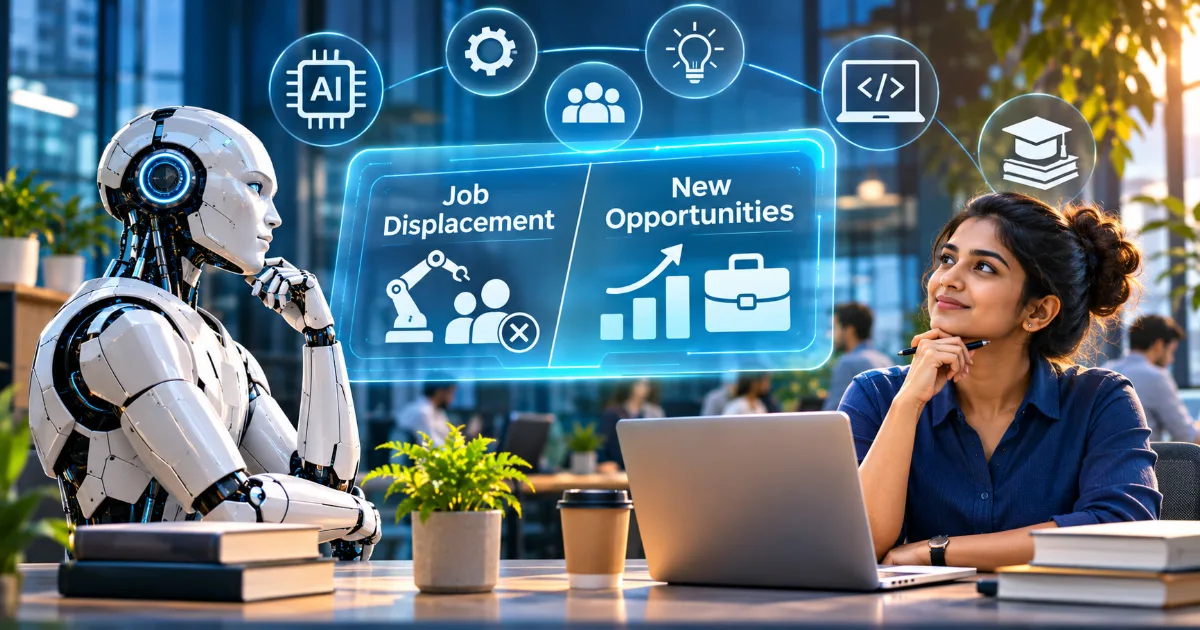
The workplace of 2030 will be significantly different from the workplace most professionals know today. Artificial intelligence, automation, robotics, cloud computing, digital collaboration, and advanced data technologies are changing how businesses operate and how employees perform their responsibilities. Tasks that once required hours of manual effort can increasingly be completed with intelligent software, while new professional opportunities are emerging around technologies that did not exist in their current form a decade ago.
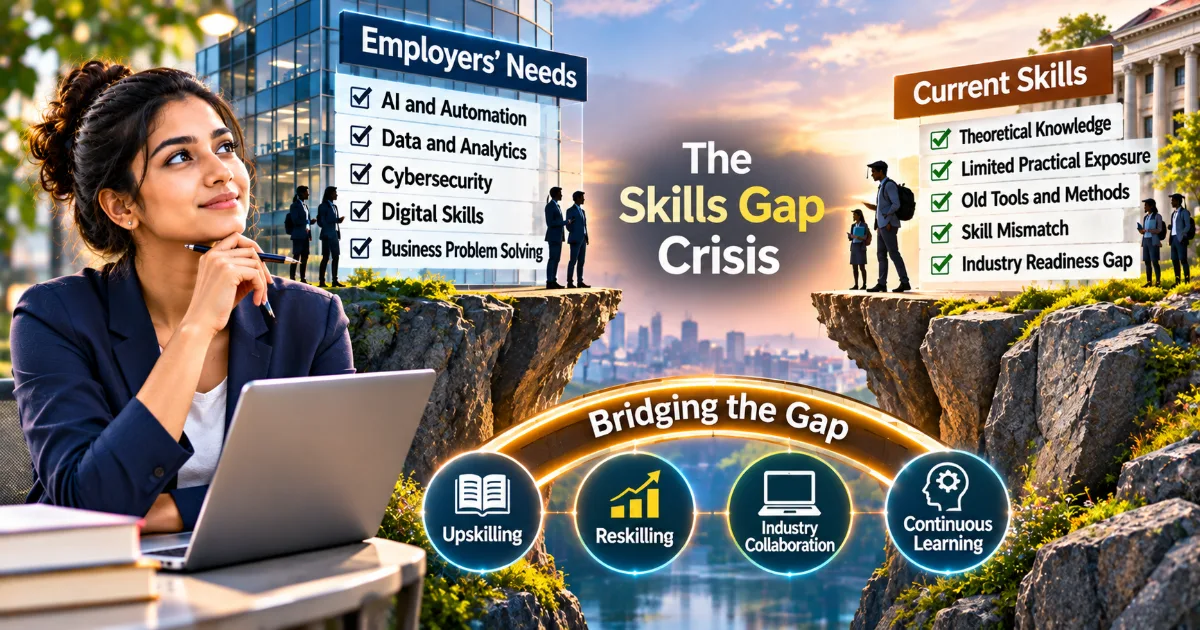
For students preparing to enter the workforce, employees building long-term careers, and entrepreneurs developing businesses, this transformation creates both opportunities and challenges. Traditional qualifications and professional experience will continue to matter, but they may not be sufficient on their own. Employers will increasingly need people who can learn new technologies, solve unfamiliar problems, communicate effectively, interpret information, and adapt to changing business requirements.
The future workplace will not reward only those who know how to use a particular software application or perform a specific technical task. It will also value people who understand how to combine technology with human judgment, creativity, collaboration, and responsibility.
Consider two professionals working in the same organization. Both have similar educational qualifications and years of experience. One continues performing tasks using traditional methods and avoids learning new tools. The other develops digital literacy, understands AI applications, improves analytical skills, and learns how to collaborate effectively with technology. As the organization changes its processes, the second professional may be better positioned to take on new responsibilities.
Continue Reading
This does not mean that everyone must become a programmer, data scientist, or artificial intelligence engineer. The future workplace will need professionals from different backgrounds, including finance, education, healthcare, marketing, design, management, engineering, administration, and skilled trades. However, people across these professions will benefit from developing a combination of technical and human capabilities.
Understanding which skills will matter most by 2030 can help individuals make better decisions about education, career development, professional training, and lifelong learning.
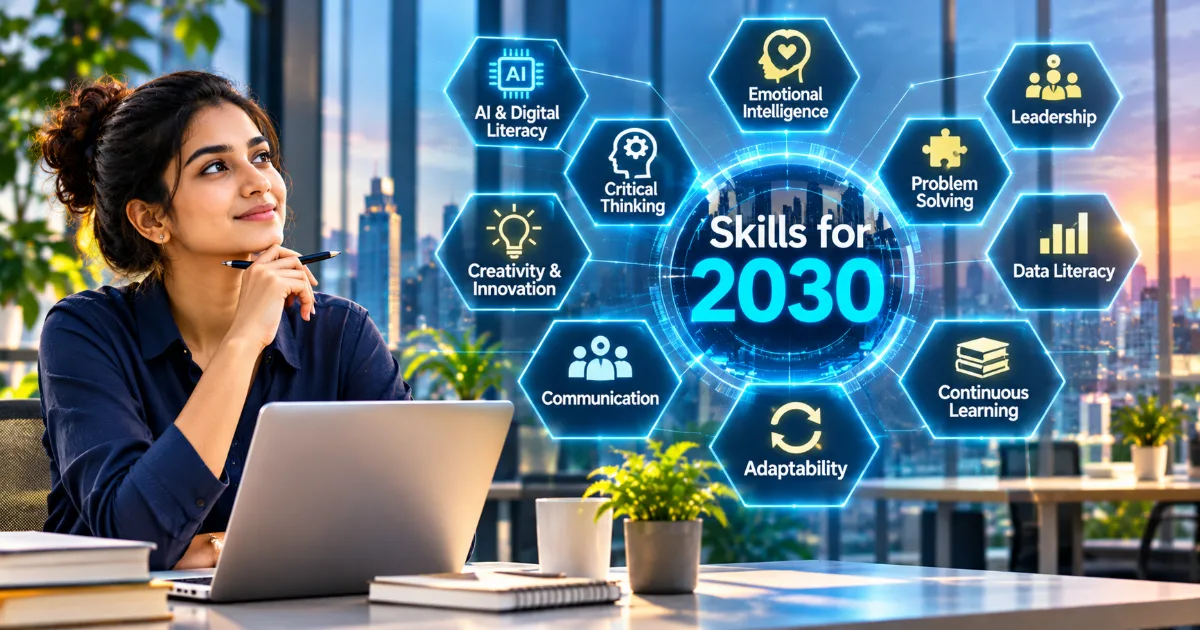
This article explores ten important skills that can help professionals succeed in the future workplace, explains why they matter, and provides practical ways to develop them.
1. Artificial Intelligence Literacy: Understanding and Working With Intelligent Technology
Artificial intelligence literacy is becoming one of the most important professional capabilities of the modern workplace. As organizations integrate AI into everyday business operations, employees will increasingly interact with intelligent systems regardless of their job titles or industries.
AI literacy does not mean that every employee must understand complex machine learning algorithms or build artificial intelligence models. It means understanding what AI can do, where it can be useful, what limitations it has, and how to use it responsibly.
A marketing professional may use AI to research customer interests, generate campaign ideas, organize information, and prepare initial content drafts. An accountant may use intelligent tools to organize financial information and identify unusual patterns. A teacher may use AI to develop learning materials and explain difficult concepts. A software developer may use AI coding assistants to explore solutions and generate preliminary code.
In each situation, the employee must understand the task and evaluate the output rather than blindly accepting whatever the system produces.
Why AI Literacy Will Matter in 2030
Artificial intelligence is becoming part of productivity software, communication platforms, customer relationship management systems, financial applications, and enterprise operations. Employees who understand these tools may be able to complete certain responsibilities more efficiently.
AI literacy can also help professionals identify opportunities for process improvement. Instead of manually repeating the same activity every day, an employee may recognize that an approved AI-enabled workflow can reduce repetitive work and allow more time for complex responsibilities.
However, responsible usage is essential. AI systems can generate incorrect information, misunderstand instructions, or produce biased recommendations. Employees must know when human verification is necessary and how to protect confidential information.
How to Develop AI Literacy
Start by identifying the AI applications relevant to your profession. Learn how to write clear instructions, evaluate generated results, compare outputs, and recognize limitations. Experiment with AI for research, summarization, planning, analysis, and other suitable activities.
Most importantly, develop the ability to decide when AI should be used and when human expertise is more appropriate.
By 2030, AI literacy may become as fundamental to many professional environments as basic computer literacy is today.
2. Critical Thinking and Analytical Reasoning: Learning to Evaluate Information
The ability to think critically will become increasingly valuable as people gain access to enormous quantities of information generated by digital systems.
Artificial intelligence can produce reports, recommendations, predictions, summaries, and explanations within seconds. However, the availability of information does not automatically guarantee that the information is accurate, relevant, or useful.
Professionals must be able to question assumptions, evaluate evidence, identify inconsistencies, compare alternatives, and reach logical conclusions.
Critical thinking involves understanding a problem before accepting a solution. It requires people to consider different perspectives and examine whether a recommendation makes sense in a particular situation.
Why Critical Thinking Matters
Imagine a business using an AI-powered analytics system to identify products that should receive additional marketing investment. The system recommends promoting a product because historical sales data suggests strong customer demand.
A professional with critical thinking skills will investigate further. They may examine whether the sales increase was caused by seasonal demand, a temporary discount, a competitor's shortage, or a change in customer behavior.
Without this additional evaluation, the business might invest resources based on an incomplete interpretation of information.
Critical thinking is also essential in healthcare, finance, education, research, management, cybersecurity, and public administration. In these fields, decisions can have significant consequences, making careful evaluation particularly important.
How to Develop Critical Thinking
Develop the habit of asking why a conclusion has been reached. Examine the evidence supporting an argument and consider whether alternative explanations exist.
When using AI-generated information, verify important facts through reliable sources. Compare different viewpoints instead of accepting the first explanation.
Practice solving problems that require reasoning rather than memorization. Participate in discussions, analyze real-world situations, and explain why you support a particular decision.
Critical thinking helps professionals remain independent thinkers even when intelligent systems become increasingly capable.
3. Digital Literacy and Technological Adaptability
Digital literacy involves understanding and using digital technologies effectively in professional and personal environments.
It includes basic computer skills, online communication, digital collaboration, information management, cybersecurity awareness, cloud applications, and the ability to learn new software.
By 2030, most industries are likely to depend even more heavily on digital systems. Employees may work with enterprise applications, online project management platforms, automated workflows, digital payment systems, cloud storage, analytics dashboards, and AI-enabled software.
A professional who struggles to understand digital tools may find it increasingly difficult to participate effectively in technology-enabled workplaces.
Why Digital Literacy Is More Than Computer Knowledge
Digital literacy is not simply knowing how to operate a computer or browse the internet. It also involves understanding how digital information is created, stored, shared, and protected.
For example, employees working remotely must know how to manage shared documents, participate in virtual meetings, organize digital files, and communicate through collaboration platforms.
A business professional may need to understand how customer information moves between different systems. A healthcare employee may need to work with digital patient records while following privacy requirements.
Digital literacy also includes recognizing suspicious messages, avoiding unsafe downloads, using strong authentication practices, and protecting sensitive information.
How to Develop Digital Literacy
Become comfortable with commonly used productivity applications, digital collaboration tools, cloud platforms, and online information systems.
Learn how to organize files, manage digital documents, work with spreadsheets, participate in virtual meetings, and understand basic data protection practices.
Do not limit learning to the software you currently use. Develop the confidence to explore unfamiliar applications and understand how they can support your work.
Technological adaptability is especially important because the specific tools used in workplaces will continue changing.
4. Communication Skills: Expressing Ideas Clearly in a Connected Workplace
Communication will remain one of the most valuable professional skills in 2030, even as artificial intelligence becomes more capable of generating text, speech, and presentations.
Successful communication involves much more than speaking or writing correctly. It requires understanding the audience, explaining ideas clearly, listening carefully, providing relevant information, and responding appropriately.
Modern workplaces bring together employees from different departments, locations, cultures, and professional backgrounds. Many organizations operate with distributed teams, international customers, and remote employees.
In such environments, poor communication can create misunderstandings, delays, conflicts, and unnecessary operational costs.
Written Communication
Employees must be able to prepare professional emails, reports, proposals, project updates, instructions, and documentation.
Clear written communication becomes particularly important in remote workplaces because colleagues may not always be available for immediate conversations.
A well-written project update can explain what has been completed, which problems remain, what support is required, and what should happen next.
Verbal Communication
Meetings, presentations, customer discussions, interviews, and negotiations require confidence and clarity.
Professionals should learn how to explain complex subjects in language that their audience understands.
A technical specialist, for example, may need to explain a cybersecurity problem to a business manager who does not have technical knowledge.
Listening and Understanding
Good communication also requires listening.
Professionals who listen carefully can understand customer expectations, identify workplace concerns, resolve conflicts, and build stronger relationships.
How to Improve Communication Skills
Practice writing concise but complete professional messages. Participate in presentations and group discussions. Learn to explain complicated ideas using practical examples.
Develop active listening habits and ask relevant questions when information is unclear.
Communication skills can improve the effectiveness of almost every other professional capability.
5. Creativity and Innovation: Developing Ideas That Create Value
Creativity will become increasingly important as AI makes certain routine production activities easier and faster.
Artificial intelligence can generate images, text, designs, code, music, and other forms of digital output. However, generating material is not the same as identifying a meaningful problem or developing a valuable solution.
Human creativity involves imagination, curiosity, experience, observation, experimentation, and the ability to connect ideas from different areas.
Innovation takes creativity further by turning ideas into practical products, services, processes, or business opportunities.
Why Creativity Matters in the Future Workplace
Businesses must continuously respond to changing customer expectations, competitive pressure, economic uncertainty, and emerging technologies.
Organizations need employees who can identify opportunities and propose improvements rather than simply follow existing procedures.
Consider a small retail business experiencing declining customer engagement. A creative employee may suggest a personalized loyalty program, a new customer experience, or a digital service that improves convenience.
AI can help research these possibilities, but identifying which opportunity best fits the business requires an understanding of customers and the market.
Creativity Across Different Professions
Creativity is not limited to artists, writers, and designers.
An accountant can develop a more efficient reporting process. A teacher can create a new learning approach. A software developer can design a simpler user experience. A manager can introduce a better method for coordinating a distributed team.
Every profession offers opportunities for creative problem-solving.
How to Develop Creativity
Stay curious about developments outside your professional field. Explore different perspectives, read widely, observe how people solve problems, and experiment with new approaches.
Avoid assuming that existing procedures are always the best possible solutions.
Use AI as a tool for exploring alternatives, but develop your own ability to evaluate ideas and create original value.
6. Problem-Solving and Decision-Making
Problem-solving is the ability to identify challenges, understand their causes, evaluate possible solutions, and take appropriate action.
It is one of the most transferable professional skills because every organization encounters problems involving customers, technology, finances, operations, employees, and business strategy.
The ability to make good decisions becomes particularly important when situations are uncertain or information is incomplete.
Why Problem-Solving Will Matter in 2030
AI can identify patterns and suggest possible solutions, but real-world problems often involve factors that are difficult to represent through data alone.
For example, an organization may experience declining employee productivity. A simple analysis might suggest that employees are completing fewer tasks than before.
However, the actual reasons could include unclear management expectations, outdated software, excessive meetings, insufficient training, or unrealistic workloads.
A capable problem-solver investigates the situation rather than immediately applying a convenient solution.
A Practical Problem-Solving Approach
Begin by defining the problem clearly. Separate symptoms from underlying causes. Collect relevant information and identify the people affected.
Develop several possible solutions and evaluate their costs, benefits, risks, and long-term consequences.
Choose an appropriate course of action, implement it, and review the results.
This structured approach can help professionals make better decisions in both routine and complex situations.
How to Develop Problem-Solving Skills
Participate in projects that require practical decisions. Study business cases, solve analytical exercises, and reflect on problems encountered in daily work.
When something goes wrong, focus on understanding why it happened and what can prevent similar problems in the future.
Strong problem-solving skills make employees valuable because they contribute solutions rather than simply reporting difficulties.
7. Emotional Intelligence and Interpersonal Skills
Emotional intelligence is the ability to understand emotions, recognize how they influence behavior, manage personal responses, and interact effectively with other people.
Although technology can analyze language and identify certain behavioral patterns, human relationships involve complex emotions, experiences, values, and social circumstances.
Employees who understand people and communicate with empathy can contribute significantly to workplace culture and organizational effectiveness.
Why Emotional Intelligence Matters
Consider a manager leading a team during a major organizational transformation.
Employees may feel uncertain about new technology, changing responsibilities, and future job security. A manager who focuses only on deadlines and productivity may overlook these concerns.
A manager with emotional intelligence will recognize that employees need clear communication, reassurance, support, and opportunities to learn.
This approach can improve trust, cooperation, and the overall transition process.
Emotional intelligence is valuable in leadership, healthcare, education, customer service, recruitment, sales, negotiation, and team management.
Important Components of Emotional Intelligence
Self-awareness helps individuals recognize their emotions and understand how their behavior affects others.
Self-management involves responding thoughtfully rather than reacting impulsively.
Empathy helps people understand different perspectives and recognize the concerns of colleagues and customers.
Relationship management involves building trust, handling disagreements, and maintaining productive professional relationships.
How to Develop Emotional Intelligence
Practice active listening and become more aware of how your words and actions affect other people.
Learn to manage stress, respond calmly to disagreement, and accept constructive feedback.
Try to understand situations from the perspective of colleagues, customers, and team members.
Emotional intelligence will remain important in workplaces where people must collaborate with both human colleagues and intelligent technologies.
8. Data Literacy and Analytical Skills
Data has become an important resource for modern organizations.
Businesses collect information about customers, sales, operations, financial performance, employee activity, inventory, and market conditions.
However, collecting information is only useful when people can interpret it and make meaningful decisions.
Data literacy is the ability to understand, analyze, interpret, and communicate information using data.
Why Data Literacy Will Matter in 2030
Organizations increasingly use analytics to improve business performance.
Marketing professionals examine campaign results. Finance teams study financial trends. Retailers analyze purchasing behavior. Healthcare organizations evaluate patient information. Manufacturers monitor production performance.
Employees who understand data can contribute more effectively to these decisions.
For example, a marketing executive may observe that a campaign generated a large number of website visits but very few purchases.
A data-literate professional will investigate conversion rates, customer behavior, audience relevance, pricing, and the purchasing process rather than assuming that high traffic automatically indicates success.
Essential Data Skills
Professionals should understand spreadsheets, charts, percentages, averages, basic statistics, and common performance indicators.
More advanced roles may require knowledge of SQL, business intelligence tools, statistical methods, programming, and predictive analytics.
However, every employee can benefit from understanding how to interpret information and identify misleading conclusions.
How to Develop Data Literacy
Begin with spreadsheet applications and learn how to organize information, create charts, use formulas, and interpret results.
Practice analyzing real-world examples involving sales, budgets, customer behavior, or workplace productivity.
Learn to distinguish correlation from causation and understand that data may contain errors or biases.
The ability to convert information into useful business insights will be valuable across industries.
9. Adaptability and Resilience: Preparing for Continuous Change
Adaptability is the ability to adjust to new situations, changing expectations, and unfamiliar challenges.
Resilience is the ability to recover from setbacks, manage difficulties, and continue making progress.
Together, these capabilities help professionals remain effective in uncertain environments.
The workplace of 2030 may introduce new technologies, changing business models, evolving job responsibilities, and different employment arrangements.
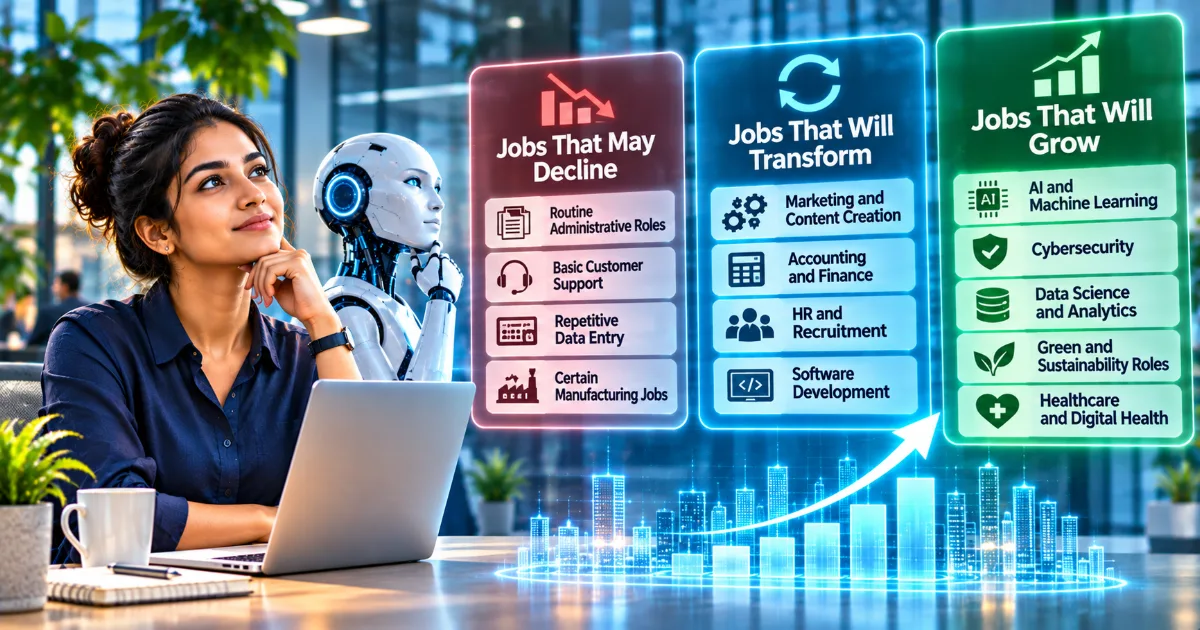
Some professionals may need to learn new tools. Others may transition into different roles or industries. Certain occupations may require additional training as automation changes existing responsibilities.
Employees who resist every change may struggle to remain competitive.
Why Adaptability Is Essential
Consider a professional who has worked in a particular industry for several years. The organization introduces new software that changes how daily responsibilities are completed.
One employee avoids the technology because learning it feels uncomfortable. Another explores the software, asks questions, completes training, and gradually develops confidence.
The second employee is more likely to adjust successfully because they approach change as a learning opportunity.
Adaptability does not mean accepting every organizational decision without question. It means being willing to understand new circumstances, evaluate alternatives, and respond constructively.
How to Develop Adaptability
Build a habit of learning unfamiliar tools and methods. Volunteer for projects outside your usual responsibilities. Accept constructive feedback and treat mistakes as opportunities to improve.
Develop the ability to work with people from different backgrounds and adapt to changing priorities.
Resilience also requires maintaining healthy routines, managing stress, and seeking support when necessary.
10. Leadership and Collaboration: Achieving Results Through People
Leadership is no longer limited to senior managers or executives.
Modern organizations need professionals who can take responsibility, coordinate activities, support colleagues, communicate priorities, and contribute to shared objectives.
Collaboration is equally important because complex business problems often require knowledge from multiple departments and professional backgrounds.
Leadership in an AI-Enabled Workplace
Future leaders will need to understand how technology affects employees, customers, and business operations.
They must make decisions about automation, allocate resources, communicate organizational changes, and ensure that technology is used responsibly.
For example, introducing AI into a customer support department may improve response times, but employees will need training and clear guidance about when automated systems should transfer inquiries to human representatives.
A good leader understands both operational efficiency and the human consequences of change.
Collaboration in Distributed Teams
Remote and hybrid workplaces require employees to coordinate work across different locations and time zones.
Teams need clear responsibilities, documented decisions, effective communication, and shared objectives.
Collaboration also involves respecting different viewpoints and combining individual strengths to achieve better results.
How to Develop Leadership and Collaboration Skills
Take responsibility for small projects and learn how to coordinate tasks.
Practice giving constructive feedback, managing disagreements, and supporting colleagues.
Develop the ability to delegate appropriately and communicate expectations clearly.
Leadership is not simply about controlling people. It is about helping individuals work together effectively and achieve meaningful outcomes.
Building a Balanced Skill Set for the Workplace of 2030
The ten skills discussed above should not be treated as completely separate capabilities.
They complement one another and become more powerful when developed together.
Consider a professional managing an AI-enabled business project. AI literacy helps the person understand available technologies. Digital literacy supports the use of software platforms. Critical thinking helps evaluate recommendations. Data literacy supports performance analysis. Communication allows the project requirements to be explained clearly. Creativity helps identify improvements. Problem-solving addresses unexpected challenges. Emotional intelligence supports relationships within the team. Adaptability helps manage changing requirements, while leadership and collaboration ensure that the project moves towards its objectives.
This combination illustrates why future workplace success will depend on a balanced skill set rather than one isolated qualification.
A professional does not need to master all ten skills immediately. Development should be gradual and connected to individual career goals.
A Practical Learning Roadmap for Students and Professionals
Preparing for the workplace of 2030 becomes easier when learning is organized into manageable stages.
During the first stage, individuals should evaluate their existing capabilities. They can identify their strongest skills, areas requiring improvement, and technologies relevant to their profession.
During the second stage, they should build foundational digital and AI literacy. Learning common productivity applications, digital collaboration, basic data analysis, and responsible AI usage can provide a useful starting point.
During the third stage, they should strengthen human capabilities. Communication, critical thinking, creativity, emotional intelligence, and problem-solving can be improved through practical projects, discussions, presentations, and teamwork.
During the fourth stage, individuals should apply their learning. They can develop a portfolio, complete professional projects, participate in internships, volunteer for new responsibilities, or build independent projects.
During the fifth stage, they should review their progress regularly. Technology and professional requirements will continue changing, so learning should remain an ongoing activity.
Students can follow this roadmap while completing their education. Working professionals can apply it alongside their existing responsibilities. Entrepreneurs can use it to improve their ability to manage technology, teams, and business operations.
The objective is not to collect as many certificates as possible. It is to develop capabilities that can be demonstrated through meaningful work.
Conclusion: Your Ability to Learn Will Become Your Greatest Professional Advantage
The workplace of 2030 will demand more than technical qualifications or years of professional experience. It will require individuals who can combine digital knowledge with human judgment, creativity, communication, and adaptability.
Artificial intelligence and automation will continue transforming industries, but these technologies will also create opportunities for people who understand how to use them effectively.
AI literacy will help professionals work with intelligent systems. Critical thinking will help them evaluate information. Digital literacy will prepare them for technology-enabled environments. Communication will strengthen collaboration. Creativity will encourage innovation. Problem-solving will support better decisions. Emotional intelligence will improve relationships. Data literacy will make information more useful. Adaptability will help individuals navigate change, while leadership and collaboration will enable teams to achieve meaningful results.
These skills are relevant not only to technology professionals but also to teachers, accountants, designers, doctors, managers, entrepreneurs, marketers, administrators, and students entering the job market.
The future will not necessarily belong to those who know the most about one particular technology. It will belong to people who remain curious, continue learning, understand the needs of others, and know how to turn knowledge into practical value.
The best time to prepare for the workplace of 2030 is not in 2030. It is today.
#FutureOfWork #SkillsFor2030 #FutureSkills #CareerDevelopment #DigitalTransformation