Understanding the Skills Gap in the Modern Workplace
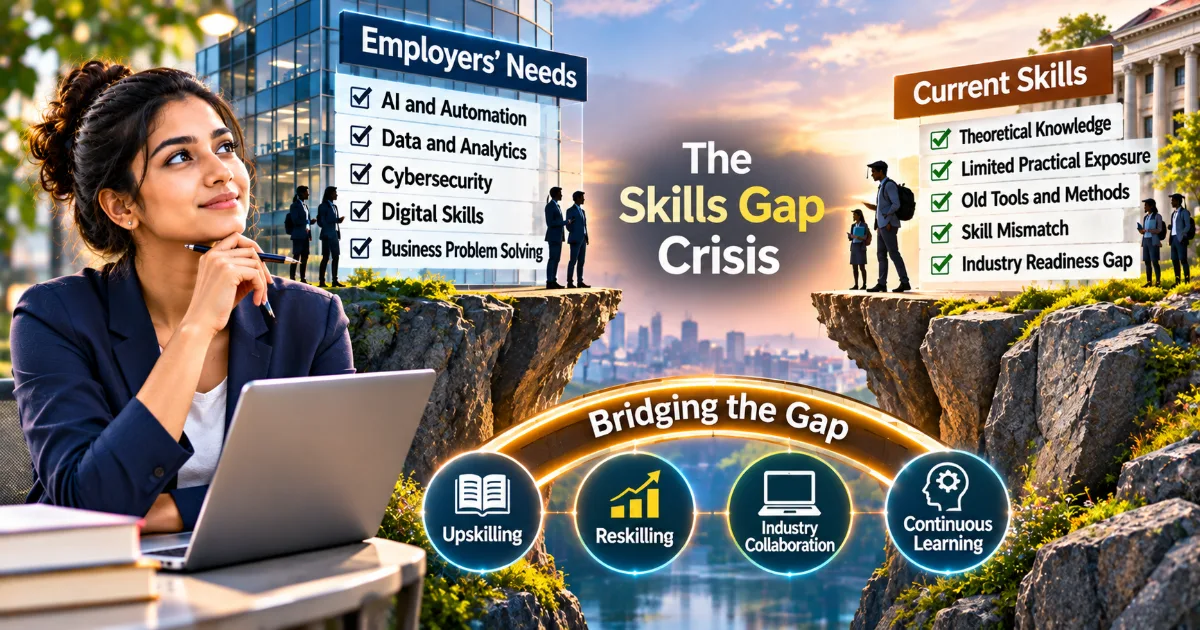
A skills gap exists when the capabilities available within a workforce do not sufficiently match the capabilities required to perform particular jobs or achieve organisational objectives.
This mismatch can occur at different levels. An individual employee may lack a specific technical skill required for a new responsibility. A company may struggle to recruit professionals with expertise in a rapidly developing field. An entire industry may face a shortage of workers who understand emerging technologies or specialised processes.
The skills gap is not limited to technical occupations. It can involve communication, critical thinking, project management, leadership, problem-solving, data interpretation, customer management, and the ability to adapt to changing working environments.
For example, a business may recruit a digital marketing executive who understands traditional advertising but has limited experience with marketing analytics, automation, customer data platforms, and AI-assisted campaign management. The candidate may be qualified for the position in general, but the organisation may require additional capabilities that were not part of the candidate's previous experience.
Continue Reading
Similarly, a software company may need developers who understand cloud infrastructure, application security, system integration, and AI-assisted development. A candidate with programming knowledge may still require training before becoming effective in that particular environment.
The skills gap should therefore be understood as a difference between current capabilities and required capabilities, rather than simply a shortage of educated people.
Why the Skills Gap Is Becoming a Major Business Challenge
The skills gap has existed for decades, but technological and economic changes are making it more visible. Businesses are introducing new tools, changing operational processes, and creating roles that did not previously exist. The workforce must adapt to these developments while organisations continue to meet customer expectations and business objectives.
Technology Is Evolving Faster Than Traditional Training
Digital technologies are developing continuously. Artificial intelligence, machine learning, cloud computing, cybersecurity, automation, and data analytics are changing how organisations operate.
Traditional education programmes may take years to design, approve, deliver, and update. By the time a course becomes widely available, some industry tools and practices may already have changed.
This does not mean academic education is no longer valuable. Strong fundamentals remain essential. However, educational institutions and employers must find ways to connect foundational knowledge with practical and current industry requirements.
Professionals also need to develop habits of continuous learning rather than depending entirely on the knowledge acquired during formal education.
Job Responsibilities Are Changing
A job title may remain the same while the responsibilities associated with it evolve.
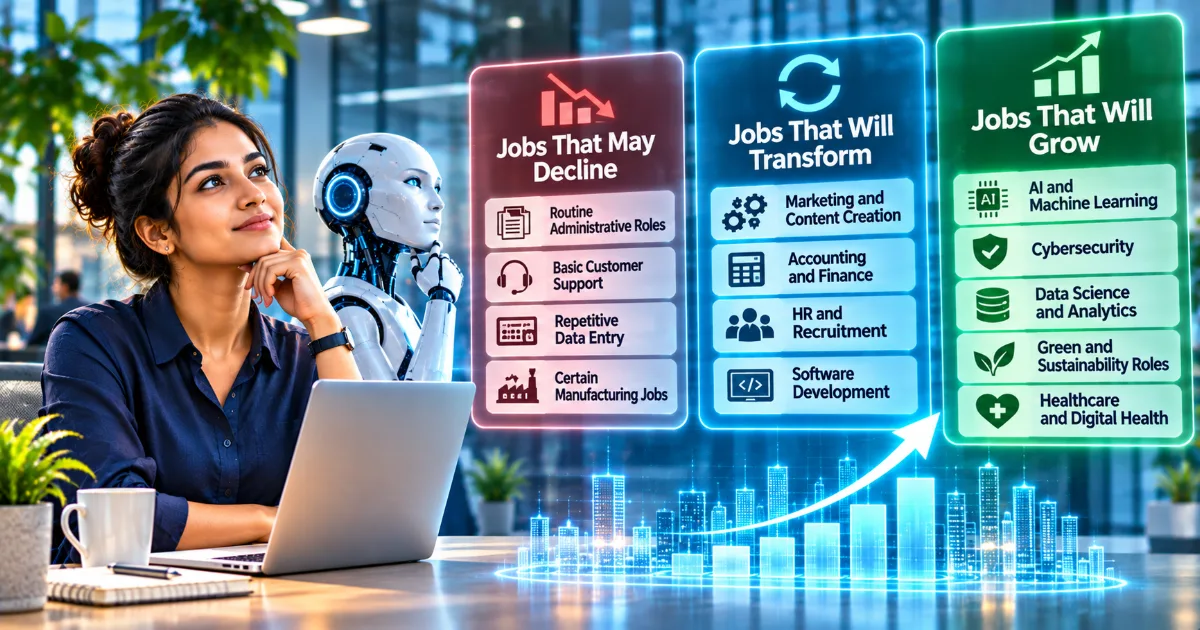
An accountant may increasingly use automated financial analysis tools. A marketing executive may need to understand customer data and AI-assisted campaign optimisation. A human resources professional may work with recruitment analytics and employee management platforms. A software developer may need to review AI-generated code and evaluate security risks.
When job responsibilities change faster than employee training, a skills gap can emerge inside an organisation.
Companies should therefore examine the actual tasks performed within roles rather than relying only on traditional job descriptions.
Businesses Need More Specialised Capabilities
As industries become more complex, organisations may require professionals with specific combinations of knowledge.
A company may not simply need a software developer. It may need someone experienced in cloud-native architecture, application security, distributed systems, and financial technology.
A healthcare organisation may need professionals who understand clinical operations as well as digital health platforms and data privacy.
A manufacturer may require employees who can work with robotics, industrial automation, predictive maintenance, and quality analytics.
These specialised requirements can make recruitment difficult, particularly when the relevant talent pool is limited.
Traditional Hiring Practices May Not Identify Real Capabilities
Some organisations rely heavily on academic qualifications, years of experience, and familiar job titles when evaluating candidates.
These factors can provide useful information, but they do not always reveal whether someone can perform the actual work.
A candidate may have strong practical abilities but lack a particular formal qualification. Another may have an impressive academic background but limited experience applying knowledge in a real business environment.
Employers that focus only on conventional indicators may overlook capable candidates while continuing to report difficulty finding talent.
Skills-based recruitment can help organisations evaluate candidates through practical assignments, work samples, demonstrations, structured interviews, and relevant evidence of professional capability.
The Difference Between a Skills Gap and a Talent Shortage
The terms skills gap and talent shortage are often used together, but they describe different problems.
A talent shortage generally refers to a situation in which there are not enough available candidates to fill the required number of positions.
A skills gap refers to a mismatch between the capabilities employers need and the capabilities candidates or existing employees possess.
For example, a company may receive hundreds of applications for a software development position but find that only a small number of applicants understand the required technology stack. This is a skills mismatch.
In another situation, a business may struggle to find enough qualified cybersecurity professionals in its recruitment market. This may represent a talent shortage.
The two challenges can occur simultaneously. An organisation may have too few candidates overall and may also find that many available candidates require additional training.
Understanding the difference matters because the solutions are not identical. A talent shortage may require expanding recruitment channels, improving compensation, or hiring from new geographical markets. A skills gap may require training, reskilling, better assessment methods, and stronger collaboration between education providers and employers.
The Major Causes of the Skills Gap
The skills gap does not have a single cause. It develops through a combination of educational, technological, organisational, economic, and individual factors.
A Disconnect Between Education and Industry Requirements
Educational institutions provide foundational knowledge, professional qualifications, and structured learning. However, employers often need people who can apply that knowledge in specific workplace situations.
A graduate may understand programming concepts but have limited experience developing, testing, securing, and maintaining a production application.
A business graduate may understand management theories but have little experience working with project management software, business analytics, or operational planning.
This difference between academic learning and workplace application can create difficulties for new entrants.
The solution is not to remove theory from education. Instead, institutions should connect theoretical knowledge with projects, internships, practical assignments, industry interaction, and problem-solving exercises.
Rapid Changes in Technology
New tools can change professional requirements quickly. An employee who was effective using an established software system may need to learn a new platform after an organisation upgrades its operations.
Technology can also create entirely new responsibilities. Businesses adopting AI may require professionals who understand data preparation, system integration, model evaluation, security, and governance.
When training programmes do not keep pace with these changes, employees may struggle to perform new tasks confidently.
Limited Access to Practical Experience
Some people complete courses without having opportunities to apply their knowledge to realistic problems.
Practical experience helps learners understand how different concepts work together. It also teaches them how to handle incomplete information, changing requirements, unexpected errors, deadlines, and collaboration.
Employers may hesitate to recruit candidates who have theoretical knowledge but cannot demonstrate how they would use it.
Internships, apprenticeships, project-based learning, simulations, and supervised workplace assignments can help address this problem.
Inadequate Investment in Employee Training
Some organisations expect employees to adapt to new technologies without providing sufficient learning opportunities.
Training may be limited to introductory presentations or occasional online courses. Employees may not receive the time, guidance, or practical support needed to apply new knowledge.
When companies introduce new systems without preparing their workforce, productivity can decline and resistance to change may increase.
Employee development should be treated as a continuing business investment rather than an optional activity.
Changing Employee Expectations
Workers increasingly value opportunities for professional development, meaningful responsibilities, flexibility, and career progression.
If organisations do not provide learning opportunities, capable employees may leave for employers that offer better development prospects.
This can create a cycle in which companies struggle to retain experienced workers while also facing difficulty recruiting new talent.
Career development and employee retention are therefore connected to the skills gap.
Geographic and Economic Inequality
Access to high-quality education, reliable internet, professional networks, and industry exposure varies across locations and economic backgrounds.
People living outside major employment centres may have fewer opportunities to access specialised training or practical experience.
This can create a mismatch between where talent is available and where businesses need it.
Remote learning, distributed work, local training partnerships, and accessible digital resources can help reduce some of these barriers, although infrastructure and affordability remain important considerations.
Technical Skills That Employers Increasingly Need
Technical requirements differ across industries, but several areas are influencing workforce development.
Artificial Intelligence and Automation
AI is becoming part of business operations in marketing, finance, software development, customer service, healthcare, manufacturing, education, and logistics.
Employers may need professionals who can identify suitable AI applications, use AI tools effectively, evaluate outputs, integrate systems, and manage risks.
Not every employee needs to develop AI models. However, understanding how AI affects everyday work is becoming useful across many professional roles.
Employees should learn the capabilities and limitations of the tools relevant to their responsibilities. They should also understand the importance of checking accuracy, protecting confidential information, and maintaining human oversight.
Data Analysis and Data Literacy
Organisations collect information from customers, transactions, operations, websites, applications, and internal systems.
Data professionals help transform this information into useful insights. Their work may involve data collection, cleaning, analysis, visualisation, statistical reasoning, and reporting.
However, data literacy is relevant beyond specialist analyst roles.
Managers, marketers, finance professionals, HR teams, and operations employees may all need to understand performance indicators and interpret reports.
The ability to distinguish meaningful patterns from misleading conclusions is an important workplace capability.
Cybersecurity
As businesses become more dependent on digital systems, protecting information and infrastructure becomes increasingly important.
Cybersecurity skills include network security, identity management, application security, cloud security, vulnerability assessment, incident response, and risk management.
Organisations need both specialised security professionals and employees who understand basic security responsibilities.
For example, employees should recognise suspicious messages, follow access-control procedures, protect credentials, and handle sensitive information appropriately.
Cloud Computing
Cloud platforms support applications, data storage, computing resources, collaboration, and business operations.
Cloud-related skills may include infrastructure management, deployment, networking, monitoring, security, cost optimisation, and system reliability.
Technology companies need specialists who can design and maintain cloud environments. Other businesses need employees who understand how cloud services affect their everyday workflows.
Software Development and System Integration
Businesses depend on applications that communicate with each other and support different operational processes.
Employers may seek developers who understand programming, databases, application architecture, testing, APIs, system integration, and secure development practices.
AI-assisted coding tools can accelerate development, but employees must still understand the systems they build and maintain.
Digital Operations and Automation
Many organisations are redesigning workflows through digital tools.
Employees may need to understand process mapping, workflow automation, software configuration, quality monitoring, and operational analytics.
These capabilities can help businesses reduce repetitive work while improving consistency and efficiency.
Human Skills That Are Becoming Equally Important
The skills gap is not only a technology problem. Employers also need people who can communicate, make decisions, collaborate, and manage complex situations.
Critical Thinking
Critical thinking allows employees to examine information, evaluate assumptions, recognise risks, and make reasoned decisions.
This is particularly important when working with AI-generated content, automated reports, and predictive systems.
Employees should not accept recommendations simply because they come from advanced technology. They must understand the evidence, context, and possible consequences.
Communication
Professionals need to explain ideas clearly, listen carefully, write effectively, and communicate with people who have different backgrounds and areas of expertise.
Technical employees may need to explain complex issues to non-technical managers. Customer-facing employees must understand concerns and provide accurate information. Team leaders need to communicate expectations and feedback.
Communication is a practical business skill, not merely a personal quality.
Problem-Solving
Workplace problems rarely arrive in a perfectly structured format.
Employees may need to identify the cause of an issue, collect relevant information, consider different approaches, and implement a suitable solution.
Problem-solving involves judgement, persistence, analysis, and the ability to learn from mistakes.
Adaptability
Employees may need to learn new systems, change responsibilities, work with different teams, or respond to new business requirements.
Adaptability helps people manage uncertainty without becoming dependent on familiar processes.
It also encourages professionals to treat learning as a continuous part of their careers.
Collaboration
Modern work often involves teams with different areas of expertise.
A successful project may require developers, designers, analysts, marketers, managers, and customers to contribute together.
Collaboration requires respect, clear communication, accountability, and an understanding of shared objectives.
Leadership and Decision-Making
Leadership is not limited to senior management.
Employees at different levels may need to take ownership of tasks, coordinate activities, guide colleagues, resolve disagreements, and make responsible decisions.
Organisations benefit when employees can demonstrate initiative while understanding the boundaries of their responsibilities.
Why Academic Qualifications Alone May Not Be Enough
Formal education remains important. It provides structured learning, recognised qualifications, subject foundations, and opportunities to develop intellectual discipline.
However, a qualification does not automatically demonstrate readiness for every workplace responsibility.
Employers increasingly need evidence that candidates can apply what they know.
A computer science graduate may understand algorithms and programming languages but still need practical experience with version control, testing, deployment, debugging, and team-based development.
A marketing graduate may understand consumer behaviour but need experience with analytics tools, campaign execution, customer relationship platforms, and performance measurement.
A finance graduate may understand accounting principles but need experience using financial software, preparing reports, and interpreting business results.
This is why practical learning should complement academic education.
Students should work on projects, participate in internships, solve real-world problems, and develop portfolios that demonstrate their abilities.
Employers should also recognise that practical competence can be developed through alternative learning routes, including vocational education, apprenticeships, professional certifications, and self-directed projects.
The objective should be to assess what a person can actually contribute rather than relying exclusively on the institution or qualification listed on a CV.
The Skills Gap in India
India has a large young workforce, a growing technology sector, a broad education system, and expanding opportunities across digital and traditional industries.
These factors create significant potential. However, the transition from education to employment remains challenging for many people.
The issue is not simply the number of graduates entering the labour market. It is also the alignment between education, practical experience, employer expectations, and changing industry requirements.
The Graduate Employability Challenge
Graduates may complete degrees without having sufficient exposure to the tools and processes used by employers.
Some may have limited experience working on collaborative projects, presenting ideas, solving practical business problems, or communicating with customers.
This can make the transition into professional roles difficult.
Institutions can improve employability by integrating practical assignments, internships, industry projects, communication training, and career guidance into academic programmes.
Students should also take responsibility for building demonstrable skills before graduation.
The Demand for Digital Skills
India's technology and services industries require professionals across software development, cloud computing, cybersecurity, data analysis, AI, digital marketing, and business process automation.
However, demand for these capabilities can vary significantly across locations and industries.
Training programmes should be aligned with realistic employment opportunities rather than focusing only on popular technology topics.
A learner should understand the fundamentals of a chosen field and develop the ability to apply them through projects.
Opportunities Beyond Major Cities
Digital learning and remote work can help people outside major technology centres access knowledge and professional opportunities.
A student in a smaller city can learn programming, digital design, data analysis, or marketing through online resources and practical projects.
A professional can build a portfolio and connect with organisations that recruit remotely.
However, access to reliable connectivity, suitable equipment, mentoring, and professional networks remains important.
Expanding these resources can help make employment opportunities more accessible.
The Role of Vocational and Skill-Based Education
Not every career requires a traditional university pathway.
Technical trades, healthcare support, manufacturing, logistics, electrical work, repair services, hospitality, and many other occupations depend on practical capabilities.
Vocational education and apprenticeships can help learners develop job-specific skills through structured training and workplace experience.
These pathways deserve recognition as valuable routes into employment.
Continuous Workforce Development
As industries change, existing employees also need opportunities to update their capabilities.
Companies can support workers through internal training, mentoring, professional certifications, cross-functional projects, and reskilling programmes.
This is particularly important for employees whose current responsibilities are affected by automation or digital transformation.
How Students Can Bridge the Skills Gap Before Entering the Job Market
Students can improve their career readiness by developing practical abilities alongside formal education.
Understand the Requirements of Your Target Industry
Before choosing courses or certifications, students should research the roles they want to pursue.
They should examine job descriptions, common responsibilities, required tools, professional expectations, and the skills employers repeatedly mention.
This helps learners distinguish essential capabilities from temporary trends.
For example, a student interested in web development should understand programming fundamentals, databases, application development, testing, and version control rather than learning only one fashionable framework.
Build a Practical Portfolio
A portfolio provides evidence of what a student can do.
It may include software projects, research work, design examples, business case studies, data analysis, writing samples, or practical assignments.
Each project should explain the problem, the approach taken, the tools used, and the result achieved.
A portfolio does not need to contain dozens of projects. A smaller number of well-executed examples can demonstrate genuine understanding.
Participate in Internships and Apprenticeships
Internships and apprenticeships provide exposure to workplace expectations.
Students can learn how teams communicate, how projects are managed, how deadlines are handled, and how professional responsibilities differ from classroom assignments.
Even a short practical experience can help learners identify areas where they need further development.
Improve Communication and Presentation Skills
Students should practise writing professional emails, explaining projects, participating in discussions, and presenting their ideas.
These skills can influence interviews, teamwork, client interactions, and career progression.
Technical knowledge becomes more valuable when a person can explain it clearly.
Learn to Use AI as a Learning Assistant
Students can use AI tools to explore concepts, generate practice questions, understand errors, and receive feedback on their work.
However, they should verify important information and make sure they understand the final result.
The objective is to improve independent capability, not simply produce assignments faster.
How Working Professionals Can Close Their Skills Gaps
Professionals who are already employed may have an advantage because they understand their industry, customers, processes, and organisational challenges.
They can build on this experience while developing additional capabilities.
Conduct a Personal Skills Assessment
Start by listing the skills required in your current role and comparing them with your existing capabilities.
Consider technical knowledge, communication, analytical abilities, management responsibilities, and industry-specific expertise.
Identify which capabilities are essential for current performance and which may become important as the role evolves.
This creates a practical learning plan.
Choose Learning Goals Based on Career Direction
Not every new technology or professional skill is relevant to every career.
A finance professional may benefit from advanced spreadsheet skills, data analysis, financial modelling, and automation. A marketing professional may focus on analytics, customer data, AI-assisted workflows, and campaign measurement.
A project manager may prioritise stakeholder communication, risk management, digital project tools, and leadership.
Learning should be connected to the responsibilities and opportunities a professional wants to pursue.
Apply New Knowledge at Work
Learning becomes more valuable when it is applied.
Employees can volunteer for projects, improve existing processes, experiment with approved tools, and collaborate with colleagues who have different expertise.
Practical application helps turn knowledge into professional capability.
Build Evidence of Improvement
Professionals should document the results of their learning.
For example, they may demonstrate how a new automation reduced processing time, how a reporting improvement increased accuracy, or how a redesigned workflow improved customer response.
Measurable outcomes can support performance discussions, promotion opportunities, and future job applications.
Seek Feedback and Mentorship
Managers, colleagues, mentors, and industry professionals can help identify areas that require improvement.
Constructive feedback may reveal weaknesses that individuals do not recognise themselves.
Mentorship can also help professionals understand changing industry expectations and make better career decisions.
What Employers Can Do to Close the Skills Gap
Businesses cannot solve the skills gap through recruitment alone. They need to develop existing employees, improve hiring practices, and create a workplace environment where learning is encouraged.
Create a Skills-Based Workforce Strategy
Organisations should identify the capabilities required to achieve their future objectives.
This involves understanding current workforce strengths, identifying emerging requirements, and assessing which roles may change.
A skills-based strategy helps companies plan recruitment and training more effectively.
Invest in Upskilling and Reskilling
Upskilling means improving existing capabilities so that employees can perform their current roles more effectively or take on additional responsibilities.
Reskilling means developing different capabilities that prepare employees for new roles or career directions.
For example, a customer support employee may be upskilled in data analysis and customer relationship management. An administrative employee whose routine responsibilities are automated may be reskilled for operations coordination or process management.
These programmes can help companies retain valuable experience while preparing their workforce for changing requirements.
Improve Recruitment Assessments
Employers should evaluate candidates through methods that demonstrate relevant capabilities.
Practical assignments, structured interviews, work samples, technical demonstrations, and problem-solving exercises can provide useful evidence.
Recruitment teams should also avoid unnecessary requirements that exclude capable candidates without improving job performance.
Develop Internal Mobility Opportunities
Employees may already possess skills that can be applied to other departments or responsibilities.
Internal mobility allows organisations to identify this potential and provide training for new roles.
This can reduce recruitment costs, preserve institutional knowledge, and create clearer career development opportunities.
Encourage Continuous Learning
Learning should be supported through realistic workloads, access to training resources, mentoring, knowledge-sharing sessions, and opportunities to apply new skills.
Employees are more likely to develop capabilities when learning is connected to actual responsibilities and recognised as part of professional growth.
Measure Training Outcomes
Companies should not measure learning success only by the number of courses completed.
They should evaluate whether employees can apply new knowledge, improve performance, reduce errors, manage new responsibilities, and contribute to business objectives.
Training should produce practical improvements rather than simply increase completion statistics.
The Role of Educational Institutions in Preparing Future Talent
Educational institutions have an important responsibility in reducing the distance between academic learning and workplace requirements.
They should continue to teach strong fundamentals while helping students understand how knowledge is applied in professional environments.
Strengthen Industry Collaboration
Institutions can work with employers to understand changing skill requirements and design relevant learning experiences.
Industry experts can contribute through guest lectures, practical workshops, case studies, internships, and project supervision.
These partnerships help students understand real business problems before entering the workforce.
Introduce Project-Based Learning
Project-based learning allows students to apply multiple concepts to a single practical challenge.
For example, students studying computer science can develop an application that includes database design, security, user experience, testing, and documentation.
Business students can analyse a real organisational problem and prepare recommendations supported by evidence.
Such projects develop both technical and professional skills.
Support Career Guidance
Students need information about different career paths, industry expectations, and the capabilities required for specific roles.
Career guidance should begin before the final year of education.
Institutions can help students understand how their subjects connect with employment opportunities and what additional experience may be useful.
Recognise Alternative Learning Pathways
Professional capabilities can be developed through formal degrees, vocational programmes, certifications, apprenticeships, industry projects, and independent learning.
Educational institutions and employers should evaluate these pathways fairly.
A strong combination of knowledge and practical evidence may be more useful than a qualification alone.
Upskilling and Reskilling: Two Essential Strategies for the Future
Upskilling and reskilling are central to workforce development because they help employees respond to changing responsibilities.
Understanding Upskilling
Upskilling focuses on improving existing abilities.
A graphic designer may learn advanced prototyping and design systems. A finance professional may develop data visualisation and automation skills. A manager may improve digital leadership and analytics capabilities.
The objective is to increase effectiveness within a current professional direction.
Understanding Reskilling
Reskilling prepares an individual for a different role or area of work.
For example, an employee whose routine data-processing responsibilities are being automated may learn business analysis, quality management, or workflow automation.
A traditional IT support professional may develop cloud administration or cybersecurity skills.
Reskilling requires more than learning a new tool. It often involves understanding a different set of responsibilities and applying knowledge in a new context.
Choosing the Right Learning Approach
Employees should choose learning programmes based on their career goals, current knowledge, and available opportunities.
Short courses can help develop specific capabilities. Certifications may provide structured evidence of knowledge in certain fields. Practical projects demonstrate application. Mentorship can support professional judgement.
No single learning method is sufficient for every situation.
A strong development plan combines relevant knowledge with practical application and feedback.
The Importance of Soft Skills in Closing the Skills Gap
Technical training is important, but organisations also need employees who can work effectively with people.
A technically capable employee may still struggle if they cannot communicate clearly, understand customer needs, collaborate with colleagues, or manage competing priorities.
Soft skills should not be treated as optional additions to technical education.
Emotional Intelligence
Emotional intelligence helps employees understand their own responses and recognise the perspectives of others.
It supports customer relationships, leadership, teamwork, negotiation, and conflict resolution.
Time Management
Employees must prioritise responsibilities, manage deadlines, and organise work effectively.
This is especially important in remote and hybrid environments where direct supervision may be limited.
Professional Responsibility
Organisations need people who can take ownership of tasks, communicate problems honestly, respect confidentiality, and follow professional standards.
Reliability and accountability influence trust across the workplace.
Negotiation and Relationship Management
Professionals often need to discuss expectations, resolve disagreements, coordinate work, and build relationships with customers and colleagues.
These capabilities can improve project outcomes and support long-term career development.
How AI Can Help Identify and Reduce Skills Gaps
Artificial intelligence can support workforce planning by helping organisations analyse job requirements, employee capabilities, training needs, and emerging industry trends.
However, these systems should support human decisions rather than replace them.
Workforce Skills Mapping
Organisations can use digital systems to create inventories of employee capabilities.
This may help managers identify which skills are available internally and where additional recruitment or training is required.
For example, a company planning to introduce a new analytics platform may discover that some employees already have relevant data experience and could be trained for advanced responsibilities.
Personalised Learning Recommendations
AI-powered learning platforms can recommend training based on an employee's current knowledge, career objectives, and role requirements.
This may help employees find relevant learning resources more efficiently.
However, recommendations should be reviewed to ensure that they are accurate, appropriate, and aligned with real career opportunities.
Analysing Job Requirements
AI tools can help recruitment and workforce planning teams identify common skills across job descriptions and detect changing requirements.
This can provide useful insights into emerging capabilities.
Organisations must still check the quality of the information and avoid assuming that every keyword in a job description represents an essential requirement.
Risks of Automated Skills Assessment
AI-based assessments may produce inaccurate or biased conclusions.
A system may misunderstand experience, undervalue alternative qualifications, or make assumptions based on incomplete data.
Employees should have appropriate opportunities to review their records, explain their experience, and challenge incorrect assessments.
Human judgement remains essential when evaluating professional capability.
Measuring Whether the Skills Gap Is Closing
Organisations, educational institutions, and individuals need ways to evaluate progress.
Without measurement, training programmes can become disconnected from actual workforce needs.
Measure Capability Development
Companies should assess whether employees have developed the knowledge and abilities targeted by training.
This can involve practical demonstrations, project outcomes, structured assessments, and manager feedback.
Track Internal Mobility
An increase in employees moving into new responsibilities may indicate that reskilling programmes are creating useful opportunities.
Organisations should also examine whether employees are receiving suitable support during these transitions.
Evaluate Recruitment Quality
Companies can review whether new employees possess the capabilities required for their roles and how much additional training is needed after recruitment.
This can help improve job descriptions, candidate assessments, and onboarding programmes.
Examine Business Outcomes
Training should be connected to operational results.
Relevant measures may include improved productivity, fewer errors, better customer satisfaction, faster project delivery, and improved quality.
The most useful measurements depend on the purpose of the programme.
Building a Future-Ready Workforce: A Practical Roadmap
Closing the skills gap requires coordinated action rather than isolated training activities.
Students need practical learning opportunities. Professionals need accessible development pathways. Employers need better workforce planning. Educational institutions need stronger connections with industry. Governments and industry bodies can support wider access to relevant training and employment opportunities.
A practical approach can begin with five priorities.
First, identify the capabilities required for the next stage of work. Organisations and individuals should understand how technology and business changes affect professional responsibilities.
Second, assess current capabilities honestly. A clear understanding of existing strengths and weaknesses helps avoid unnecessary training.
Third, prioritise skills that create practical value. Learning should be based on real requirements rather than trends alone.
Fourth, provide opportunities to apply new knowledge. Projects, internships, workplace assignments, and demonstrations help turn learning into capability.
Fifth, review progress continuously. Skills requirements change, so workforce development should be an ongoing process.
Conclusion: The Future Belongs to Those Who Keep Learning
The skills gap is one of the defining workforce challenges of the modern economy. Businesses need people who can work with emerging technologies, solve complex problems, communicate effectively, and adapt to changing responsibilities. Workers need opportunities to develop these capabilities, while educational institutions must connect learning more closely with practical applications.
The solution is not to abandon traditional education or assume that every person must become a technology specialist. Strong foundations remain valuable. What must change is the relationship between education, professional experience, workplace training, and continuous development.
Students should build practical portfolios and understand industry requirements. Working professionals should identify their skills gaps and pursue relevant upskilling or reskilling. Employers should invest in people, improve recruitment assessments, and create opportunities for internal mobility. Educational institutions should strengthen industry collaboration and practical learning.
Artificial intelligence and automation will continue to transform occupations, but human capabilities such as judgement, communication, creativity, responsibility, and problem-solving will remain important.
The most sustainable career strategy is not to depend on one qualification, one technology, or one set of responsibilities throughout an entire working life. It is to remain curious, develop useful capabilities, apply knowledge in real situations, and adapt as opportunities change.
The future of work will reward organisations that develop talent and individuals who take ownership of their learning. Closing the skills gap is therefore not only a recruitment challenge. It is a shared responsibility and a long-term investment in economic opportunity.
#FutureOfWork #SkillsGap #Upskilling #Reskilling #CareerDevelopment