The Changing Meaning of a Successful Workplace
The future of work is being shaped by technological innovation, global collaboration, changing employee expectations, and new approaches to leadership. Organisations are investing in artificial intelligence, automation, digital infrastructure, flexible working arrangements, and continuous learning to remain competitive. However, one important factor behind sustainable business success is sometimes treated as a secondary consideration: the ability to build a workplace where people with different backgrounds, experiences, identities, abilities, and perspectives can contribute meaningfully.
Workplace diversity, equity, and inclusion, commonly referred to as DEI, have become important topics in modern business strategy. They influence how organisations attract talent, develop employees, understand customers, solve problems, make decisions, and respond to social and economic change. A company may employ people from many backgrounds and still fail to create an environment where everyone has a fair opportunity to participate. Representation alone does not automatically produce belonging, equal opportunity, or meaningful influence.
As businesses become more international and teams increasingly collaborate across locations, cultures, generations, and professional disciplines, inclusive workplace practices are becoming more relevant. Organisations need people who can understand different customer needs, challenge assumptions, communicate across cultural boundaries, and approach difficult problems from multiple perspectives. These capabilities are particularly valuable in an economy where innovation and adaptability can determine whether a business succeeds or falls behind.
Diversity, equity, and inclusion should not be understood only as human resources initiatives or short-term corporate campaigns. They are connected to organisational culture, leadership behaviour, recruitment, career development, employee experience, product design, and business accountability. When these principles are integrated into everyday operations, they can help create workplaces that are fairer, more collaborative, and better prepared for change.
Continue Reading
This article explores what workplace diversity, equity, and inclusion mean, why they matter for the future of business, how organisations can put them into practice, and what employees and leaders can do to build more inclusive working environments.
Understanding Diversity, Equity, and Inclusion
Although diversity, equity, and inclusion are frequently discussed together, each term describes a different aspect of the workplace. Understanding these distinctions is important because an organisation cannot create meaningful change by treating all three concepts as interchangeable.
What Is Workplace Diversity?
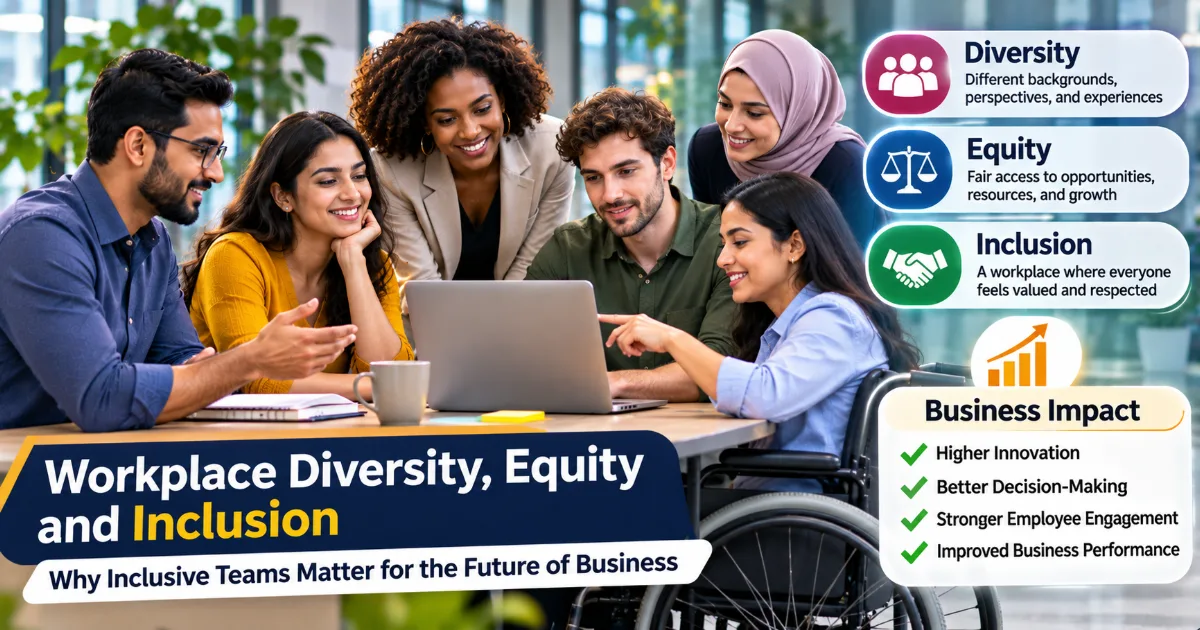
Workplace diversity refers to the presence of people with different characteristics, backgrounds, experiences, and perspectives within an organisation. These differences may include age, gender, disability, ethnicity, language, nationality, socioeconomic background, education, professional experience, working style, and ways of thinking.
Diversity also includes differences that are not immediately visible. Two employees may appear to have similar backgrounds but bring very different experiences, problem-solving approaches, communication preferences, and professional knowledge. One person may have worked in a large multinational organisation, while another may have built a career in a small business or startup. Their different experiences can influence how they approach a business challenge.
A diverse workforce can help organisations understand a wider range of people and situations. For example, a technology company developing a digital banking application may benefit from involving employees who understand the needs of first-time users, older customers, people with disabilities, small business owners, and customers who are less familiar with digital services. A team that reflects a broader range of experiences may identify problems that a more uniform group could overlook.
However, diversity is primarily about who is represented. It does not automatically guarantee that employees are treated fairly or that their contributions are heard. An organisation may have a diverse workforce while maintaining practices that favour only a limited group of employees. This is why equity and inclusion are equally important.
What Is Workplace Equity?
Equity means recognising that employees may have different circumstances, needs, and barriers, and ensuring that they have fair access to opportunities and resources. It focuses on fairness rather than assuming that giving everyone exactly the same support will always produce fair outcomes.
Equality and equity are related, but they are not identical. Equality generally means providing the same treatment or resources. Equity considers whether people have the support they need to access opportunities and participate effectively.
For example, a company may provide the same training programme to every employee. However, an employee with a disability may require accessible learning materials or assistive technology to participate fully. An employee working in a different time zone may need an alternative session. Providing reasonable adjustments does not give these employees an unfair advantage. It helps remove barriers that could prevent them from accessing the same development opportunity.
Equity also matters in recruitment, promotion, compensation, performance evaluation, leadership development, and access to important assignments. Organisations need to examine whether their policies and processes create fair opportunities or unintentionally favour certain groups.
What Is Workplace Inclusion?
Inclusion refers to creating an environment where employees feel respected, welcomed, valued, and able to contribute. It is reflected in everyday interactions, leadership decisions, communication practices, meeting behaviour, workplace policies, and organisational culture.
An inclusive workplace does not require employees to think alike or agree on every issue. Instead, it creates conditions in which people can express different perspectives without being dismissed or unfairly treated. Employees should be able to raise concerns, ask questions, share ideas, and participate in decisions that affect their work.
Consider a project meeting in which several employees have valuable suggestions. If the manager consistently listens to only the most senior or outspoken participants, other team members may stop contributing. The team might technically be diverse, but its working environment is not fully inclusive. An inclusive manager creates opportunities for everyone to participate and ensures that contributions are evaluated on their merit.
Why All Three Principles Must Work Together
Diversity, equity, and inclusion support one another. Diversity brings different people and perspectives into an organisation. Equity helps ensure that employees have fair access to opportunities and resources. Inclusion creates an environment where those employees can participate, develop, and contribute.
A company that focuses only on diversity may improve representation without changing the employee experience. A company that focuses only on inclusion may create a positive culture but fail to address unequal access to recruitment or advancement. A company that focuses only on equity may introduce fairer policies without ensuring that employees feel respected in everyday interactions.
A strong workplace strategy considers all three dimensions and connects them to measurable organisational practices.
Why DEI Matters for the Future of Business
The business environment is becoming more complex. Organisations serve customers with different expectations, compete across international markets, work with distributed teams, and respond to rapid technological change. A workforce that can understand different perspectives and collaborate effectively can help businesses navigate this complexity.
Supporting Innovation and Creative Problem-Solving
Innovation often begins when someone questions an existing assumption or identifies a problem from a different perspective. Teams with varied experiences may approach the same challenge in different ways, increasing the range of ideas available for consideration.
For example, a company designing an online education platform may have engineers who focus on technical performance, educators who understand learning outcomes, designers who consider usability, and employees who can identify accessibility challenges. Each perspective contributes a different part of the solution.
A diverse team does not automatically become innovative. If employees are discouraged from challenging established ideas, the potential benefits of different perspectives may remain unused. Inclusion is therefore essential. People need to feel that their ideas will receive fair consideration, even when those ideas challenge existing practices.
Improving Business Decision-Making
Business decisions can be affected by assumptions, incomplete information, and personal experiences. When decision-makers have similar backgrounds and viewpoints, they may share blind spots without recognising them.
A team with different professional and personal experiences can examine a decision from more angles. This can help identify risks, question unsupported assumptions, and consider how a strategy may affect different customers or employees.
For instance, a retail company planning to expand into a new market could benefit from employees who understand local customer behaviour, regional languages, accessibility requirements, and cultural expectations. Their contributions can help the organisation evaluate whether its product, marketing, and customer support strategies are appropriate.
The objective is not to make every decision through endless discussion. It is to improve the quality of analysis before important decisions are made.
Strengthening Employee Engagement and Retention
Employees are more likely to contribute positively when they believe their work is valued and that they have a fair opportunity to grow. A workplace where people regularly experience exclusion, disrespect, or unequal treatment can damage trust and reduce engagement.
When employees feel comfortable sharing ideas and raising concerns, organisations may identify problems earlier. People are also more likely to participate in learning, collaboration, and improvement activities when they believe that their contributions matter.
Retention is especially important in industries where skilled employees are difficult to replace. Losing experienced people can create recruitment costs, disrupt projects, reduce institutional knowledge, and increase pressure on remaining employees. Inclusive management practices can support a healthier employee experience, although they must be accompanied by fair compensation, career opportunities, good management, and reasonable working conditions.
Understanding Customers and Expanding Markets
Customers are not a single, uniform group. They differ in age, language, income, location, ability, digital confidence, cultural expectations, and purchasing behaviour.
Employees with varied experiences can help businesses understand customer needs that might otherwise be overlooked. A product team developing a healthcare application, for example, should consider users with different levels of digital literacy, different accessibility needs, and different experiences of healthcare systems.
This can influence product design, customer service, communication, and marketing. It may also help organisations identify underserved customer groups and develop more relevant solutions.
A business should not assume that one employee can represent an entire demographic group. Customer research, usability testing, accessibility reviews, and direct feedback remain necessary. Workforce diversity can strengthen these activities, but it cannot replace them.
Building Organisational Resilience
Resilient organisations are able to respond to disruption, learn from mistakes, and adapt their operations. Teams that encourage constructive disagreement and information-sharing may be better equipped to recognise emerging problems.
During a major operational change, employees may identify different risks depending on their responsibilities and experiences. A customer support representative may notice repeated complaints, an engineer may identify a technical weakness, and a regional manager may understand local implementation challenges. An inclusive organisation creates channels through which these observations can reach decision-makers.
Resilience depends on more than diversity, but inclusive communication can help organisations use their available knowledge more effectively.
The Major Dimensions of Workplace Diversity
A meaningful DEI strategy should recognise that diversity has multiple dimensions. Organisations should avoid reducing the topic to a single characteristic or treating employees as representatives of fixed categories.
Gender Diversity
Gender diversity involves ensuring fair opportunities and respectful treatment for people of different genders. It includes recruitment, compensation, career progression, leadership representation, workplace safety, parental support, and protection from discrimination and harassment.
Organisations can examine whether promotion rates, pay structures, access to high-visibility assignments, and leadership opportunities are fair. They should also consider whether workplace policies support employees with different caregiving responsibilities and life circumstances.
Gender diversity is not achieved simply by increasing the number of women in entry-level positions. Career development and leadership opportunities must also be accessible.
Age and Generational Diversity
Modern workplaces often bring together employees at different career stages. Early-career professionals may bring familiarity with emerging digital platforms and new working habits. Experienced employees may contribute institutional knowledge, professional judgement, and an understanding of long-term business relationships.
Generational stereotypes can damage collaboration. It is inaccurate to assume that younger employees are always more technologically capable or that older employees are resistant to change. Skills, interests, and working preferences vary among individuals.
Organisations can encourage knowledge-sharing through mentoring, reverse mentoring, cross-functional projects, and learning programmes that allow employees to exchange expertise.
Cultural and Linguistic Diversity
Globalisation and remote work have increased collaboration across countries, regions, and cultures. Employees may have different communication styles, holidays, languages, social expectations, and approaches to teamwork.
Cultural diversity can improve an organisation's understanding of international markets and customer expectations. However, teams need clear communication practices to avoid misunderstandings. Managers should not assume that silence means agreement or that a particular communication style reflects an employee's competence.
Providing clear documentation, encouraging questions, and allowing reasonable flexibility around cultural and regional requirements can support collaboration.
Disability Inclusion and Accessibility
Disability inclusion means ensuring that employees with disabilities can access workplaces, technology, information, development opportunities, and career progression. Accessibility should be considered in physical offices, digital tools, recruitment processes, meetings, and employee support systems.
Examples include accessible websites and internal software, captioned video meetings, screen-reader-compatible documents, adjustable workstations, accessible entrances, and reasonable workplace adjustments.
Accessibility benefits more people than those who request formal accommodations. Clear captions can help employees working in noisy environments, while well-structured documents can make information easier for everyone to understand.
Organisations should consult employees about their needs rather than making assumptions about what support they require.
Socioeconomic and Educational Diversity
Employees may enter the workplace through different educational and economic pathways. Some have access to prestigious institutions and extensive professional networks, while others develop their skills through vocational training, online courses, apprenticeships, self-directed learning, or practical experience.
Employers that rely too heavily on narrow educational requirements may overlook capable candidates. Skills-based hiring can help organisations assess what applicants can actually do rather than using educational background as the only indicator of potential.
This approach can widen access to employment while helping businesses discover talent from a broader range of sources.
Neurodiversity and Different Working Styles
Neurodiversity recognises that people may think, learn, process information, communicate, and approach tasks in different ways. These differences can include autism, attention-related differences, dyslexia, and other forms of neurological variation.
An inclusive organisation avoids assuming that every employee must work, communicate, or demonstrate competence in exactly the same way. Clear instructions, predictable processes, flexible communication options, and thoughtful meeting practices can help employees perform effectively.
Managers should focus on individual strengths, responsibilities, and support requirements rather than relying on stereotypes or making assumptions based on a diagnosis.
Common Challenges That Prevent Organisations from Becoming Inclusive
Many organisations publicly support diversity and inclusion but struggle to translate their commitments into daily practice. The gap between stated values and employee experience can create frustration and reduce trust.
Unconscious Bias in Recruitment and Promotion
Unconscious bias refers to automatic assumptions that can influence how people evaluate others. Recruiters and managers may favour candidates whose communication styles, educational backgrounds, interests, or professional experiences resemble their own.
This can affect interview assessments, performance reviews, project assignments, and promotion decisions. A candidate may be judged as a better cultural fit because they share familiar characteristics with the interviewer, even when another applicant has stronger evidence of relevant skills.
Structured interviews, consistent evaluation criteria, diverse interview panels, and documented promotion standards can reduce opportunities for arbitrary judgement.
Tokenism and Superficial Representation
Tokenism occurs when an organisation includes a small number of people from underrepresented groups primarily to create an appearance of diversity without giving them meaningful influence or support.
For example, an employee may be repeatedly asked to speak on behalf of an entire demographic group or participate in promotional campaigns while being excluded from important business decisions.
Representation should be accompanied by access to responsibility, leadership opportunities, professional development, and decision-making. Employees should not be expected to carry the responsibility for changing an organisation simply because they belong to an underrepresented group.
Unequal Access to Career Opportunities
Some employees may receive more opportunities to work on high-profile projects, interact with senior leaders, or attend professional events. These opportunities can influence promotion and career development.
If managers distribute important assignments informally through personal relationships, employees outside established networks may be overlooked. Transparent processes and regular reviews of opportunity allocation can help organisations identify and address these patterns.
Exclusion in Meetings and Everyday Communication
Workplace exclusion is not always the result of formal policies. It can occur through repeated interruptions, dismissive comments, inaccessible meeting arrangements, jokes that target personal characteristics, or decisions made without consulting affected employees.
Managers can improve meeting inclusion by sharing agendas in advance, allowing different ways to contribute, managing interruptions, documenting decisions, and providing accessible participation options.
Resistance to Organisational Change
Some employees may view DEI initiatives as unnecessary, unfair, or disconnected from business priorities. Others may worry that changes will create additional administrative work or limit established practices.
Organisations should respond with clear explanations, practical examples, transparent policies, and opportunities for constructive discussion. Leaders should explain the problems they are trying to solve and how changes will be evaluated.
Effective DEI work should not rely on slogans or assumptions about employee motives. It should focus on fair processes, respectful behaviour, and evidence of workplace outcomes.
Building an Inclusive Workplace: Practical Strategies for Employers
Creating an inclusive workplace requires consistent action across the employee lifecycle. A policy document cannot produce meaningful change if everyday management practices contradict its principles.
Make Recruitment More Accessible and Fair
Recruitment is one of the first opportunities to demonstrate organisational commitment to fairness. Job descriptions should focus on essential skills and responsibilities rather than unnecessary requirements that may discourage qualified applicants.
Employers can broaden recruitment channels, use consistent interview questions, assess candidates against defined criteria, and provide accessible application processes. They should also review whether their selection methods unintentionally favour certain educational or professional backgrounds.
Where practical, organisations can offer candidates clear information about interview formats, assessment expectations, and accessibility arrangements.
Create Transparent Career Development Processes
Employees should understand how performance is evaluated, what is required for promotion, and how they can access development opportunities. Managers should communicate expectations clearly and provide useful feedback.
Organisations can review promotion outcomes, training participation, compensation structures, and access to leadership development. If patterns suggest that some groups are consistently overlooked, leaders should investigate the reasons and improve the relevant processes.
Transparency does not mean every employee will have the same career path. It means that decisions should be based on clear, relevant, and consistently applied criteria.
Train Managers to Lead Inclusive Teams
Managers influence the daily experience of employees. Their behaviour can determine whether people feel comfortable sharing concerns, asking questions, or proposing different ideas.
Training can help managers recognise bias, conduct fair performance conversations, manage conflict, support accessibility, and respond appropriately to discrimination or harassment. However, training should be supported by accountability and practical workplace systems.
Managers should also learn to recognise that employees may need different forms of communication and support. A single management style may not work equally well for every team member.
Establish Clear Policies Against Discrimination and Harassment
Employees need to know what behaviour is unacceptable, how concerns can be reported, and what happens after a complaint is raised. Policies should be understandable, accessible, and applied consistently.
Organisations should provide confidential or appropriately protected reporting channels, explain investigation procedures, and protect employees from retaliation. Leaders must take complaints seriously and ensure that concerns are handled fairly.
A workplace becomes safer when employees trust that problems will be addressed rather than ignored or minimised.
Support Flexible and Accessible Working Arrangements
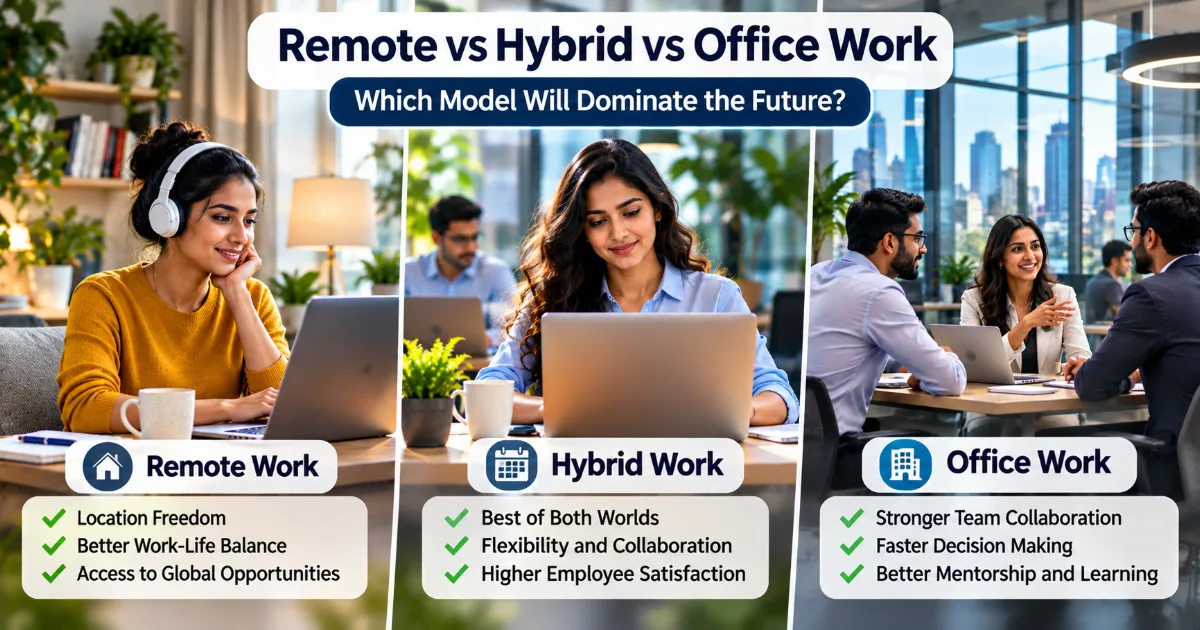
Flexible work can help employees manage different responsibilities and working needs. Options may include remote work, hybrid schedules, flexible start times, accessible office arrangements, and adjustments to meeting formats.
Flexibility should be managed fairly and in line with operational requirements. Employees who work remotely should not automatically receive fewer opportunities for visibility, mentoring, or promotion than those who spend more time in the office.
Organisations should evaluate outcomes rather than assuming that physical presence is the only evidence of commitment or productivity.
Encourage Employee Resource Groups and Mentoring
Employee resource groups can provide spaces for connection, professional development, discussion, and feedback. They may help employees identify shared concerns and communicate suggestions to leadership.
Mentoring programmes can connect employees with experienced colleagues who offer guidance, feedback, and professional support. Sponsorship programmes can go further by helping employees gain visibility and access to important opportunities.
These initiatives should be voluntary, properly supported, and connected to broader organisational action. They should not replace management responsibility for fair treatment.
The Role of Leadership in Driving Inclusion
Leadership commitment is essential because organisational culture is shaped by what leaders consistently support, reward, tolerate, and measure. Employees observe whether senior leaders follow the same standards they expect from others.
Make Inclusion Part of Business Strategy
DEI should be connected to workforce planning, recruitment, product development, customer experience, leadership development, and organisational risk management. When it is treated as a separate activity with no connection to business operations, it can become difficult to sustain.
Leaders should identify the workplace challenges they want to address and define practical goals. These goals might include improving accessibility, strengthening promotion transparency, widening recruitment channels, or increasing employee confidence in reporting concerns.
Demonstrate Accountability Through Behaviour
Employees are more likely to trust leadership commitments when they see consistent action. Leaders should listen to feedback, acknowledge mistakes, explain decisions, and respond when policies are not being followed.
Accountability also means applying standards consistently, including when concerns involve senior employees or high-performing individuals. An organisation cannot claim to value respect while excusing harmful behaviour because someone delivers strong financial results.
Listen to Employees and Act on Feedback
Employee surveys, listening sessions, interviews, and feedback channels can help leaders understand the workplace experience. However, collecting feedback is only useful when organisations communicate what they learned and what they intend to change.
Employees may stop participating if they believe their feedback disappears without action. Leaders should explain which changes will be made, which suggestions cannot be implemented, and why.
Measuring Diversity, Equity, and Inclusion
Organisations need reliable ways to understand whether their efforts are improving the workplace. Measurement should be designed carefully, with respect for employee privacy and applicable legal requirements.
Representation Metrics
Representation data can help organisations understand workforce composition across job levels, departments, and leadership positions. It may reveal whether recruitment pipelines are broad or whether certain groups are concentrated in particular roles.
These metrics should be interpreted responsibly. Representation alone cannot explain employee experience or establish whether an organisation is inclusive.
Recruitment and Promotion Outcomes
Companies can review application rates, interview progression, hiring outcomes, promotion rates, internal mobility, and access to professional development. Differences in outcomes may indicate areas that require further investigation.
The purpose of measurement should be to identify barriers and improve processes, not to make assumptions about individual capability.
Employee Experience and Belonging
Employee surveys can explore whether people feel respected, heard, supported, and able to raise concerns. Questions should be clear, relevant, and designed to protect confidentiality.
Organisations should also consider qualitative feedback because numerical scores may not explain why employees have particular experiences. Confidential interviews and structured discussions can provide useful context.
Pay Equity and Fair Access to Resources
Pay reviews can help organisations identify unexplained compensation differences. Analysis should consider relevant factors such as role, experience, responsibility, location, and performance criteria.
Companies can also examine who receives training, mentorship, stretch assignments, and leadership exposure. Fairness involves more than salary. Access to career-building opportunities is equally important.
Avoid Measuring Activity Instead of Outcomes
The number of training sessions held or policies published does not necessarily demonstrate meaningful progress. Organisations should evaluate whether employees experience fairer processes, whether accessibility improves, and whether concerns are handled effectively.
Measurement should lead to action. A useful DEI dashboard connects indicators to clear responsibilities, review periods, and improvement plans.
Diversity, Equity, and Inclusion in the Indian Workplace
India's workforce includes people from many linguistic, regional, educational, economic, and cultural backgrounds. Organisations operate across metropolitan cities, smaller towns, rural regions, and international markets. This diversity creates opportunities as well as practical challenges for employers.
Regional and Linguistic Diversity
Indian companies often employ people who speak different languages and come from different regional cultures. Teams may include employees who have grown up in different states, studied in different education systems, and developed different communication preferences.
Organisations can improve collaboration by using clear professional communication, documenting important information, and avoiding unnecessary assumptions about language ability or regional identity. Multilingual customer support and local market knowledge can also strengthen business operations.
Gender Participation and Career Progression
Employers can examine whether women and other underrepresented employees have fair access to hiring, development, leadership roles, and safe working environments. Workplace practices should consider professional growth, parental responsibilities, safety, and prevention of harassment.
Policies need to be implemented consistently. A company may publish supportive policies but still create barriers through inflexible schedules, informal promotion decisions, or unequal access to important assignments.
Disability Inclusion and Accessible Technology
Digital transformation creates opportunities to make workplaces more accessible, but only when accessibility is considered during implementation. Internal portals, recruitment systems, training materials, and communication tools should be designed to support people with different access requirements.
Employers can consult employees with disabilities, review office accessibility, and ensure that reasonable workplace adjustments are handled respectfully and without unnecessary delay.
Expanding Access Beyond Major Cities
Remote and hybrid work can help organisations reach skilled professionals outside major employment centres. This may create opportunities for people who cannot easily relocate or commute to large cities.
However, remote hiring should be supported by accessible technology, clear communication, fair performance evaluation, and equal career development opportunities. Employers should avoid creating a situation in which remote employees become less visible and less likely to receive promotions.
Skills-Based Hiring and Wider Talent Access
India has a large pool of talent with varied educational and professional pathways. Companies can consider practical assessments, portfolios, certifications, apprenticeships, and demonstrated experience alongside formal qualifications.
Skills-based hiring can help employers discover capable candidates who may not have followed traditional career routes. It can also support people who are changing careers or returning to work after a break.
The Impact of Artificial Intelligence on Workplace Inclusion
Artificial intelligence is changing recruitment, performance management, communication, learning, and workforce planning. These tools can improve efficiency, but they can also reproduce unfair patterns if organisations use them without appropriate oversight.
AI Recruitment Tools and Algorithmic Bias
AI-based recruitment systems may screen applications, rank candidates, or identify patterns in hiring data. If the data used to train or configure a system reflects historical bias, the system may repeat or amplify those patterns.
For example, a recruitment model trained on past hiring decisions may favour particular educational institutions, career histories, or language patterns. This can disadvantage qualified applicants whose backgrounds differ from those historically selected.
Employers should evaluate systems before deployment, test them for disparate outcomes, maintain human oversight, and provide appropriate routes for candidates to raise concerns.
Accessibility Benefits of AI
AI tools can support accessibility through speech-to-text, text-to-speech, live captions, translation, summarisation, and alternative ways of interacting with information. These features may help employees participate in meetings, training, and collaboration.
However, accessibility features should be tested with real users. Automated captions may misinterpret accents or technical vocabulary, while translation tools may miss cultural context. Human review remains important for critical communication.
Responsible Use of Employee Data
AI-powered workforce tools may process sensitive information about employee performance, behaviour, or productivity. Organisations should be transparent about what data is collected, why it is used, who can access it, and how long it is retained.
Employees should not be subjected to unexplained automated decisions that affect their careers. Organisations need clear governance, privacy protections, human review, and accountability for outcomes.
Building AI Literacy Across the Workforce
Employees and managers need to understand the strengths and limitations of AI systems. Training should cover data quality, bias, privacy, accessibility, and the importance of human judgement.
AI should support better decisions rather than remove responsibility from decision-makers. Organisations remain accountable for how technology affects people.
The Employee's Role in Creating an Inclusive Workplace
Although leaders and employers carry significant responsibility, employees also influence workplace culture through their daily behaviour. Small actions can make collaboration more respectful and effective.
Employees can listen without immediately dismissing unfamiliar perspectives, avoid jokes or comments that target personal characteristics, and give colleagues credit for their contributions. They can also make meetings more inclusive by inviting input from quieter participants and sharing information with people who need it.
When employees notice unfair treatment, they can raise concerns through appropriate channels and support colleagues who may be experiencing exclusion. The safest and most effective response will depend on the situation, organisational policy, and available reporting procedures.
Employees should also remain open to feedback about their own behaviour. Inclusive workplaces are not built by assuming that everyone already understands every issue. They develop through continuous learning, respectful communication, and a willingness to improve.
A Practical Roadmap for Organisations
Organisations that want to strengthen DEI can begin with a structured approach rather than launching disconnected initiatives.
First, assess the current workplace experience. Review recruitment, promotion, compensation, accessibility, employee feedback, and leadership practices. Identify where employees face barriers and which processes need improvement.
Second, establish clear priorities. An organisation may have several challenges, but it should focus on the areas where action can make a meaningful difference. Goals should be specific enough to guide decisions and realistic enough to be implemented.
Third, assign responsibility. Leaders, managers, human resources teams, technology teams, and operational departments should understand their roles. DEI should not become the responsibility of a single employee or department.
Fourth, improve workplace systems. This may involve accessible recruitment, structured interviews, transparent promotion criteria, inclusive meeting practices, fair performance evaluation, and reliable reporting procedures.
Fifth, communicate progress honestly. Employees should understand what has changed, what remains unresolved, and how they can provide feedback. Organisations should avoid presenting isolated achievements as proof that every workplace challenge has been solved.
Finally, review outcomes regularly. Policies and practices should evolve as the workforce, technology, business model, and employee needs change.
What the Future of Inclusive Workplaces May Look Like
The future workplace is likely to involve more distributed teams, AI-supported workflows, international collaboration, and flexible career paths. These changes will make inclusive practices increasingly important.
Organisations may rely more heavily on skills-based recruitment and continuous learning as technology changes job requirements. Employees may work with colleagues across countries and time zones, making cultural awareness and accessible communication essential.
Digital accessibility may become a standard part of workplace technology rather than a separate accommodation. AI tools may help employees communicate and learn in different ways, provided that organisations manage privacy, bias, and accountability responsibly.
Leadership expectations may also evolve. Managers will need to build trust across distributed teams, evaluate performance fairly, and create opportunities for employees who do not have constant physical visibility. Businesses will need to understand that productivity depends on effective systems, capable people, and supportive working conditions.
The most successful organisations will not necessarily be those with the most elaborate DEI statements. They will be those that consistently turn fairness, respect, accessibility, and participation into everyday business practices.
Conclusion: Inclusion Is a Long-Term Business Capability
Workplace diversity, equity, and inclusion are not temporary management trends. They address fundamental questions about how organisations attract talent, distribute opportunities, make decisions, develop people, and serve customers.
Diversity brings different experiences and perspectives into the workplace. Equity helps remove barriers and improve access to opportunities. Inclusion creates an environment where employees can contribute with confidence and dignity. Together, these principles can strengthen collaboration, improve organisational learning, support innovation, and help businesses respond to a changing world.
However, meaningful progress requires more than recruitment targets, awareness campaigns, or public statements. It depends on fair systems, responsible leadership, accessible technology, transparent career development, respectful behaviour, and continuous evaluation.
The future of work will be shaped not only by the tools organisations use but also by how effectively they bring people together. Companies that recognise the value of different perspectives and create fair conditions for participation will be better positioned to build trust, develop talent, and adapt to new challenges.
An inclusive workplace is not one where everyone is expected to be the same. It is one where people can contribute their abilities, experiences, and ideas without facing unnecessary barriers. That is an important foundation for the future of business.
#FutureOfWork #WorkplaceDiversity #EquityAndInclusion #InclusiveWorkplace #FutureOfBusiness