The way people work has changed significantly over the past few years. Technology, changing employee expectations, global business operations, and new management practices have challenged the traditional idea that productive work must happen inside a physical office. Companies are now reconsidering where employees should work, how teams should collaborate, and what kind of workplace structure can support long-term business performance.
Remote work, hybrid work, and office-based work have become three major models shaping the modern workplace. Each offers different advantages, challenges, and opportunities. Remote work gives employees the freedom to work from different locations. Hybrid work combines remote and office-based arrangements. Traditional office work brings employees together in a shared physical environment, supporting direct interaction and face-to-face collaboration.
The debate is no longer simply about whether employees should work from home or return to the office. Businesses are increasingly asking a more important question: which working model produces the best results for employees, customers, teams, and the organisation?
There is no universal answer. A technology company, a manufacturing business, a hospital, a consulting firm, and a customer service organisation may require very different workplace arrangements. Even within the same company, different departments may benefit from different working models.
The future of work will probably not be controlled by one arrangement alone. Instead, organisations will need to understand their operational requirements, employee needs, technology capabilities, and business objectives before deciding how work should be organised.
Continue Reading
Understanding the Three Major Workplace Models
Before comparing the advantages and disadvantages of remote, hybrid, and office-based work, it is important to understand what each model means in practical terms. Although these terms are frequently used in workplace discussions, companies sometimes apply them differently.
What Is Remote Work?
Remote work is a working arrangement in which employees perform their professional responsibilities outside the organisation's traditional office environment. Employees may work from their homes, coworking spaces, or other suitable locations, depending on company policies and the nature of their roles.
In a fully remote organisation, employees do not normally need to visit a central office to complete their daily responsibilities. Communication and collaboration take place through digital platforms, video meetings, messaging applications, project management systems, shared documents, and other online tools.
Remote work can allow companies to recruit employees from different cities, regions, and countries. Instead of limiting recruitment to people who live near an office, employers can consider candidates from a much wider talent pool. This can be especially valuable for businesses looking for specialised technical, creative, analytical, or managerial skills.
For employees, remote work can reduce commuting time, provide greater control over daily schedules, and create opportunities to organise work around personal responsibilities. However, successful remote work requires discipline, clear communication, reliable technology, and an ability to collaborate without depending on constant physical interaction.
Remote work should not be confused with working without structure. Employees still need goals, responsibilities, deadlines, performance expectations, and regular communication with their teams. The difference is that work is organised around outcomes rather than physical attendance.
What Is Hybrid Work?
Hybrid work combines remote work with office-based work. Employees divide their working time between a physical workplace and another location, usually their homes.
The exact arrangement can vary considerably. Some companies require employees to visit the office on fixed days every week. Others allow teams to decide when they should meet in person. Certain organisations use a flexible system in which employees visit the office only for meetings, training, planning sessions, or collaborative activities.
Hybrid work attempts to combine the flexibility of remote work with the benefits of face-to-face interaction. Employees can complete individual assignments from home while using office days for teamwork, discussions, mentoring, relationship-building, and activities that benefit from direct communication.
However, hybrid work requires thoughtful coordination. If employees come to the office without a clear purpose, office attendance can become an unnecessary routine. Similarly, if remote employees are excluded from important conversations, hybrid work can create unequal experiences within the same organisation.
The most effective hybrid arrangements establish clear expectations about why employees should meet physically and which activities can be completed more efficiently remotely.
What Is Office-Based Work?
Office-based work is the traditional arrangement in which employees are expected to perform their responsibilities from a designated workplace.
Employees share a physical environment where they can communicate directly, attend meetings, discuss problems, receive immediate assistance, and participate in organisational activities. Managers can interact with team members in person, and new employees may find it easier to understand workplace practices through direct observation.
This model is particularly important for roles that require physical equipment, specialised facilities, secure environments, customer-facing services, or close operational coordination.
Office-based work can also support informal communication. Employees may exchange ideas during conversations, learn from colleagues, and build professional relationships through regular interaction.
However, the traditional model can involve long commutes, reduced flexibility, higher workplace costs, and limitations on recruitment geography. Physical attendance also does not automatically guarantee productivity. A person sitting inside an office for eight hours is not necessarily producing better results than someone working remotely.
Remote Work: Freedom, Flexibility, and Global Opportunities
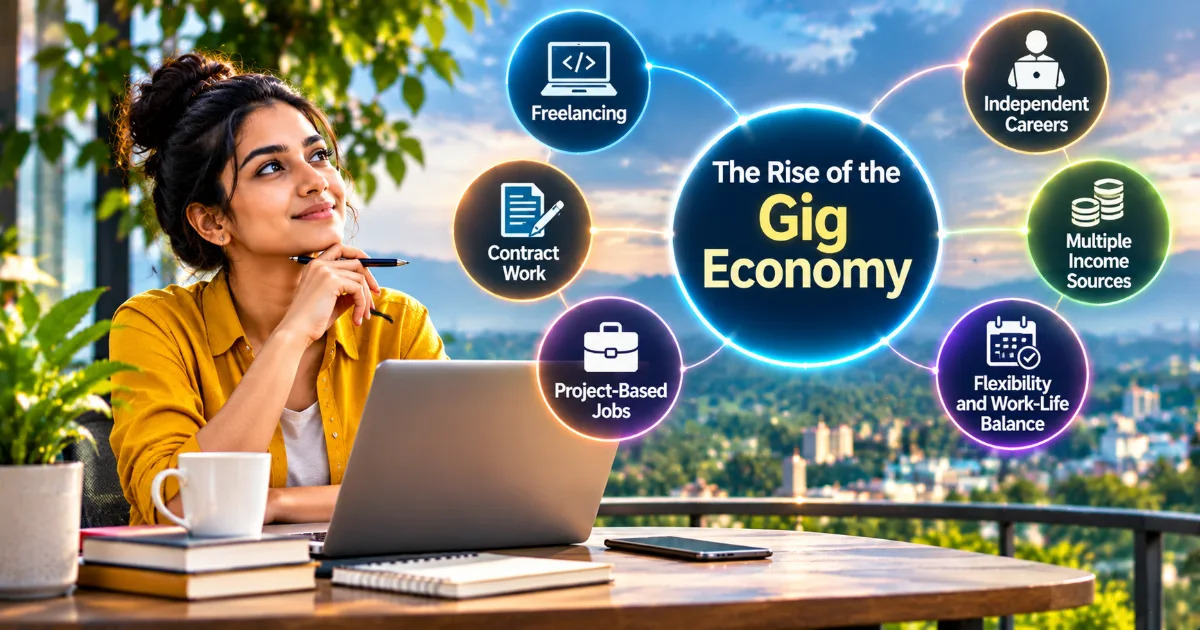
Remote work has changed how organisations think about talent, productivity, and workplace geography. It has made it possible for many employees to contribute to companies without living near their offices.
Greater Access to Global Talent
One of the strongest advantages of remote work is the ability to recruit beyond geographical boundaries. Organisations can search for suitable candidates across different cities and regions instead of restricting recruitment to a particular office location.
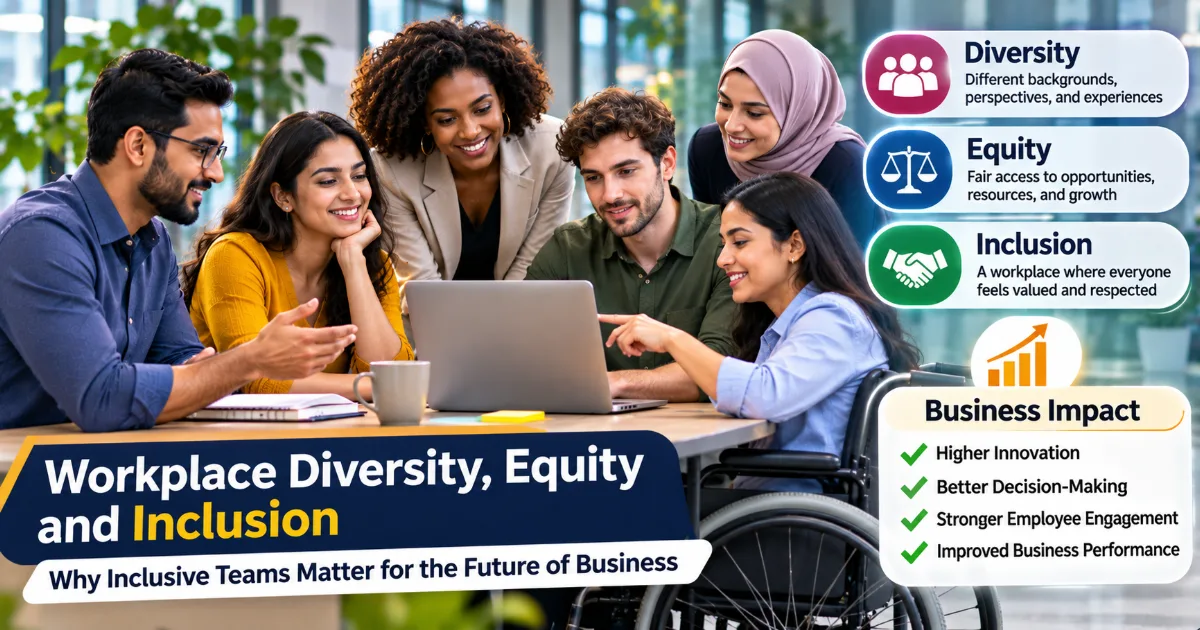
This can help companies find specialised professionals who may be difficult to recruit locally. Businesses can also build teams with diverse professional experiences, cultural perspectives, and technical capabilities.
For startups and small businesses, remote recruitment can be particularly valuable. They may not have the financial resources to establish offices in multiple cities, but they can still work with skilled professionals located elsewhere.
However, international recruitment also introduces challenges involving employment regulations, taxation, compensation structures, time zones, and data security. Companies must establish appropriate policies before building distributed teams across national borders.
Reduced Commuting and More Flexible Schedules
Commuting can consume a significant amount of time and energy. Employees who travel long distances to work may spend several hours each day managing transportation rather than personal activities or rest.
Remote work can reduce this burden. Employees may use the time saved for family responsibilities, exercise, learning, or other activities that support their well-being.
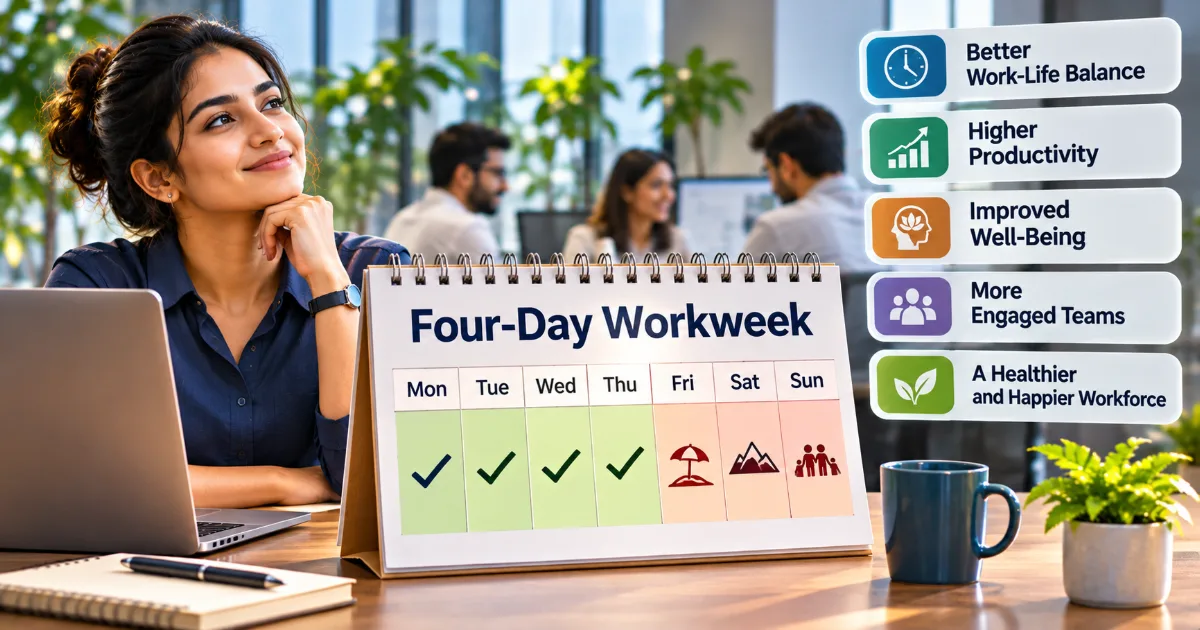
Flexibility can also help employees organise their working hours around responsibilities that do not always fit neatly into a traditional office schedule. However, flexibility should not become an expectation that employees remain available throughout the entire day.
Organisations need clear working-hour expectations, communication guidelines, and boundaries that protect employees from unnecessary interruptions.
Lower Office-Related Costs
Remote work can reduce certain organisational expenses, including office rent, electricity, furniture, maintenance, transportation allowances, and other facility-related costs.
These savings may be particularly attractive to startups and growing businesses. Instead of investing heavily in physical infrastructure, organisations can allocate more resources to technology, product development, recruitment, customer experience, and employee training.
However, remote work does not eliminate workplace expenses entirely. Companies may need to invest in laptops, cybersecurity, software subscriptions, technical support, internet allowances, and home-office assistance.
The financial benefit depends on how effectively the organisation manages these costs.
Challenges of Remote Work
Despite its advantages, remote work is not suitable for every employee or business environment. One major challenge is the absence of regular face-to-face interaction. Employees may find it harder to develop relationships, understand team dynamics, or receive informal guidance.
Communication can also become fragmented when organisations rely heavily on messages and video meetings. A simple question that could be resolved through a short conversation may require multiple messages and delays.
Isolation is another concern. Employees who work remotely for long periods may miss social interaction and feel disconnected from colleagues. New employees may particularly struggle to understand company culture when most interactions happen through scheduled online meetings.
Remote work also depends on a suitable working environment. Not everyone has a quiet room, reliable internet connection, ergonomic furniture, or enough space to work comfortably.
Organisations should therefore avoid assuming that every employee experiences remote work in the same way.
Hybrid Work: Balancing Flexibility and Collaboration
Hybrid work is often presented as a middle ground between fully remote and fully office-based arrangements. Its appeal comes from the possibility of combining independent work with purposeful in-person interaction.
The Advantage of Purposeful Office Days
Hybrid work can allow employees to use office days for activities that benefit from physical presence. Teams can schedule brainstorming sessions, planning meetings, training programmes, workshops, and important discussions when employees are together.
Individual tasks that require concentration can be completed remotely, while collaborative activities can happen in the office.
This arrangement can improve the usefulness of office attendance. Instead of travelling to work simply because company policy requires it, employees have a clearer reason to meet their colleagues.
For example, a product development team might work remotely for most of the week while meeting in person for planning sessions, design reviews, and major project discussions.
The success of this approach depends on coordination. If different team members attend on unrelated days, the organisation may lose the collaboration benefits it expected from hybrid work.
Flexibility Without Losing Team Connection
Hybrid work can provide employees with greater control over their working environment while preserving opportunities for personal interaction.
An employee may complete focused assignments from home and visit the office for important team activities. This can reduce commuting frequency without removing the opportunity to build professional relationships.
Hybrid arrangements may also help employees who prefer a combination of independent work and social interaction.
However, companies need to make sure that remote employees are not treated as less involved than colleagues who regularly attend the office. Important decisions should not be made through informal office conversations that exclude people working elsewhere.
Challenges of Hybrid Work
Hybrid work can become complicated when organisations fail to establish consistent policies. Employees may be uncertain about which days they should attend the office, whether attendance is mandatory, and how performance will be evaluated.
Another challenge is unequal participation. Employees who are physically present may receive more informal information, greater visibility, or easier access to senior managers.
This can create a two-tier workplace in which office-based employees enjoy more opportunities than remote colleagues, even when both groups deliver similar results.
Hybrid meetings also require suitable technology. If people inside a meeting room communicate with each other while remote participants struggle to hear or contribute, the meeting becomes less inclusive.
Companies need to design hybrid processes deliberately rather than simply combining office attendance with video conferencing.
Office Work: Collaboration, Mentorship, and Organisational Culture
Physical workplaces continue to offer important advantages, particularly in environments where direct interaction, practical training, and immediate coordination are essential.
Faster Communication and Problem-Solving
Face-to-face communication can make certain discussions easier. Employees can ask questions, clarify misunderstandings, review documents together, and respond quickly when a problem requires immediate attention.
This can be valuable in teams handling complex projects, operational challenges, or situations involving multiple departments.
Office environments may also support spontaneous discussions. Employees from different teams can exchange information without needing to schedule every interaction.
However, these benefits depend on workplace culture. An office filled with unnecessary meetings, constant interruptions, and unclear priorities may reduce concentration rather than improve productivity.
Mentorship and Professional Development
New employees often benefit from observing experienced colleagues. They can learn how decisions are made, how customers are handled, how problems are approached, and how professional responsibilities are managed.
In-person environments can make mentorship more accessible because employees have more opportunities to interact directly with supervisors and experienced team members.
This is especially important for early-career professionals who may need frequent feedback, practical guidance, and opportunities to develop communication and collaboration skills.
Nevertheless, mentorship does not require everyone to be in the same building every day. Organisations can create effective remote mentoring programmes through regular discussions, shared projects, structured feedback, and online learning sessions.
Building Organisational Culture
Company culture is influenced by shared values, communication habits, leadership behaviour, trust, and everyday working relationships.
Physical offices can help employees develop a sense of belonging through shared experiences, team events, celebrations, and informal interactions.
However, office attendance alone cannot create a healthy culture. A workplace with poor leadership, limited transparency, unfair policies, or a lack of respect will not become positive simply because employees sit together.
Strong organisational culture must exist in the way people are treated, decisions are made, and responsibilities are managed, regardless of where employees work.
Remote vs Hybrid vs Office Work: A Practical Comparison
The three models offer different advantages depending on the nature of the work and the priorities of the organisation.
Remote work is often strongest when responsibilities can be completed digitally, employees have suitable working environments, and teams can coordinate effectively through technology.
Hybrid work can be useful when organisations need both focused independent work and regular in-person collaboration.
Office-based work may be more suitable when employees depend on physical equipment, direct customer interaction, specialised facilities, or close operational coordination.
A company should evaluate each model against several important factors rather than choosing one based on popularity.
Productivity
Productivity should be measured through completed work, quality, efficiency, customer outcomes, and progress toward business objectives.
Remote employees may benefit from fewer office interruptions and more control over their schedules. Office employees may benefit from easier access to colleagues and faster discussions. Hybrid employees may receive advantages from both arrangements when their schedules are managed effectively.
No model guarantees productivity. Leadership, role clarity, employee skills, management practices, and workplace tools remain important factors.
Employee Satisfaction
Employees have different preferences. Some prefer working independently at home, while others enjoy the social environment of an office. Some appreciate the flexibility of hybrid work.
Organisations should understand these differences instead of assuming that every employee wants the same arrangement.
Employee satisfaction also depends on workload, compensation, career development, management support, workplace relationships, and the ability to maintain healthy boundaries.
Business Costs
Remote work can reduce office-related expenses but may increase technology and support costs. Hybrid work may allow companies to operate smaller offices, although they still need suitable shared facilities. Office-based work requires investment in physical infrastructure and ongoing maintenance.
The correct financial comparison should consider total operating costs rather than office rent alone.
Collaboration
Office work can support direct interaction, while remote collaboration depends on communication systems and clearly documented processes. Hybrid work requires deliberate coordination to ensure that everyone can participate equally.
The best arrangement depends on how frequently employees need to exchange information and how complex their collaborative tasks are.
Which Industries Benefit From Each Work Model?
Different industries have different operational requirements. A single workplace policy may not work effectively across every department or professional role.
Information Technology and Software Development
Software development, testing, technical documentation, cybersecurity analysis, and many IT support activities can often be performed remotely.
Digital project management systems, code repositories, communication platforms, and cloud infrastructure allow distributed teams to collaborate across locations.
However, product planning, architecture discussions, onboarding, and complex problem-solving may benefit from occasional in-person collaboration.
For many technology organisations, remote and hybrid arrangements can both be practical, depending on the nature of their teams and projects.
Healthcare and Medical Services
Healthcare requires direct interaction with patients, medical equipment, and clinical facilities. Doctors, nurses, laboratory professionals, and many other healthcare workers must perform essential duties in physical environments.
However, certain administrative, research, consultation, documentation, and support activities may be completed remotely or through digital systems.
The appropriate model depends on patient needs, professional regulations, data protection requirements, and the specific responsibilities of each role.
Education and Training
Teachers and trainers often need direct interaction with students, particularly in environments involving practical learning, classroom activities, and physical equipment.
At the same time, online education has created opportunities for remote teaching, digital courses, virtual tutoring, and distributed training programmes.
Hybrid education can combine classroom interaction with digital learning resources. The best arrangement depends on student age, subject matter, learning objectives, and access to technology.
Banking and Financial Services
Financial organisations operate through a combination of customer-facing services, compliance activities, technology operations, financial analysis, and administrative responsibilities.
Certain activities require secure facilities and controlled access. Other tasks, such as analysis, software development, documentation, and internal coordination, may be suitable for remote or hybrid arrangements.
Security, confidentiality, regulatory compliance, and data governance are particularly important when deciding where financial work can be performed.
Manufacturing and Retail
Manufacturing requires employees to operate machinery, manage production lines, maintain equipment, and supervise physical processes. Retail employees need to interact with customers, manage products, and maintain stores.
These responsibilities generally require physical presence.
However, functions such as marketing, finance, software development, supply chain analysis, recruitment, and business administration may have greater flexibility.
This demonstrates why workplace policies should be designed around job responsibilities rather than applying identical rules to every employee.
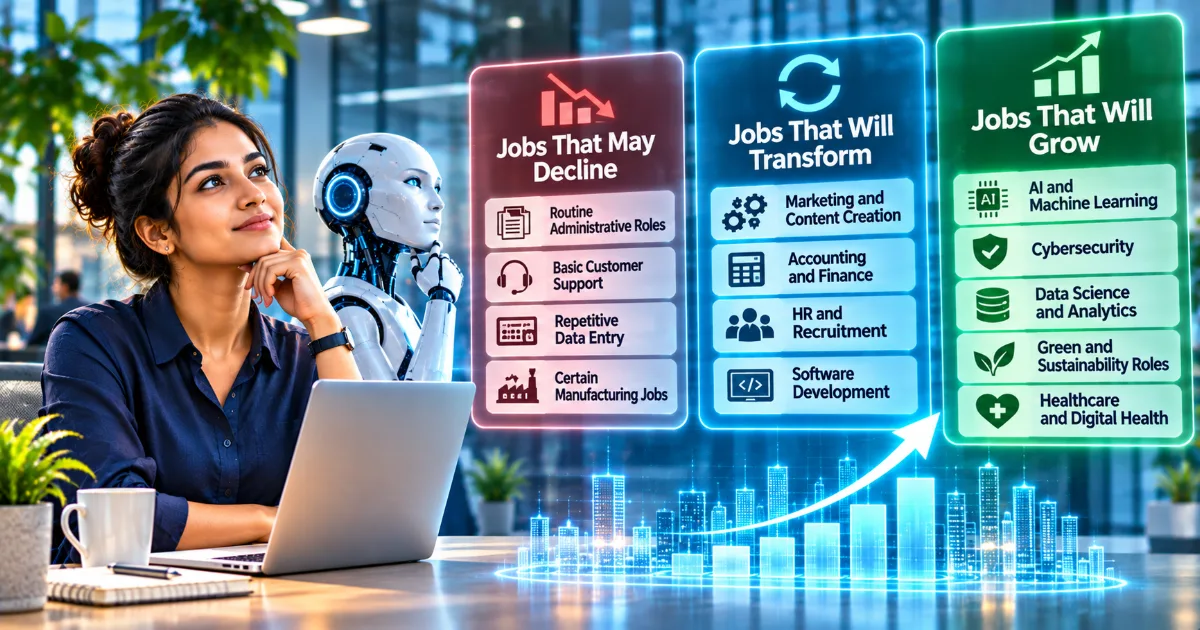
How Artificial Intelligence Is Changing Workplace Models
Artificial intelligence is influencing not only what employees do but also how teams organise their work.
AI-powered tools can assist with writing, research, data analysis, customer support, software development, documentation, scheduling, and project coordination.
These capabilities may make distributed teams more efficient because employees can access digital assistance regardless of their physical location.
AI and Remote Productivity
Remote employees can use AI tools to summarise meetings, organise information, draft documents, analyse datasets, and automate repetitive tasks.
These capabilities can reduce administrative work and help employees focus on activities requiring judgement, creativity, and problem-solving.
However, organisations must establish clear policies covering confidential information, accuracy, human review, and responsible use of AI-generated outputs.
AI and Hybrid Collaboration
Hybrid teams can use AI-assisted meeting summaries, transcription, task tracking, and knowledge management systems to keep everyone informed.
For example, an employee who misses an office meeting may be able to review an approved meeting summary and access assigned tasks through a shared project platform.
This can reduce information gaps between employees working in different locations.
AI and Office-Based Work
Office-based teams can use AI to improve scheduling, manage operational information, analyse performance, and support customer-facing activities.
AI does not remove the value of physical interaction. Instead, it can help employees spend less time on repetitive administrative activities and more time on communication, decision-making, and complex responsibilities.
The future workplace will increasingly depend on how effectively people combine digital tools with human judgement.
The Future of Work in India
India offers an interesting environment for the evolution of remote, hybrid, and office-based work. The country has a large professional workforce, a growing technology sector, expanding digital infrastructure, and businesses operating across different regions.
Major technology hubs such as Bengaluru, Hyderabad, Pune, Chennai, Mumbai, and Gurugram have traditionally attracted professionals who relocate for employment opportunities.
Remote work has created additional possibilities for employees who want to work for organisations without moving to another city. It can also help companies recruit talent from smaller cities and towns.
Opportunities for Employees in Smaller Cities
Professionals living outside major metropolitan areas may gain access to employment opportunities that were previously concentrated in large business centres.
This can reduce the need for relocation and allow more people to participate in the digital economy.
However, these opportunities depend on reliable internet access, suitable working environments, digital skills, and the availability of organisations willing to recruit distributed employees.
The Role of Startups
Startups often need to manage limited budgets while attracting skilled employees. Remote and hybrid models can help reduce infrastructure expenses and expand recruitment possibilities.
A startup may begin with a distributed team and introduce a shared office environment as its operations grow.
The decision should be based on collaboration requirements, customer needs, security, and the organisation's financial position.
Challenges in the Indian Workplace
Indian employees may experience different challenges depending on their location, family responsibilities, housing conditions, and access to technology.
Some employees have dedicated workspaces, while others share living areas with family members. Internet reliability and power availability can also vary.
Hybrid work can reduce some difficulties, but commuting costs, traffic conditions, office attendance policies, and geographical distance remain important considerations.
Employers should create workplace policies that recognise these differences rather than assuming that every employee has the same working environment.
How Companies Should Choose the Right Workplace Model
Selecting a workplace model should be a strategic business decision. Organisations should avoid choosing an arrangement simply because competitors are using it or because it appears more modern.
Evaluate the Nature of Each Job
The first step is to understand what employees actually do. Roles requiring physical equipment, direct customer service, secure facilities, or hands-on operations may need regular workplace attendance.
Roles involving digital communication, analysis, writing, software development, and independent project work may offer greater location flexibility.
Companies should assess responsibilities individually and identify which tasks require physical presence.
Measure Results Instead of Attendance
A major mistake in workplace management is treating physical attendance as a substitute for productivity.
Organisations should establish measurable goals, project milestones, service standards, quality expectations, and clear responsibilities.
Managers should evaluate whether employees complete their work effectively rather than relying only on the number of hours they spend in an office.
This approach requires better performance management and stronger communication between managers and employees.
Invest in the Right Technology
Remote and hybrid teams need reliable digital infrastructure. This includes secure communication platforms, project management systems, document collaboration tools, identity management, data protection, and technical support.
Technology should make work easier rather than introduce unnecessary complexity.
Companies must also train employees to use these systems effectively and establish clear guidelines for communication and information sharing.
Create Fair Workplace Policies
Workplace policies should be transparent and consistently applied. Employees need to understand attendance expectations, working hours, meeting arrangements, performance evaluation, equipment support, and communication responsibilities.
Companies should also ensure that remote employees receive fair access to training, promotions, leadership discussions, and professional development.
A flexible workplace cannot succeed if employees believe that their location determines their career opportunities.
Review the Model Regularly
Business needs change over time. A workplace arrangement that works well for a small team may become less effective as the organisation grows.
Companies should collect feedback, review performance, examine operating costs, and evaluate employee experience.
Workplace policies should be adjusted when evidence shows that a different arrangement could improve results.
The Employee's Perspective: Choosing the Right Working Environment
Employees should also evaluate workplace models based on their personal and professional circumstances.
A person beginning a career may benefit from regular interaction with experienced colleagues. Someone with substantial experience may prefer greater independence. An employee managing family responsibilities may value flexibility, while another may prefer a structured office environment that separates professional and personal activities.
There is no single correct preference.
Consider Your Working Style
Some people perform their best work in quiet environments with fewer interruptions. Others gain energy from social interaction and regular discussions.
Understanding your working style can help you identify which arrangement supports your concentration, communication, and performance.
Consider Career Development
Employees should consider whether their preferred workplace model provides access to mentorship, learning opportunities, important projects, and professional networks.
Remote work can provide excellent career opportunities, but employees may need to make deliberate efforts to communicate achievements, request feedback, and participate in team activities.
Consider Work-Life Boundaries
Flexibility can improve daily life, but it can also make it difficult to disconnect from work.
Employees working remotely should establish clear routines, suitable working hours, and boundaries around personal time.
Office-based employees should also consider the impact of commuting and workplace schedules on their personal responsibilities.
The right arrangement should support sustainable performance rather than simply increase the amount of time available for work.
Will One Workplace Model Dominate the Future?
The idea that one model will completely replace the others is unlikely to reflect the complexity of modern business operations.
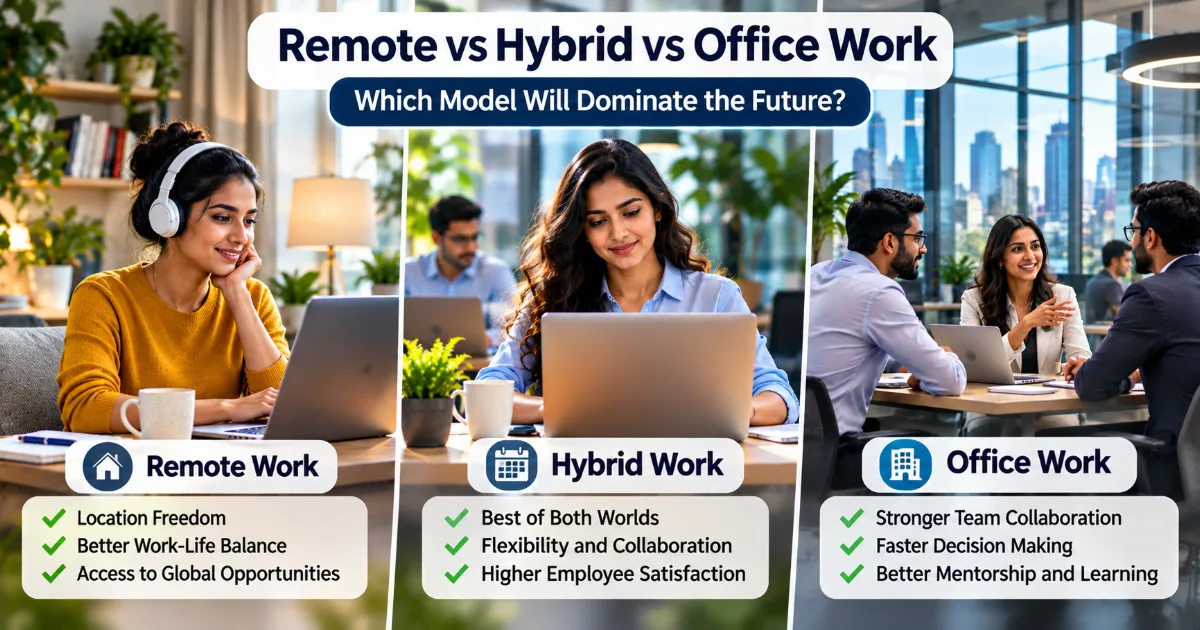
Remote work offers location flexibility and access to wider talent pools. Hybrid work combines independent work with opportunities for direct collaboration. Office-based work supports physical operations, immediate interaction, and certain forms of practical learning.
Each model serves different needs.
The future may involve more flexible workplace strategies in which organisations determine where specific activities should happen rather than requiring every employee to follow one fixed arrangement.
For example, a company could allow software developers to work remotely while organising periodic in-person planning sessions. Its customer service team might use a hybrid schedule, while employees responsible for physical operations work from designated facilities.
This approach recognises that the workplace should support the work itself.
The most successful organisations will likely focus on outcomes, employee experience, technology, communication, and operational requirements. They will understand that flexibility is not simply an employee benefit. It can also be a way to improve recruitment, efficiency, and organisational resilience when implemented thoughtfully.
Conclusion: The Future Workplace Will Be Built Around People and Purpose
Remote, hybrid, and office-based work each have an important role in the future of employment. The question is not which model is universally superior, but which arrangement allows people and organisations to achieve their goals effectively.
Remote work can create opportunities for flexibility, global recruitment, and reduced commuting. Hybrid work can balance independent productivity with purposeful collaboration. Office-based work can support direct communication, practical training, and responsibilities that require physical presence.
Businesses should make decisions based on evidence, job requirements, employee feedback, and long-term objectives. Employees should consider their working styles, career goals, personal responsibilities, and professional development needs.
The future of work will require more than a decision about where people sit during working hours. It will require a better understanding of productivity, trust, technology, communication, leadership, and the changing relationship between employers and employees.
Organisations that build flexible, inclusive, and well-managed workplaces will be better prepared to adapt to changing expectations. Employees who develop strong digital skills, communication abilities, adaptability, and self-management will also be better positioned to succeed.
Ultimately, the workplace of the future should not be defined by a building, a home office, or a video meeting. It should be defined by the quality of work people produce, the opportunities they receive, and the value they create together.
#FutureOfWork #RemoteWork #HybridWork #WorkplaceTrends #WorkplaceTransformation