A New Era of Work Is Already Taking Shape
The way people work has never remained the same for long. From agricultural societies and industrial factories to corporate offices and digital workplaces, every major technological revolution has changed how people earn a living, develop their skills, collaborate with others, and organize their daily lives. Today, the world is experiencing another significant transformation. Artificial intelligence, automation, robotics, cloud computing, advanced communication systems, and digital platforms are changing the traditional understanding of employment.
For generations, the idea of having a stable job was closely connected with working from a physical office or factory, following a fixed schedule, reporting to a manager, and performing responsibilities that were clearly defined by an employer. Professional success was often measured by years of experience, educational qualifications, job titles, and promotions within an organization. Although these factors remain relevant, the modern workplace is gradually moving towards a different model in which skills, adaptability, creativity, digital capabilities, and measurable contributions are becoming increasingly important.
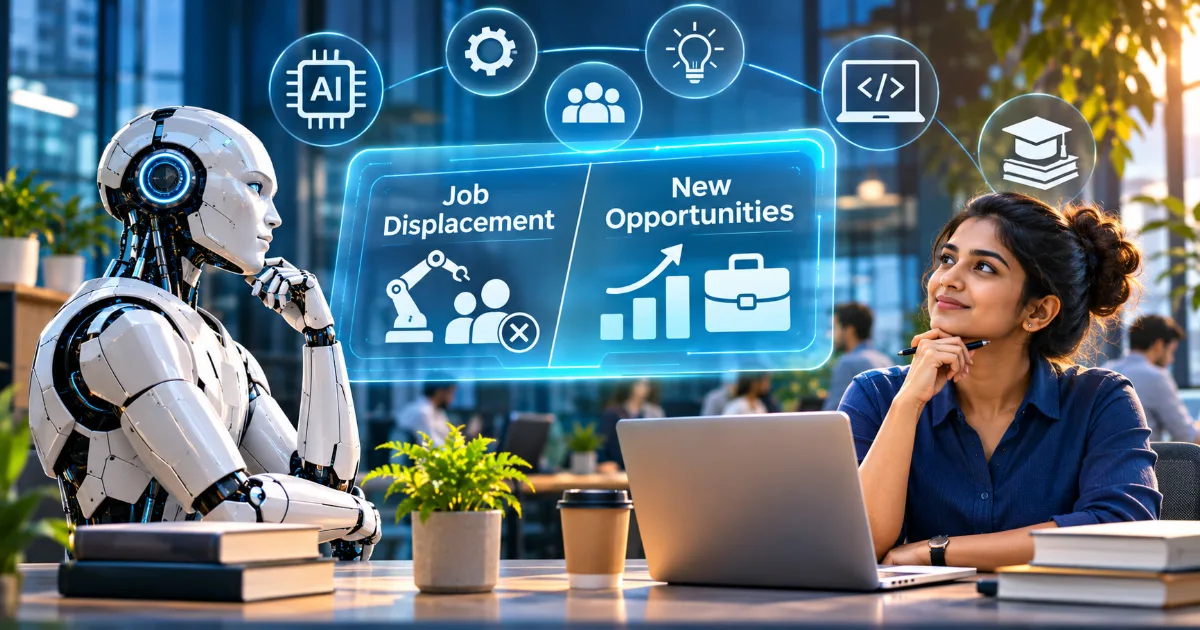
The future of work is not simply about robots replacing employees or artificial intelligence taking over office responsibilities. It is about a much broader transformation in the relationship between people, businesses, technology, and employment. Some jobs will disappear, others will change significantly, and entirely new professions will emerge. Employees will need to learn continuously, organizations will have to rethink their operating models, and educational institutions will need to prepare individuals for careers that may not yet exist.
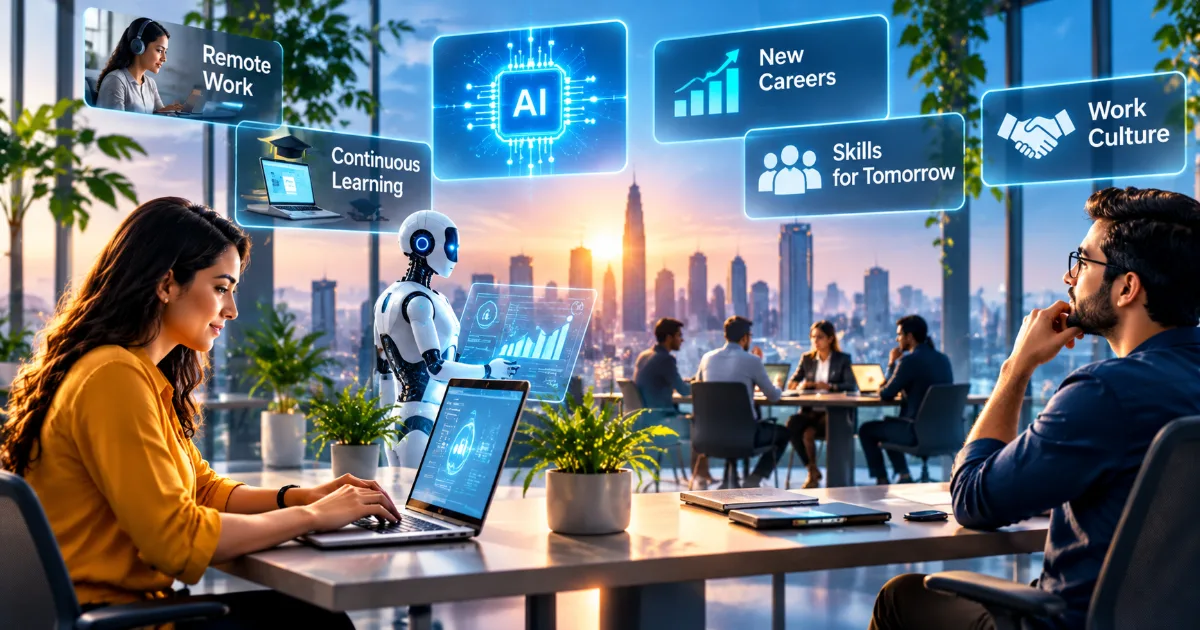
This transformation will also influence how people balance their professional and personal lives. Remote working, flexible schedules, digital entrepreneurship, freelance opportunities, global recruitment, and AI-assisted productivity are creating possibilities that were difficult to imagine just a few decades ago.
Continue Reading
Understanding the future of work is therefore essential for students, professionals, entrepreneurs, business owners, educators, and policymakers. The decisions people make today about education, career development, technology adoption, and professional skills will influence their opportunities in the coming decades.
1. Understanding What the Future of Work Really Means
The future of work refers to the evolving nature of employment, workplaces, professional skills, business operations, and relationships between employers and employees as technology, economic conditions, demographic changes, and social expectations develop.
It includes changes in the type of work people perform, the tools they use, the locations from which they work, the way organizations recruit talent, and the methods used to measure productivity. It also includes the emergence of new employment models and the changing expectations of workers.
One of the most important characteristics of this transformation is that work is becoming less dependent on a specific physical location. Many responsibilities that previously required employees to be present in an office can now be completed through digital systems. Teams can collaborate through cloud platforms, attend virtual meetings, manage projects remotely, and communicate with customers across different countries.
Another important characteristic is the increasing integration of intelligent technology into everyday professional activities. Employees can use AI tools to summarize information, generate initial drafts, analyze datasets, organize schedules, assist customers, and automate repetitive administrative tasks. This changes the nature of many jobs without necessarily eliminating the human roles associated with them.
The future of work also involves a shift from traditional career paths towards more flexible professional journeys. People may work for several organizations throughout their careers, combine full-time employment with independent projects, develop multiple sources of income, or move between industries as their interests and skills change.
Therefore, the future of work should not be understood as one particular workplace model. It is a combination of technological, economic, organizational, and cultural changes that will reshape employment across industries.
2. Artificial Intelligence Is Redefining the Modern Workplace
Artificial intelligence is one of the most influential technologies shaping the future of work. Its applications are expanding across finance, healthcare, education, manufacturing, marketing, customer service, software development, logistics, and professional services.
Traditional software generally follows instructions and rules defined by developers. Modern AI systems can perform more complex tasks involving language, pattern recognition, prediction, classification, and content generation. These capabilities allow organizations to introduce new ways of completing work.
For example, a marketing professional can use AI to research an audience, identify content opportunities, generate initial campaign ideas, and analyze performance data. A software developer can use AI coding assistants to understand unfamiliar code, generate test cases, identify possible errors, and accelerate routine development tasks. A customer support representative can receive suggested responses and relevant customer information before handling an inquiry.
These applications do not automatically eliminate the need for human professionals. Instead, they change how responsibilities are distributed between people and machines.
AI as a Productivity Partner
One of the most significant opportunities created by artificial intelligence is the ability to reduce time spent on repetitive activities. Employees frequently spend considerable portions of their working days organizing information, preparing reports, searching documents, responding to routine messages, and performing administrative tasks.
AI systems can assist with many of these activities, allowing employees to dedicate more time to planning, problem-solving, communication, and decision-making.
Consider a business analyst who previously spent several hours collecting information from multiple spreadsheets. With suitable AI-enabled analytical tools, some of the preparation and organization can be accelerated. The analyst can then concentrate on understanding the results, identifying business problems, and explaining recommendations to management.
However, productivity improvements depend on the quality of the tools, the accuracy of the information, employee training, and the suitability of the task. AI-generated information can contain errors, incomplete explanations, or misleading conclusions. Human review remains essential, especially when decisions affect customers, employees, finances, or public safety.
The Rise of AI-Assisted Jobs
Many professional roles are likely to become increasingly AI-assisted. Writers may work with AI research and editing tools. Designers may use generative systems to explore concepts. Recruiters may use intelligent software to organize applications. Accountants may rely on automated systems for data processing and anomaly detection.
The professional who learns to use these tools responsibly may become more productive than someone who continues relying entirely on manual processes.
This does not mean that every employee must become an AI engineer. It means that understanding how AI works, recognizing its limitations, and knowing when to use it will become valuable professional capabilities across many occupations.
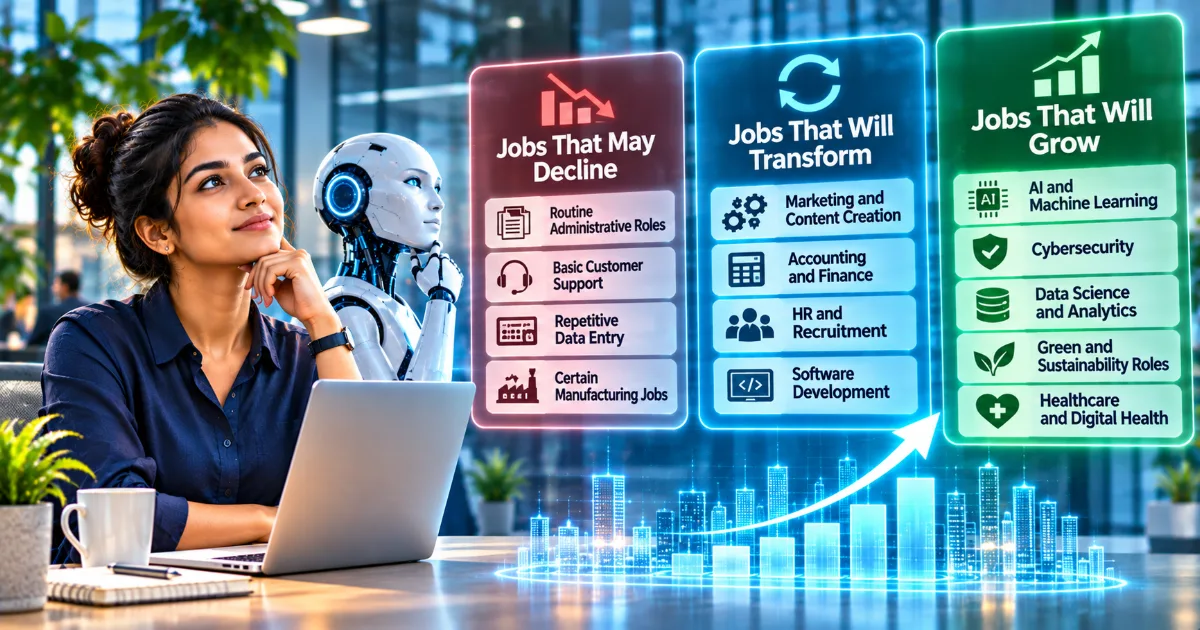
3. Will Artificial Intelligence Replace Human Jobs?
The question of whether AI will replace human jobs has become one of the biggest concerns surrounding the future of employment.
The answer is more complicated than a simple yes or no. Some tasks can be automated almost entirely, while other responsibilities require human judgment, physical interaction, accountability, empathy, creativity, and complex decision-making.
A job is usually made up of multiple activities. A customer service professional, for example, may answer routine questions, resolve complaints, explain policies, understand customer emotions, and handle unusual situations. An automated system may successfully respond to common questions, but complicated complaints may still require human intervention.
Similarly, an accountant performs data entry, reconciliation, reporting, interpretation, compliance checks, and advisory responsibilities. Automation may reduce the time required for routine processing, but professional judgment and responsibility remain important.
The distinction between automating a task and eliminating an entire occupation is critical.
Jobs Most Exposed to Automation
Roles involving repetitive, predictable, and standardized activities are generally more exposed to automation. Examples include certain data entry responsibilities, routine document processing, basic transaction handling, repetitive manufacturing activities, and standardized administrative tasks.
However, exposure does not always mean immediate job loss. Organizations may redesign these roles, combine responsibilities, reduce manual workloads, or shift employees towards more complex activities.
Jobs That Require Strong Human Capabilities
Professions involving empathy, interpersonal relationships, complex judgment, leadership, and unpredictable physical environments may be more difficult to automate completely.
Healthcare professionals, teachers, therapists, skilled technicians, managers, researchers, and many service professionals rely on combinations of knowledge and human interaction that technology cannot independently reproduce in every situation.
Nevertheless, these professions will also change as intelligent tools become part of their working environments.
The Importance of Adapting Rather Than Resisting
Employees should not approach technological change only with fear. They should understand how technology affects their particular industry and identify opportunities to strengthen their professional capabilities.
A person working in accounting can learn financial analytics and automation. A teacher can explore digital learning platforms and AI-assisted educational methods. A marketing executive can develop expertise in customer research, analytics, and AI-powered campaign management.
The objective is not to compete with machines at tasks they perform efficiently. It is to develop the capabilities that allow people to work effectively alongside them.
4. Remote Work and Hybrid Work Are Changing Workplace Geography
One of the most visible changes in modern employment is the increasing acceptance of remote and hybrid working arrangements.
Traditional employment often required employees to travel to a specific office every working day. Digital communication, cloud computing, collaboration software, and secure remote access have made it possible for many professionals to complete their responsibilities from different locations.
Remote work allows employees to perform their jobs outside a traditional office. Hybrid work combines remote and office-based activities, giving employees and organizations greater flexibility in deciding where particular responsibilities should be completed.
The Benefits of Remote Work
Remote working can reduce commuting time, provide access to wider employment opportunities, and allow individuals to organize their professional responsibilities around personal circumstances.
For employers, remote work can expand recruitment beyond a single city or geographical region. A company located in Bengaluru may recruit a software developer in Pune, a designer in Delhi, and a marketing specialist in another country.
This creates access to a broader talent pool and can help organizations build teams with diverse professional experiences.
Remote work can also benefit people who live outside major employment centers. Individuals may access opportunities that were previously limited by geographical restrictions.
Challenges of Distributed Teams
Remote work also introduces challenges. Employees may experience isolation, communication difficulties, unclear expectations, and weaker connections with colleagues.
Managers must learn how to coordinate distributed teams without relying on constant physical supervision. Organizations need clear communication practices, documented processes, appropriate cybersecurity policies, and measurable performance expectations.
Hybrid work also requires thoughtful planning. If some employees regularly participate in meetings from an office while others join remotely, organizations must ensure that remote participants are not excluded from important discussions.
The future workplace will therefore require more than digital communication tools. It will require a culture based on trust, accountability, collaboration, and effective management.
5. The Rise of Automation and Intelligent Business Operations
Automation has been transforming industries for decades. Manufacturing systems, industrial machinery, financial software, and enterprise applications have already reduced the amount of manual effort required for many business processes.
What makes the current period different is the increasing combination of traditional automation with artificial intelligence.
Traditional automation usually performs predefined actions when specific conditions are met. AI-enabled automation can interpret information, classify requests, identify patterns, and support decisions in situations involving more variation.
For example, an e-commerce company may use automation to process orders, update inventory, send notifications, and generate invoices. AI-enabled systems may additionally help classify customer complaints, identify unusual purchasing patterns, or recommend relevant products.
AI Agents and the Next Stage of Automation
AI agents represent an emerging approach in which software systems can use tools, interpret instructions, and complete sequences of related activities with varying levels of autonomy.
A business might use an AI agent to gather information from approved sources, prepare a report, organize findings, and submit the result for human review.
However, these systems require appropriate permissions, monitoring, and safeguards. Organizations should not assume that an autonomous system will always understand business context or make correct decisions.
The future of automation will depend on how effectively businesses combine technological capabilities with human oversight.
Automation Will Change Business Skills
Employees will increasingly need to understand how business processes operate and how digital tools can improve them.
A professional who understands both the business problem and the technology used to address it can contribute significant value. This combination of operational knowledge and digital capability will become increasingly important across industries.
6. The Skills That Will Matter Most in the Future Workplace
As technology changes professional responsibilities, the skills required for career success will also evolve.
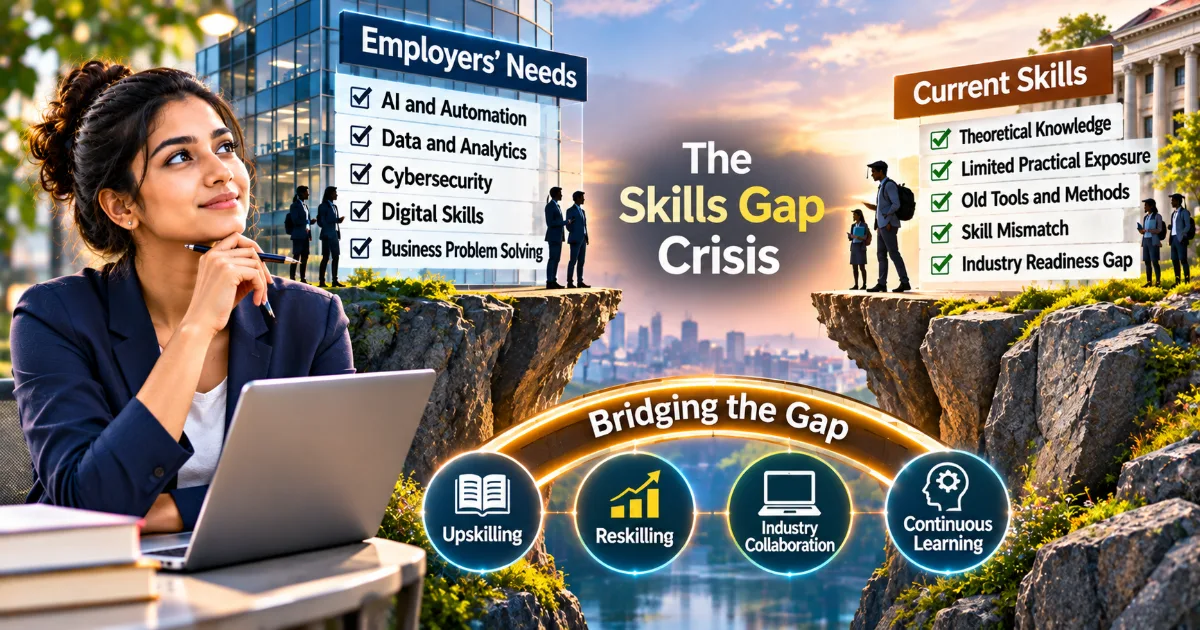
Technical knowledge remains important, but it is no longer sufficient in many professional environments. Employees must combine digital capabilities with communication, critical thinking, adaptability, and practical problem-solving.
Digital Literacy
Digital literacy involves understanding how to use technology effectively, evaluate digital information, communicate through online systems, and protect information.
Employees do not necessarily need advanced programming knowledge to become digitally capable. However, they should understand the tools commonly used in their industries and be comfortable learning new applications.
Artificial Intelligence Literacy
AI literacy includes understanding the basic capabilities and limitations of artificial intelligence, writing clear instructions, reviewing generated outputs, recognizing possible errors, and using AI responsibly.
Professionals who can identify suitable AI applications within their work may become more effective and adaptable.
Critical Thinking and Problem-Solving
Technology can produce information, predictions, and recommendations, but people must still evaluate whether those outputs make sense.
Critical thinking helps employees question assumptions, compare evidence, identify risks, and make informed decisions.
For example, an AI system may recommend a marketing strategy based on historical performance. A skilled marketing professional must consider changes in customer behavior, market conditions, brand positioning, and business objectives before accepting that recommendation.
Communication and Collaboration
As workplaces become more geographically distributed, communication becomes even more important.
Employees must explain ideas clearly, document decisions, provide constructive feedback, and collaborate with colleagues across different departments and cultures.
Strong communication skills help professionals translate technical information into practical business outcomes.
Creativity and Innovation
Creativity involves generating ideas, exploring alternatives, and identifying opportunities that may not be obvious from existing information.
AI can support creative processes, but professionals still need to understand audiences, identify meaningful problems, and make decisions about which ideas deserve attention.
Adaptability and Continuous Learning
Perhaps the most important future workplace skill is the ability to adapt.
Technology, customer expectations, business models, and professional requirements can change rapidly. Individuals who remain willing to learn, experiment, and improve their capabilities will be better prepared for uncertain career environments.
7. The Future of Education and Professional Learning
Traditional education systems were largely designed around structured courses, defined qualifications, and established professional pathways.
Although formal education will continue to matter, the future of work will require a stronger relationship between education and continuous professional development.
A degree obtained at the beginning of a career may provide an important foundation, but it cannot guarantee that an individual will possess every skill required throughout their working life.
New technologies and business practices create a need for regular learning.
Microlearning and Short Professional Courses
Microlearning allows people to develop specific capabilities through focused lessons, practical exercises, and short learning modules.
Instead of completing a lengthy qualification before acquiring a new skill, professionals may learn specific tools or techniques relevant to their immediate responsibilities.
For example, a marketing professional may complete a course on data analytics, while a business owner may learn how to automate customer communication.
Project-Based Learning
Project-based learning allows individuals to demonstrate their abilities through practical work.
A software developer can build an application, a designer can create a portfolio, and a business analyst can prepare a case study using real or simulated business information.
Such projects provide evidence of applied knowledge rather than relying exclusively on academic qualifications.
The Growing Importance of Lifelong Learning
Continuous learning should become part of professional life rather than something people pursue only when searching for a new job.
Employees can regularly review industry developments, attend professional workshops, complete relevant courses, participate in knowledge-sharing activities, and experiment with new technologies.
Organizations also have a responsibility to provide learning opportunities. Businesses that invest in employee development may be better positioned to adapt to technological changes and retain experienced professionals.
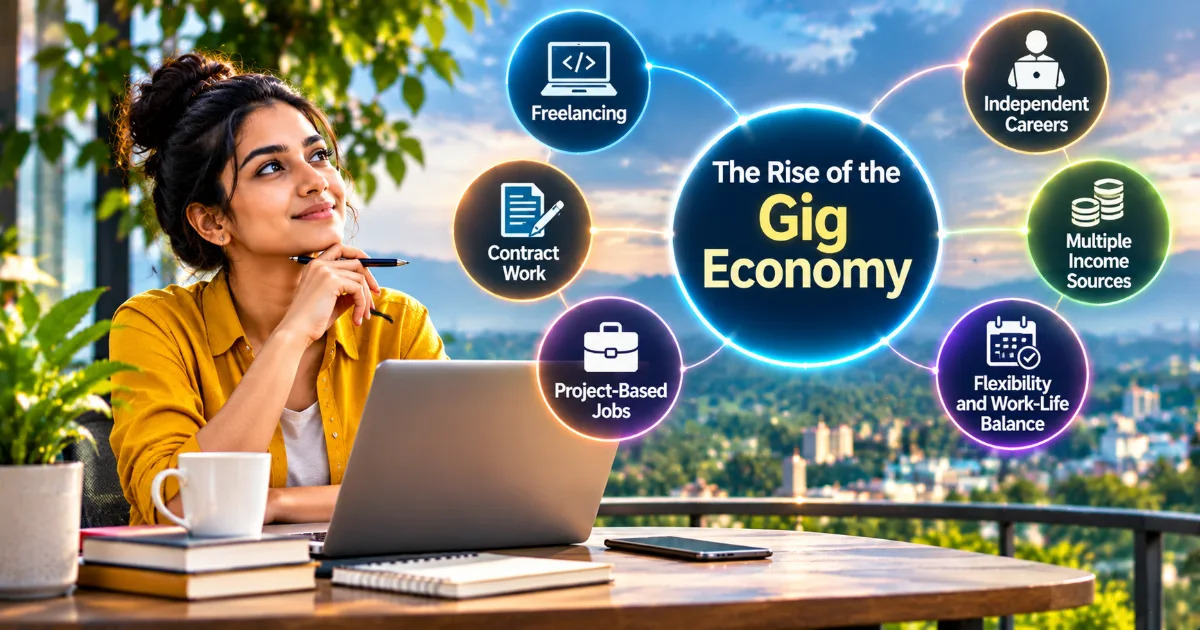
8. The Gig Economy and the Growth of Independent Careers
The gig economy has introduced alternative ways of earning income. Instead of depending entirely on permanent employment, individuals can offer services through freelance platforms, independent businesses, consulting arrangements, and project-based contracts.
This model has created opportunities for writers, designers, developers, translators, marketing professionals, consultants, tutors, and many other specialists.
Digital platforms make it easier for clients and independent professionals to discover one another, discuss requirements, exchange work, and complete transactions.
Multiple Income Sources
Some professionals combine full-time employment with independent projects. Others operate entirely as freelancers or build small businesses around their expertise.
For example, a graphic designer may work with a company during the day while accepting independent branding projects. A software developer may provide consulting services to startups. A teacher may offer online courses in addition to classroom responsibilities.
Multiple income sources can provide flexibility, but they also introduce financial uncertainty.
Independent workers must manage customer acquisition, pricing, contracts, taxes, payment schedules, professional development, and periods when projects are unavailable.
The Importance of Worker Protection
The expansion of gig work also raises important questions about social security, healthcare, paid leave, retirement savings, and income stability.
Not every independent worker has the same financial resources or negotiating power as a large organization.
The future of employment must therefore consider how flexible work arrangements can coexist with fair compensation, reasonable working conditions, and appropriate worker protections.
9. The Future of Hiring and Recruitment
Recruitment practices are also changing as organizations adopt digital platforms, applicant tracking systems, AI-assisted screening, online assessments, and remote interviews.
Traditional recruitment often depended heavily on educational qualifications, years of experience, and personal interviews.
Modern hiring increasingly combines these factors with practical assessments, portfolios, professional achievements, and demonstrations of relevant skills.
Skills-Based Hiring
Skills-based hiring focuses on whether a candidate can perform the responsibilities required for a particular role.
For example, a company recruiting a web developer may assess practical coding knowledge, problem-solving ability, understanding of software architecture, and experience building applications.
This approach can help organizations identify capable candidates whose professional abilities may not be fully represented by their academic qualifications.
AI in Recruitment
AI can help recruitment teams organize applications, identify relevant experience, prepare interview questions, and manage large volumes of information.
However, recruitment systems must be designed carefully. Poorly designed automated screening may reproduce historical biases, misunderstand candidate information, or unfairly disadvantage certain applicants.
Human review, transparent criteria, privacy protection, and regular auditing remain essential.
Building a Strong Professional Profile
Candidates should increasingly demonstrate their capabilities through portfolios, project experience, certifications, practical achievements, and clearly documented professional contributions.
A professional profile should explain not only what someone has studied but also what they can do and how their work creates value.
10. Entrepreneurship and the Future of Small Businesses
Technology is lowering some of the barriers that traditionally prevented individuals from starting businesses.
Cloud-based software, digital payment systems, online marketplaces, AI tools, website builders, and social media platforms allow entrepreneurs to launch and manage businesses with fewer initial resources than many traditional business models required.
A small business can use digital tools to communicate with customers, manage appointments, organize inventory, create marketing material, and analyze sales performance.
An individual with specialized knowledge can build an online consulting business, create educational products, or provide professional services to customers across geographical boundaries.
The Opportunity for Small Businesses
Small businesses may benefit from technologies that were previously affordable mainly to larger organizations.
For example, an independent retailer can use inventory management software, digital advertising, customer relationship management systems, and automated communication tools to improve operations.
However, technology alone does not guarantee business success. Entrepreneurs still need to understand customer requirements, manage costs, build trust, deliver quality, and maintain sustainable business models.
The future of entrepreneurship will depend on combining technology with market understanding and strong execution.
11. How Workplace Culture Will Change
Workplace culture refers to the shared values, behaviors, expectations, and practices that influence how people work together within an organization.
As businesses adopt remote work, AI, automation, and flexible employment arrangements, traditional workplace cultures will need to evolve.
In a traditional office, managers could observe employees physically and sometimes associate visible activity with productivity. In distributed and technology-enabled workplaces, this approach becomes less meaningful.
Organizations will increasingly need to focus on outcomes, responsibilities, collaboration, and quality of work.
Trust-Based Management
Trust-based management gives employees the freedom to complete their responsibilities while maintaining clear expectations and accountability.
Managers should establish objectives, provide resources, remove obstacles, and support professional development instead of relying on unnecessary supervision.
Employee Well-Being
Technology can make work more flexible, but it can also create pressure to remain constantly available.
Remote employees may struggle to separate professional responsibilities from personal time. Digital notifications, virtual meetings, and international collaboration can extend working hours if organizations do not establish appropriate boundaries.
The future workplace should encourage healthy communication practices, reasonable workloads, and respect for personal time.
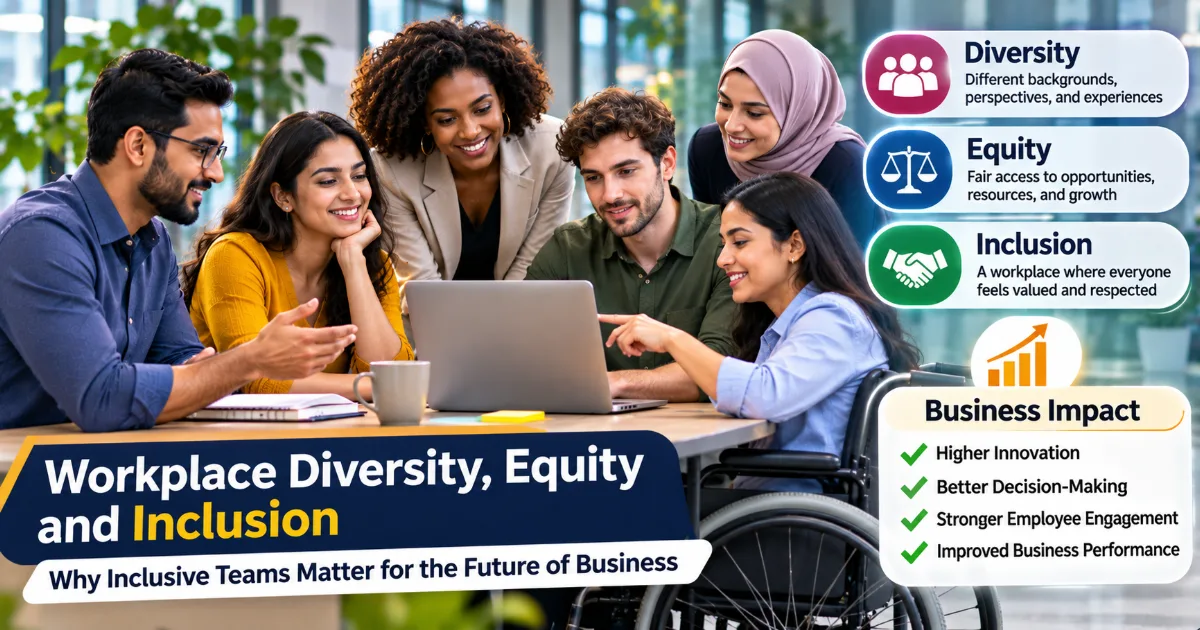
Diversity and Global Collaboration
Digital recruitment allows organizations to work with people from different regions, cultures, and professional backgrounds.
This creates opportunities for diverse perspectives and international collaboration. However, organizations must also understand cultural differences, communication styles, accessibility requirements, and time-zone challenges.
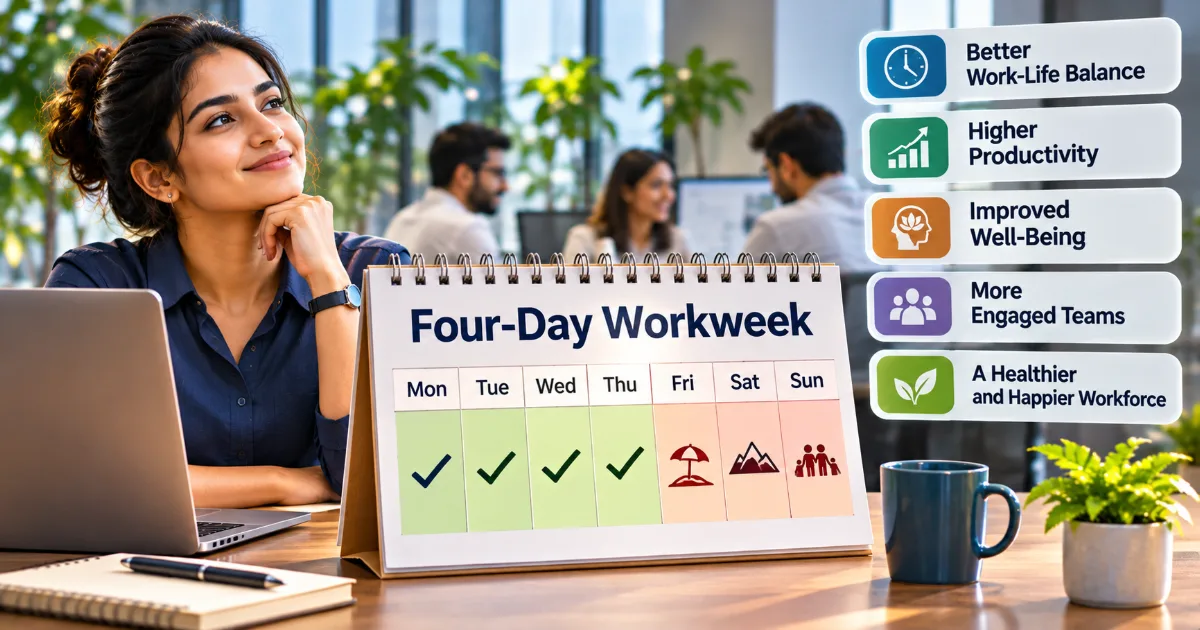
12. The Four-Day Workweek and Changing Definitions of Productivity
The traditional five-day working week has been a standard feature of many employment systems. However, changing technology and evolving employee expectations have encouraged organizations to reconsider how working time should be organized.
The four-day workweek is one example of an alternative employment model. Depending on the arrangement, employees may work fewer days while maintaining the same total weekly hours, or they may work reduced hours with the same compensation.
The potential advantages include improved work-life balance, reduced commuting, and greater employee satisfaction.
However, implementing a shorter workweek requires careful operational planning.
A business must understand customer requirements, workload distribution, staffing levels, service commitments, and performance expectations before changing its schedule.
A four-day workweek will not suit every industry or every role. Healthcare, emergency services, manufacturing, hospitality, and other operational environments may require continuous staffing.
The broader lesson is that productivity should not be measured only by the number of hours an employee spends at work. The quality of outcomes, efficiency of processes, and value delivered to customers are also important.
13. The Challenges and Risks of the Future Workplace
Technological progress creates opportunities, but it also introduces serious challenges that individuals, businesses, and governments must address.
Job Displacement and Economic Inequality
Automation may reduce demand for certain occupations or responsibilities. Workers who cannot access retraining opportunities may experience difficulty moving into new roles.
The impact may not be distributed equally across industries, income groups, or geographical regions.
Governments and organizations must therefore consider reskilling programs, employment support, accessible education, and policies that help workers manage transitions.
Data Privacy and Cybersecurity
Digital workplaces depend on large amounts of information, including employee records, customer details, financial information, and confidential business documents.
Remote access and interconnected systems can increase exposure to cybersecurity risks.
Organizations must implement appropriate access controls, employee awareness programs, secure authentication, data protection practices, and incident response procedures.
Employees also need to understand how to handle confidential information when using AI tools and external digital services.
AI Bias and Accountability
AI systems can produce biased or inaccurate results because of limitations in training data, design choices, and implementation practices.
If organizations use AI in recruitment, employee evaluation, performance management, or customer decision-making, they must establish clear accountability.
Important decisions should not be delegated blindly to automated systems.
The Digital Divide
Not everyone has equal access to reliable internet connectivity, modern devices, digital education, and professional training.
The benefits of the future workplace may be concentrated among individuals and regions with better technological infrastructure.
Expanding digital access and affordable education will be important for ensuring that more people can participate in emerging employment opportunities.
14. How Employees Can Prepare for the Future of Work
Preparing for the future of work does not require predicting every technological development. It requires building capabilities that remain useful across changing professional environments.
The first step is to understand how technology is changing the employee's current industry. A finance professional should understand financial automation and analytics. A teacher should explore digital education and AI-assisted learning. A designer should understand emerging design tools and digital collaboration.
The second step is to identify skills that can improve professional value. These may include data interpretation, communication, project management, AI literacy, cybersecurity awareness, customer understanding, or technical specialization.
The third step is to create evidence of practical capability. Employees should participate in projects, build portfolios, document achievements, and seek opportunities to apply newly acquired knowledge.
The fourth step is to develop a continuous learning routine. Even a small amount of consistent learning can help professionals remain aware of new tools, industry developments, and changing expectations.
Finally, employees should build professional relationships. Networking, mentoring, knowledge-sharing, and participation in professional groups can provide access to information and opportunities that may not be publicly advertised.
15. How Businesses Can Prepare for the Future of Work
Organizations cannot prepare for the future simply by purchasing new software or introducing AI tools. Successful transformation requires changes in processes, leadership, employee development, and organizational strategy.
Businesses should begin by identifying the activities that create the greatest operational challenges. They should evaluate where automation can reduce repetitive work, where AI can improve decision-making, and where human expertise remains essential.
Technology adoption should be linked to measurable business objectives. For example, a customer service organization may introduce AI-assisted support to reduce response times while maintaining human escalation for complicated cases.
Employee training should be included in transformation plans. Workers need opportunities to understand new systems, develop relevant capabilities, and adapt to changing responsibilities.
Businesses should also establish policies covering data privacy, cybersecurity, responsible AI use, and accountability.
Most importantly, leaders should communicate the purpose of technological changes. Employees are more likely to participate constructively when they understand how new systems will affect their work and what support will be available.
16. What the Future of Work Could Look Like by 2030
The workplace of 2030 will not look identical across every country, industry, or organization. However, several developments could become increasingly common.
AI assistants may become integrated into everyday professional software, helping employees complete research, documentation, analysis, and communication tasks.
Hybrid work may remain an important option for roles that can be performed digitally, while physical workplaces continue to play essential roles in manufacturing, healthcare, education, retail, and other location-dependent industries.
Recruitment may place greater emphasis on practical capabilities, relevant experience, and demonstrated skills. Employees may move between organizations and professional specializations more frequently as industries evolve.
Lifelong learning may become a normal expectation rather than an occasional activity. Organizations may invest more heavily in internal training and reskilling as technology changes job responsibilities.
Businesses may also introduce new roles involving AI governance, automation management, data protection, human-machine collaboration, and digital transformation.
However, these developments will depend on technological progress, economic conditions, regulation, infrastructure, and the willingness of organizations to change.
The most important characteristic of the future workplace may not be a particular technology. It may be the ability of people and organizations to adapt continuously.
17. The Human Element Will Remain Central to the Future of Work
Technology can improve efficiency, process information, identify patterns, and automate many activities. However, work is not only about completing tasks.
It is also about building relationships, understanding people, making ethical decisions, solving unfamiliar problems, developing ideas, and contributing to society.
A healthcare professional does more than process medical information. A teacher does more than deliver educational content. A business leader does more than analyze financial reports. Each profession involves responsibilities that affect people and communities.
As technology becomes more capable, the importance of human judgment, empathy, trust, creativity, and accountability will remain significant.
The organizations that build effective relationships between human expertise and technological capabilities may be better prepared for long-term change.
Conclusion: The Future Belongs to Those Who Keep Learning and Adapting
The future of work is not a distant possibility. It is already developing through artificial intelligence, automation, remote collaboration, digital entrepreneurship, and changing employment expectations.
The traditional boundaries between offices, industries, professional roles, and geographical locations are becoming more flexible. People can learn new skills online, collaborate with international teams, build independent businesses, and access opportunities that were once difficult to reach.
At the same time, technological change creates challenges involving job displacement, cybersecurity, inequality, worker protection, and responsible AI adoption. These issues require thoughtful decisions from individuals, employers, educational institutions, and governments.
For employees, the most practical response is to develop relevant skills, remain digitally capable, understand emerging technologies, and become comfortable with continuous learning.
For businesses, the priority should be to adopt technology responsibly, invest in employees, improve operational processes, and build workplace cultures based on trust and collaboration.
For students, the opportunity is to prepare for careers by combining foundational education with practical experience, digital literacy, communication, and problem-solving.
The future of work will not be shaped by technology alone. It will be shaped by how people choose to use technology, how organizations distribute opportunities, and how societies prepare individuals for changing economic conditions.
Ultimately, the most valuable professional advantage may not be knowing how to perform one task perfectly. It may be the ability to learn new things, adapt to unfamiliar situations, and continue creating value as the world changes.
The future of work is not simply about working with machines. It is about creating a better relationship between people, technology, and opportunity.
#FutureOfWork #ArtificialIntelligence #FutureOfJobs #WorkplaceTransformation #DigitalSkills