Employee benefits have become an increasingly important part of the relationship between organisations and their employees. For many years, companies relied on a relatively standard package that included paid holidays, medical insurance, retirement contributions and occasional performance incentives. These benefits were designed around the assumption that most employees had similar professional expectations and broadly comparable personal circumstances. However, the modern workforce is considerably more diverse, and the expectations people have from their employers are changing.
Employees today evaluate a job through more than its salary. They consider whether the organisation respects their time, supports their health, provides financial stability, offers opportunities to learn and accommodates responsibilities outside work. A young professional beginning a career may prioritise education assistance and career development, while a parent may value childcare support and flexible working hours. An employee approaching retirement may be more interested in retirement planning, healthcare coverage and long-term financial security. A single benefits package cannot always address these different requirements effectively.
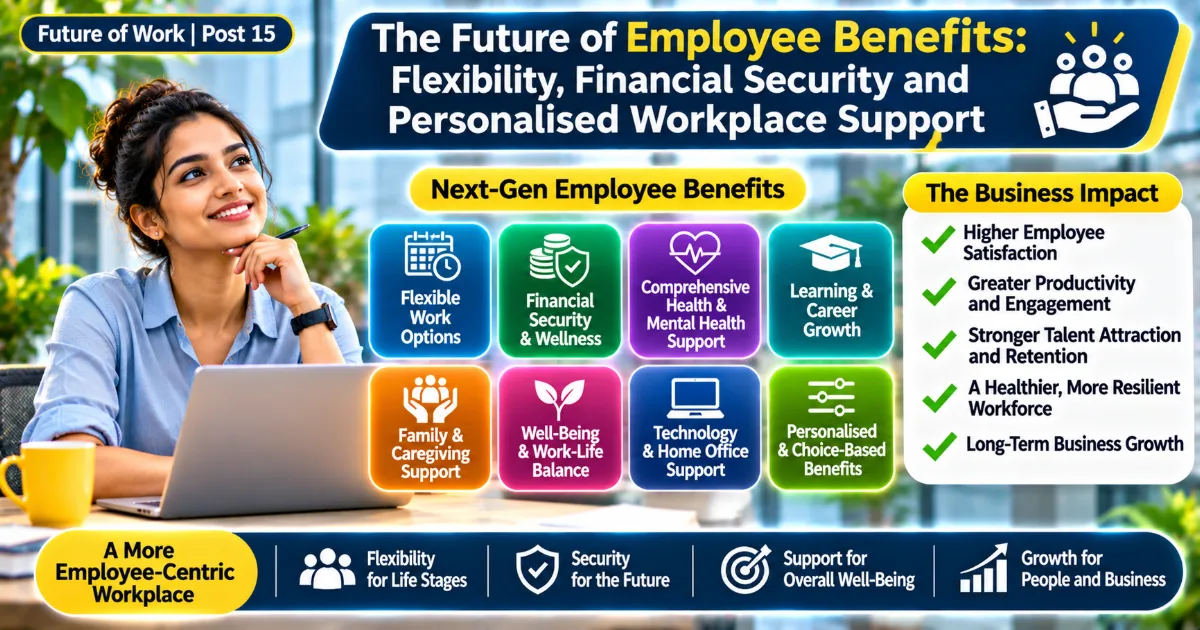
The future of employee benefits will therefore be shaped by flexibility, personalisation and a broader understanding of employee well-being. Organisations will increasingly move away from treating benefits as a fixed collection of additional payments and services. Instead, they will approach them as an integrated part of the employee experience, designed to support people through different stages of their professional and personal lives.
This shift is also connected to wider changes in the workplace. Remote and hybrid work, digital transformation, artificial intelligence, changing family structures, rising living costs and an ageing workforce are influencing what employees expect from their employers. Businesses that understand these developments will be better positioned to attract talent, retain experienced professionals and build healthier working environments.
Continue Reading
Why Traditional Employee Benefits Are Changing
Traditional employee benefits developed around the needs of relatively stable employment arrangements. Employees often worked from a company office, followed fixed schedules and remained with the same organisation for extended periods. A standard benefits package could provide a reasonable level of support because employees frequently shared similar working conditions.
Modern employment is more varied. Some people work remotely from different cities or countries, while others follow hybrid schedules or flexible shifts. Many professionals work across multiple projects, combine employment with independent work or change employers more frequently than previous generations. As a result, the traditional benefits model does not always reflect the realities of modern careers.
The expectations of employees have also expanded. Healthcare coverage remains important, but employees may now expect mental health support, access to preventive healthcare, financial education, parental assistance and professional development opportunities. They may also want benefits that help them manage transportation, housing, education, childcare and other everyday expenses.
Another important factor is the changing cost of living. Housing, healthcare, education and essential services can place significant pressure on household budgets. Even employees receiving competitive salaries may experience financial stress when unexpected expenses arise. Employers are increasingly recognising that financial well-being can influence concentration, engagement, attendance and overall job satisfaction.
These changes are encouraging businesses to reconsider how benefits are selected, funded, communicated and evaluated. Instead of assuming that employees will value the same services, organisations are beginning to explore more adaptable arrangements that respond to different needs.
Flexibility Will Become a Core Employee Benefit
Flexibility is no longer simply an alternative working arrangement. It is becoming a central part of how employees evaluate the quality of a workplace. People want greater control over when, where and how they complete their responsibilities, provided that business requirements and performance expectations are met.
Flexible working hours can help employees manage personal appointments, family responsibilities, education and other commitments without compromising their professional contribution. For example, an employee who needs to take a child to school may prefer an earlier start and earlier finish. Another employee may work more effectively later in the morning. A carefully designed flexible schedule can accommodate these differences while maintaining collaboration and accountability.
Remote and hybrid working arrangements are also influencing employee benefits. Organisations may provide home office allowances, ergonomic equipment, internet support and access to coworking spaces. These benefits recognise that the workplace is no longer limited to a company building. Employees need appropriate tools and environments to perform their work effectively from different locations.
However, flexibility requires more than allowing employees to work from home. It also involves building a culture in which people can use available options without worrying that doing so will damage their professional reputation. If employees are formally permitted to work flexibly but managers continue to reward only those who remain visible in the office, the policy will have limited value.
Organisations must establish clear expectations around availability, communication, performance measurement and collaboration. Managers should evaluate employees through outcomes and the quality of their work rather than the number of hours they appear to be online. This approach creates a more balanced relationship between professional responsibility and personal independence.
Personalised Benefits Will Replace the One-Size-Fits-All Approach
One of the most significant developments in the future of employee benefits will be personalisation. Employees have different priorities, financial circumstances, family responsibilities, career ambitions and health requirements. A standard package may provide basic protection, but it cannot always offer the most useful support to every individual.
Personalised benefits allow employees to select from a range of available options according to their circumstances. An organisation might provide a flexible benefits allowance that employees can distribute across approved categories such as healthcare, learning, retirement savings, childcare, transportation or wellness services.
For example, an employee who already has healthcare coverage through a family member may prefer to use a larger portion of an available benefits allowance for professional education. Another employee may prioritise additional medical coverage or support for dependent family members. A younger employee might value student loan assistance, while someone planning for retirement may prefer increased retirement contributions.
This approach does not mean that every employee must receive an entirely different employment package. Organisations can maintain essential benefits for everyone while allowing flexibility in selected areas. Core protections such as workplace safety, legally required benefits and appropriate healthcare arrangements should not be replaced by optional choices.
Personalisation also requires careful communication. Employees need to understand the value, limitations, eligibility conditions and tax implications of the options available to them. If the benefits system becomes too complicated, employees may struggle to make informed decisions and fail to use services that could genuinely help them.
A well-designed personalised benefits programme should therefore combine meaningful choices with simple explanations, transparent rules and accessible support.
Financial Security Will Become a Major Workplace Priority
Financial well-being is emerging as an important component of employee experience. Many employees are dealing with rising household expenses, debt obligations, housing costs, education fees and uncertainty about long-term savings. These pressures can affect their ability to focus on work and make decisions about their careers.
Employers cannot solve every financial challenge faced by their workforce, but they can introduce practical measures that improve financial stability. Competitive and transparent compensation remains the foundation. Additional support can include retirement contributions, emergency savings programmes, financial education, insurance options and access to confidential financial guidance.
Emergency savings support can be particularly valuable. An unexpected medical expense, vehicle repair or family emergency may create considerable financial pressure for someone without adequate savings. Organisations can explore structured savings programmes that help employees build reserves gradually, subject to local laws and the organisation's financial policies.
Financial education is another useful area. Employees may benefit from guidance on budgeting, debt management, taxation, retirement planning, insurance and long-term saving. Such programmes should provide general education rather than pressure employees into particular financial products. Where personalised financial advice is offered, it should be delivered by appropriately qualified professionals.
Salary transparency can also contribute to financial confidence. Employees should have a clear understanding of how compensation is determined, what performance expectations influence salary progression and which benefits form part of their total rewards package. Transparent policies can reduce confusion and help build trust between employees and management.
For organisations, financial well-being initiatives may contribute to improved engagement and reduced financial distraction. Their value should be assessed through employee feedback, participation and relevant workforce indicators rather than unsupported promises of immediate productivity gains.
Healthcare Benefits Will Expand Beyond Basic Medical Coverage
Healthcare has traditionally been one of the most important employee benefits. However, expectations around healthcare support are expanding. Employees increasingly want access to services that help them prevent illness, manage existing conditions and maintain physical and mental well-being.
Comprehensive healthcare programmes may include medical insurance, preventive screenings, telehealth services, specialist consultations, health education and support for dependants. Depending on local regulations and available providers, organisations may also offer dental, vision and rehabilitation coverage.
Preventive healthcare deserves particular attention. Employees who have convenient access to health information and appropriate screenings may be better equipped to identify potential concerns early. Employers can encourage preventive care through awareness programmes, partnerships with healthcare providers and clear explanations of available coverage.
Digital healthcare services can improve accessibility, especially for remote employees or workers located far from major medical facilities. Teleconsultations and digital appointment systems can reduce travel requirements and make it easier for employees to seek appropriate professional guidance. Organisations must still ensure that healthcare providers meet relevant standards and that sensitive medical information remains confidential.
Healthcare benefits should also recognise that employees may have dependants who rely on their support. Family coverage, parental assistance and access to relevant healthcare resources can be particularly valuable for employees managing responsibilities across generations.
The future of healthcare benefits will therefore involve a broader approach that combines financial protection, prevention, accessibility and employee choice.
Mental Health and Emotional Well-Being Will Receive Greater Attention
Mental health is an essential part of overall employee well-being. Work-related stress, uncertainty, excessive workloads, poor management practices and a lack of work-life boundaries can affect employees in different ways. Organisations that ignore these factors may experience reduced engagement, increased absence and higher employee turnover.
Future employee benefits are likely to include more structured mental health support. This may involve confidential counselling services, employee assistance programmes, access to qualified mental health professionals, stress management education and support during difficult personal circumstances.
However, offering a counselling service alone is not enough. Organisations must also examine the working conditions that contribute to stress. Excessive workloads, unrealistic deadlines, constant communication outside working hours and unclear responsibilities can undermine even the strongest wellness programmes.
Managers play an important role in creating supportive environments. They should be trained to recognise signs of workplace pressure, communicate respectfully and direct employees towards appropriate resources without attempting to act as medical professionals. Employees must also feel confident that seeking help will not lead to discrimination or negative career consequences.
Confidentiality is essential. Personal health information should be handled according to applicable privacy laws and professional standards. Employers should not use participation in mental health programmes as a basis for evaluating individual performance.
A sustainable mental health strategy combines accessible professional support with healthier management practices, reasonable workloads and a workplace culture that respects personal boundaries.
Family, Parenting and Caregiving Support Will Become More Important
Family responsibilities influence the working lives of many employees. Parents may need to manage childcare, school schedules and medical appointments. Employees caring for elderly relatives may face additional responsibilities that are difficult to predict. Some workers may also support family members with disabilities or long-term care requirements.
Traditional employee benefits have not always addressed these needs adequately. The future workplace will need more comprehensive family and caregiving support that recognises the different responsibilities employees carry outside their jobs.
Parental leave is an important starting point. Organisations may review maternity, paternity, adoption and parental leave policies to ensure that they are fair, legally compliant and suitable for different family circumstances. Flexible return-to-work arrangements can also help employees transition back into professional responsibilities after a significant family event.
Childcare assistance is another potential benefit. Depending on the organisation's location and resources, this may include childcare allowances, partnerships with childcare providers, emergency childcare support or access to verified childcare information.
Caregiving support should extend beyond parenting. Employees responsible for elderly relatives may need flexible schedules, temporary leave or access to information about care services. A workplace that recognises these responsibilities can reduce the pressure employees experience when managing professional and family commitments.
The design of these benefits should avoid assumptions about family structure. Policies should be inclusive of different household arrangements and should follow applicable employment laws. The objective is to make support accessible to employees who need it, without requiring them to fit into a narrow definition of family.
Learning and Career Development Will Become Part of Total Rewards
Employees increasingly view professional growth as an important part of the value they receive from an employer. Learning opportunities can influence career decisions just as significantly as salary and traditional benefits.
Organisations can support professional development through training budgets, certification assistance, online learning subscriptions, mentoring programmes and access to industry events. Employees may also benefit from structured career pathways that explain how they can develop skills and progress into new roles.
The rapid adoption of artificial intelligence and automation makes this support even more important. Many jobs are changing as technology takes over routine activities and creates demand for new capabilities. Employees need opportunities to understand emerging tools, strengthen their digital skills and adapt to changing responsibilities.
Learning benefits should not be limited to technical training. Communication, leadership, problem-solving, collaboration, critical thinking and project management remain valuable across industries. Organisations that invest in these capabilities can build a more adaptable workforce.
Employees should have some influence over their learning choices. A flexible development allowance may allow them to select relevant courses or certifications within an agreed framework. Managers can connect these choices to individual career objectives and organisational requirements.
When learning becomes part of the employee benefits strategy, professional development is no longer treated as an occasional activity. It becomes a continuing investment in both individual potential and organisational capability.
Technology Will Transform Employee Benefits Administration
Technology is changing how organisations design, communicate and manage employee benefits. Digital platforms can bring different services together and make it easier for employees to understand what is available to them.
A modern benefits platform may allow employees to review healthcare coverage, compare available options, submit claims, access learning resources and manage selected allowances through a single interface. Mobile access can make these services more convenient for employees who work remotely, travel frequently or do not have regular access to a company computer.
Artificial intelligence may also support benefits administration. For example, an intelligent assistant could help employees locate policy information, explain eligibility requirements or guide them through standard administrative processes. Automated systems may help HR teams identify common questions and improve internal communication.
However, technology must be introduced carefully. Employee benefits involve personal, financial and sometimes medical information. Organisations must establish appropriate access controls, encryption, data retention policies and security procedures. They should also review vendors and ensure that third-party providers meet relevant privacy and compliance requirements.
AI-driven recommendations require particular attention. A system that suggests benefits based on employee data must be transparent, tested for unfair outcomes and designed to avoid inappropriate use of sensitive information. Employees should have access to human assistance when an automated response is insufficient.
Technology should simplify access rather than create another layer of complexity. A successful digital benefits experience combines convenience with clear information, reliable support and responsible data management.
Benefits for Remote, Hybrid and Distributed Teams
The growth of remote and hybrid work has created new challenges for employee benefits. Employees may be located in different cities, states or countries, each with its own employment regulations, healthcare arrangements and tax requirements.
A benefits programme designed for a single office location may not work effectively for a distributed workforce. Remote employees may need home office equipment, internet support, coworking allowances and access to digital wellness resources. Employees who travel frequently may value additional flexibility and assistance with work-related expenses.
Organisations operating across borders must also consider local employment laws and statutory benefits. Healthcare, paid leave, retirement contributions and insurance arrangements can vary considerably between jurisdictions. Employers should work with qualified local advisers and benefits providers to maintain compliance.
Fairness is another important consideration. Employees working remotely should not automatically receive fewer development opportunities or less access to support than office-based colleagues. Similarly, employees who cannot work remotely because of operational requirements should not be overlooked when flexible benefits are designed.
A balanced approach recognises that different roles have different practical requirements. The objective is not to provide identical benefits in every situation, but to ensure that employees have fair access to meaningful support.
The Role of Employers in Building a Sustainable Benefits Strategy
A modern benefits programme requires more than selecting attractive services from a provider catalogue. Employers need a clear strategy that connects employee needs with organisational priorities, financial resources and legal responsibilities.
The first step is understanding the workforce. Organisations can use confidential surveys, employee discussions, benefits utilisation data and feedback sessions to identify which forms of support employees value most. These activities should be designed carefully so that employees are not pressured to disclose sensitive personal information.
The second step is establishing priorities. A business may identify healthcare access, financial well-being, flexible work and professional development as its most important areas. These priorities should reflect the workforce's actual needs rather than simply copying programmes used by other organisations.
The third step is evaluating affordability and long-term sustainability. Benefits create financial commitments, and employers must understand the direct and indirect costs of each programme. A smaller number of well-designed benefits may create more value than a large package of services that employees rarely use.
Communication is equally important. Employees need clear information about eligibility, enrolment periods, coverage limits, exclusions and the process for accessing support. HR teams should provide explanations in language that employees can understand and offer assistance when decisions are complicated.
Finally, organisations should review the programme regularly. Employee expectations, workforce demographics, healthcare costs and legal requirements can change. A benefits strategy should be flexible enough to evolve without creating unnecessary disruption.
Measuring the Effectiveness of Employee Benefits
Organisations need reliable ways to understand whether their benefits programmes are delivering value. Simply measuring how much money is spent does not reveal whether employees find the benefits useful or whether the programmes support organisational objectives.
Benefits utilisation is one useful measure. It shows which services employees are accessing and which may be underused. Low participation does not necessarily mean a benefit is unnecessary. Employees may be unaware of it, may find the enrolment process difficult or may not understand how to use it.
Employee feedback can provide additional insight. Confidential surveys and structured discussions can help organisations understand whether employees feel supported and whether the available benefits match their needs.
Retention and recruitment indicators can also contribute to evaluation. Organisations may examine whether benefits are frequently mentioned in candidate feedback, whether employees identify them as a reason for staying and whether changes in the programme are associated with workforce trends. These relationships should be interpreted carefully because retention and recruitment are influenced by many factors.
Other useful measures include employee satisfaction, absenteeism patterns, participation in learning programmes and awareness of available support. Data should be analysed responsibly, with appropriate privacy safeguards and without making unsupported assumptions about individual employees.
A strong evaluation process helps organisations make informed decisions about where to invest, what to improve and which programmes may no longer be effective.
Challenges in Implementing Personalised Employee Benefits
Although personalised benefits offer considerable potential, implementing them is not always straightforward. Organisations may face budget constraints, administrative complexity, unequal access and difficulties comparing different benefit options.
One challenge is ensuring fairness. Employees may have different needs, but the organisation must avoid creating arrangements that systematically disadvantage particular groups. Eligibility rules should be clear, consistent and reviewed for unintended effects.
Another challenge is managing costs. Flexible allowances and additional support services can increase expenditure if they are not planned carefully. Employers should establish budgets, define eligible categories and monitor usage to maintain financial sustainability.
Administrative complexity can also become a problem. Managing several providers, payment arrangements, tax treatments and local compliance requirements may place pressure on HR teams. Integrated platforms and reliable external partners can help, but organisations remain responsible for oversight.
Communication is often underestimated. A benefits programme may be generous on paper but ineffective if employees do not understand it. Clear onboarding, accessible policy documents, periodic reminders and human support can improve awareness and participation.
Privacy must remain a central concern. Personalised systems may involve information about family circumstances, health requirements or financial preferences. Employers should collect only the information necessary to administer benefits and should explain how it is used, protected and retained.
The most successful programmes will balance choice with simplicity, personalisation with fairness, and innovation with responsible administration.
How Employee Benefits Will Evolve in India
India's workforce is diverse, with employees working across technology, manufacturing, financial services, healthcare, retail, education, logistics and many other sectors. Organisations also operate across different cities and regions where living costs, access to healthcare and family responsibilities can vary significantly.
As India's employment landscape evolves, employee benefits are likely to become more differentiated. Technology companies and professional services firms may place greater emphasis on flexible work, learning allowances, mental health support and digital healthcare access. Manufacturing, retail and frontline employers may focus on healthcare accessibility, safety, transportation, predictable schedules and family support.
Healthcare remains an important consideration for employees and their dependants. Employers may review medical insurance coverage, hospital networks, preventive health services and support for employees working in locations with limited access to specialist care.
Financial well-being is another relevant area. Employees at different career stages may benefit from financial education, retirement planning information, transparent compensation structures and support in understanding available statutory and employer-sponsored benefits.
India's regulatory environment must also be considered. Employers should ensure that their policies comply with applicable labour laws, social security requirements, tax rules and other relevant regulations. Benefit structures should be reviewed with qualified professionals because legal requirements and interpretations can change.
Startups and smaller businesses may not have the resources to offer every benefit available at large corporations. However, they can still create a supportive employee experience through transparent policies, fair compensation, flexible arrangements where operationally possible and accessible learning opportunities.
For Indian employers, the opportunity is to create benefits that reflect both the needs of a changing workforce and the practical realities of their industries.
The Future Workplace Will Treat Benefits as an Employee Experience
The future of employee benefits is closely connected to the wider employee experience. Recruitment, onboarding, professional development, performance management, workplace culture and employee well-being are often treated as separate HR activities. In reality, they influence one another.
An employee who receives flexible working arrangements but has no access to career development may still feel limited. Someone who receives healthcare coverage but works in an environment with unreasonable workloads may continue to experience significant pressure. A generous learning allowance may have little value if employees are never given time to use it.
Organisations should therefore consider how benefits interact with everyday working conditions. Policies should support the experience employees actually have, rather than simply presenting an attractive package during recruitment.
Managers, HR teams and senior leadership all have a role in this process. Senior leaders establish priorities and allocate resources. HR teams design programmes and manage administration. Managers influence whether employees can access benefits without unnecessary barriers.
Employee experience also requires consistency. A policy should be applied fairly across teams, and employees should know where to seek help when a benefit is unavailable or a problem occurs. Trust develops when organisations communicate honestly and follow through on their commitments.
Conclusion: Building a Workplace That Supports People and Performance
Employee benefits are moving beyond the traditional model of fixed allowances and standard insurance packages. The future will be shaped by greater flexibility, financial security, personalised support, accessible healthcare, mental health resources and continuous professional development.
Employees want organisations to recognise that professional responsibilities exist alongside family commitments, financial pressures, personal ambitions and changing life circumstances. Employers that understand these expectations can design benefits that are more relevant and meaningful.
Technology will make it easier to access and manage benefits, while data may help organisations understand employee needs more effectively. However, technology must be supported by strong privacy protections, transparent policies and access to human assistance. Personalisation should create greater choice without compromising fairness or essential protections.
For businesses, employee benefits should be viewed as a long-term investment in people. A thoughtful programme can strengthen the employee experience, support recruitment, encourage retention and contribute to a healthier workplace culture. Its success will depend not on the number of benefits offered, but on whether employees can access support that genuinely improves their working and personal lives.
The most competitive workplaces of the future will not necessarily be those offering the largest benefits catalogue. They will be organisations that listen to employees, understand changing needs and provide practical support with consistency and care. In this environment, employee benefits will become an important part of how businesses build trust, develop talent and create sustainable growth.
What Comes Next in the Future of Work Series?
In Post 16, we will explore The Future of Workplace Diversity, Equity and Inclusion: Building Fairer and More Inclusive Organisations, examining how businesses can create environments where people from different backgrounds, experiences and abilities have meaningful opportunities to contribute and grow.
#FutureOfWork #EmployeeBenefits #EmployeeWellbeing #HRTrends #WorkplaceTransformation