The world of work is entering a period of transformation that will influence almost every profession, industry and organisation. Artificial intelligence, automation, robotics, digital platforms, demographic changes and evolving employee expectations are changing how businesses operate and how people build their careers. Jobs that once depended on manual processes are increasingly supported by intelligent systems, while entirely new professional opportunities are emerging around technologies and business models that did not exist a decade ago.
The next decade will not simply bring new tools into existing workplaces. It will change the nature of many jobs, reshape professional responsibilities and challenge traditional ideas about career progression. Employees may work alongside AI assistants, manage automated systems, collaborate with international teams and move between different roles throughout their working lives. Organisations will increasingly value the ability to learn, adapt and apply knowledge in changing circumstances.
This transformation raises important questions. Which jobs are likely to change? What skills will remain valuable? Will artificial intelligence eliminate more jobs than it creates? How will people prepare for careers that may not yet exist? What will employers need to do to support their workforce through technological change?
The answers will vary across industries, regions and occupations. Some tasks will be automated, some jobs will be redesigned and new roles will emerge. Many existing professions will continue, but the skills required to perform them effectively may change considerably.
The future of work should therefore not be understood as a simple competition between humans and machines. It will increasingly involve collaboration between people, intelligent software and automated systems. The most successful professionals will be those who understand how to use technology while developing the human capabilities that remain essential to meaningful work.
Continue Reading
The Changing Nature of Jobs
For generations, employment has generally been organised around defined job titles, fixed responsibilities and established career paths. A person might enter a profession, develop expertise, receive promotions and gradually move into senior positions. Although career changes were always possible, many industries followed relatively predictable structures.
The next decade is likely to make these structures more flexible. Organisations are increasingly organising work around projects, skills and business outcomes rather than relying entirely on traditional job descriptions. Employees may be assigned responsibilities across departments, contribute to temporary projects and use different technologies as business requirements change.
A marketing professional, for example, may increasingly work with AI-assisted research, customer analytics and automated campaign systems. A finance professional may spend less time processing routine transactions and more time interpreting financial information, evaluating risks and advising business leaders. A software developer may use AI coding assistants while concentrating more heavily on architecture, security and complex problem-solving.
These changes do not necessarily mean that the original professions will disappear. Instead, the tasks within those professions may be redistributed between employees and technology.
This distinction is important. When discussing automation, it is easy to focus on whether an entire occupation will disappear. In practice, many technologies automate specific activities rather than complete jobs. A role containing several different responsibilities may remain necessary even when some of its tasks become automated.
The future workforce will therefore need to understand not only what a job involves today but also how its responsibilities may evolve.
Artificial Intelligence Will Reshape Professional Responsibilities
Artificial intelligence is one of the most influential forces changing the future of work. AI systems can analyse large datasets, generate written content, assist with software development, summarise documents, support customer service and automate parts of administrative processes.
As these capabilities improve, employees will increasingly use AI as part of their everyday professional activities. Instead of completing every task manually, they may delegate suitable activities to intelligent systems and focus on reviewing results, making decisions and handling complex situations.
For example, an HR professional may use AI to organise recruitment information, prepare onboarding materials and answer routine employee questions. The professional will still need to evaluate candidates fairly, understand workplace requirements and handle sensitive employee matters.
A journalist may use AI to organise research material or prepare an initial summary, but fact-checking, editorial judgement, interviews and responsible reporting will remain essential. A designer may use generative tools to explore concepts more quickly while retaining responsibility for the final creative direction and user experience.
The introduction of AI will also create new responsibilities. Employees may need to understand how to evaluate AI outputs, identify inaccurate information, protect confidential data and recognise situations where automated recommendations should not be followed.
AI literacy will therefore become an important professional capability across many occupations. People will not necessarily need to build AI systems themselves, but they will increasingly need to understand how to use them effectively and responsibly.
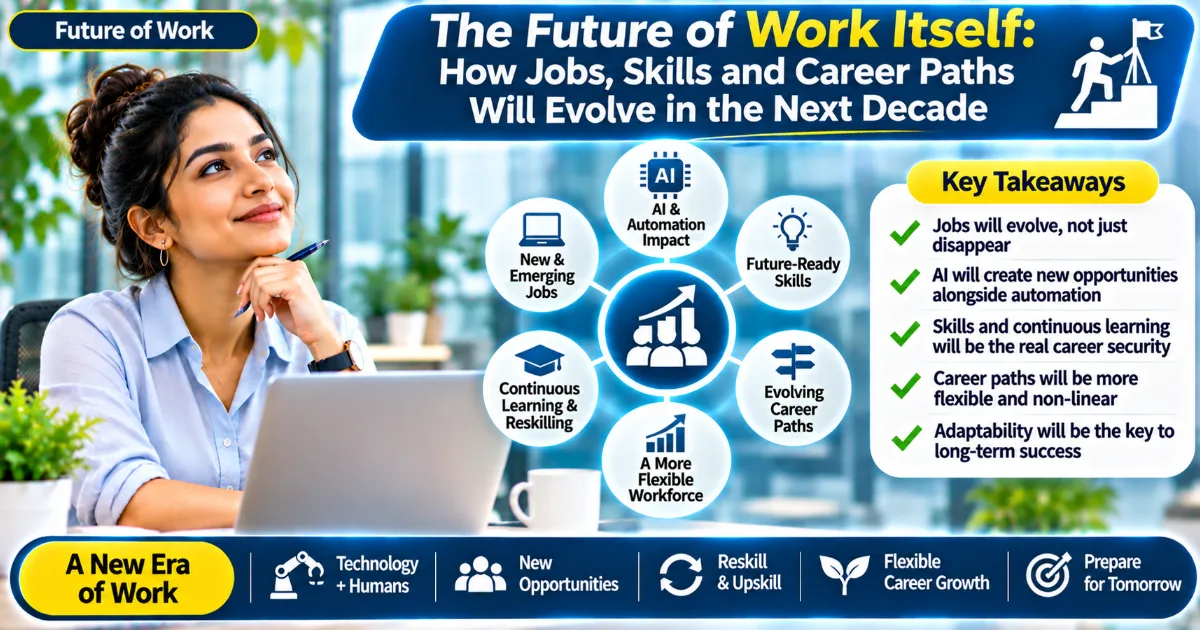
Jobs Will Evolve Rather Than Simply Disappear
Automation can reduce demand for certain activities, particularly those involving repetitive and predictable tasks. However, the effect on employment will depend on the nature of each occupation, the cost of technology, business adoption, regulation and customer expectations.
Some administrative activities may become increasingly automated. Routine data entry, standard document processing, basic scheduling and repetitive reporting are examples of tasks that software may perform more efficiently.
At the same time, organisations will continue to require people who can manage exceptions, interpret unusual situations, communicate with customers and improve the systems performing these activities.
Consider a customer service department. AI may answer common questions, retrieve account information and guide customers through standard processes. Human employees may then concentrate on complaints, complex enquiries, sensitive circumstances and situations requiring negotiation or empathy.
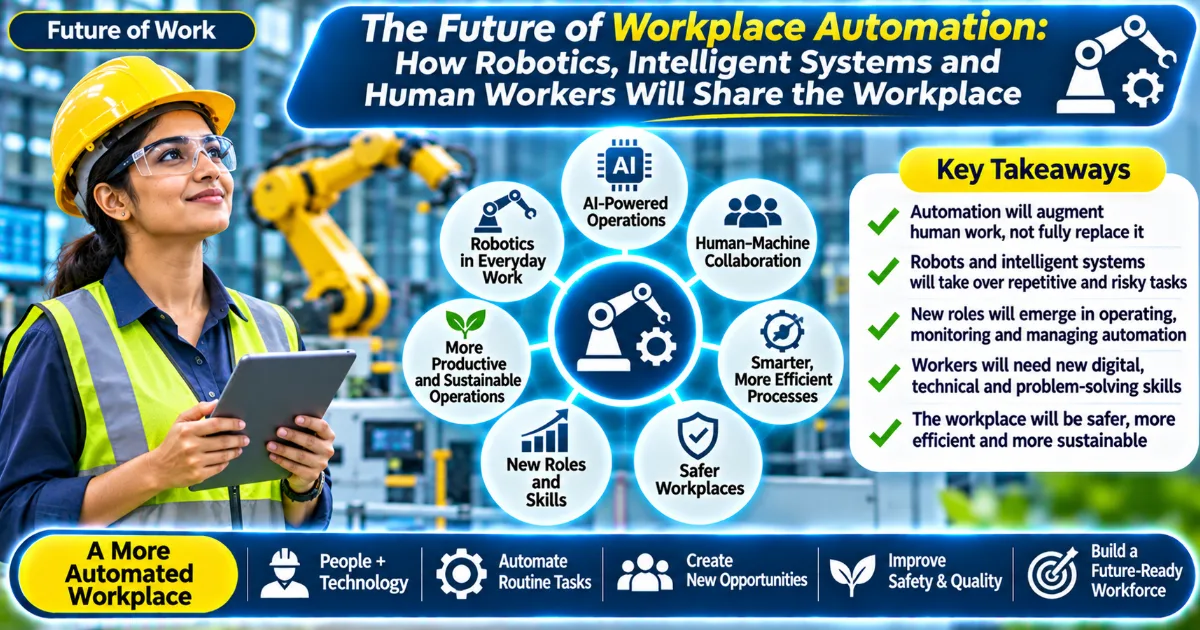
In manufacturing, robots may perform repetitive assembly tasks, while employees focus on equipment maintenance, quality assurance, process improvement and operational supervision.
In healthcare, AI may assist with analysing information and supporting administrative workflows, while healthcare professionals remain responsible for clinical judgement, patient relationships and treatment decisions.
The central change will be the redistribution of work. Employees will need to understand which responsibilities can be supported by technology and which require human expertise.
Businesses should prepare for this transition by redesigning jobs carefully rather than assuming that every technological improvement should result in the removal of human roles.
New Jobs and Emerging Career Opportunities
Technological transformation will create demand for new capabilities and professional specialisations. Some emerging roles will be directly connected to technology, while others will develop because organisations need people who can manage the business, ethical and human consequences of technological change.
AI-related careers are likely to expand across areas such as machine learning engineering, AI product management, AI governance, model evaluation and automation consulting. Organisations will need professionals who can develop, integrate, monitor and manage intelligent systems.
Cybersecurity will remain an important area as businesses become increasingly dependent on digital infrastructure. Security analysts, incident response specialists, cloud security engineers and digital risk professionals will help organisations protect information and maintain reliable systems.
Data-related professions will also remain significant. Businesses need people who can organise information, identify patterns, evaluate evidence and translate analysis into useful decisions.
Other opportunities may develop around robotics, renewable energy, smart infrastructure, digital healthcare, biotechnology and advanced manufacturing. As industries adopt new systems, they will require employees who understand both the technology and the operational environments in which it is used.
Human-centred roles may also become more important. Organisations will need professionals who can support employee reskilling, manage organisational change, improve accessibility and help teams collaborate effectively with technology.
The exact job titles will change over time. What matters is understanding the capabilities behind these roles and developing skills that can transfer across industries.
The Growing Importance of Skills-Based Careers
Traditional recruitment and career development have often placed considerable emphasis on educational qualifications, job titles and years of experience. These indicators remain useful, but they may not fully represent a person's ability to perform work in a changing environment.
A skills-based approach focuses more directly on what an individual can do. It considers technical capabilities, practical experience, professional knowledge and the ability to apply skills in real situations.
For example, a business may need someone who can analyse customer behaviour, manage digital campaigns and interpret performance data. The required capabilities may be demonstrated through a degree, professional certification, practical projects or relevant work experience.
Skills-based recruitment can help organisations identify capable candidates from a wider range of educational and professional backgrounds. It can also help employees move into new roles by demonstrating transferable abilities rather than relying entirely on previous job titles.
For workers, this approach creates opportunities to build careers through multiple routes. Someone with experience in customer support may develop analytical and communication skills that support a transition into customer success, operations or product support.
A professional working in administration may develop digital workflow and data management capabilities that open opportunities in business operations or automation management.
The future career landscape may become less dependent on a single linear progression and more focused on the continuous development of relevant skills.
Technical Skills That Will Matter in the Next Decade
Technical skills will remain essential as businesses adopt more advanced digital systems. However, the required level of expertise will differ between occupations.
Digital literacy will become a basic requirement in many professional environments. Employees should understand how to use digital platforms, manage information, collaborate online and recognise common cybersecurity risks.
AI literacy will become increasingly important. Professionals will need to understand how AI tools work at a practical level, how to provide useful instructions, how to evaluate generated information and where human review is necessary.
Data literacy will also be valuable. Employees across departments may need to interpret charts, understand basic statistical concepts, evaluate evidence and identify misleading conclusions. They do not all need to become data scientists, but they should be comfortable using information to support decisions.
Cybersecurity awareness will become relevant to almost every role. Employees need to understand safe password practices, access controls, phishing risks and the responsible handling of sensitive information.
Depending on the industry, specialised skills may include programming, cloud computing, robotics, machine learning, digital design, network management, automation engineering and advanced analytics.
Technical knowledge should not be treated as a permanent achievement. Tools and platforms change, and professionals will need to update their capabilities as technology evolves.
Human Skills Will Become More Valuable
As technology takes over selected routine activities, human capabilities will continue to distinguish effective professionals. These skills are difficult to reduce to a simple automated process because they involve judgement, context, relationships and complex reasoning.
Critical thinking is one of the most important. Employees must evaluate information, question assumptions, identify risks and make decisions when the available evidence is incomplete.
Communication will remain essential. Professionals need to explain ideas, listen to different perspectives, present recommendations and work with people who have different backgrounds and expectations.
Creativity will also matter. AI systems can generate options and support experimentation, but people must understand the problem, recognise what is meaningful and decide which ideas should be developed.
Emotional intelligence will influence how employees collaborate, manage disagreements and support customers or colleagues. As workplaces become more technologically connected, the quality of human relationships will remain important.
Adaptability will be another defining capability. Professionals will need to learn new tools, adjust to changing responsibilities and remain effective when familiar processes are redesigned.
These capabilities should not be viewed as alternatives to technical knowledge. The strongest professionals will combine domain expertise, digital skills and human judgement.
Continuous Learning Will Become a Career Requirement
In the past, many people expected their formal education to provide the knowledge required for a substantial part of their working lives. Professional development often involved occasional training or qualifications when an employee wanted to change roles.
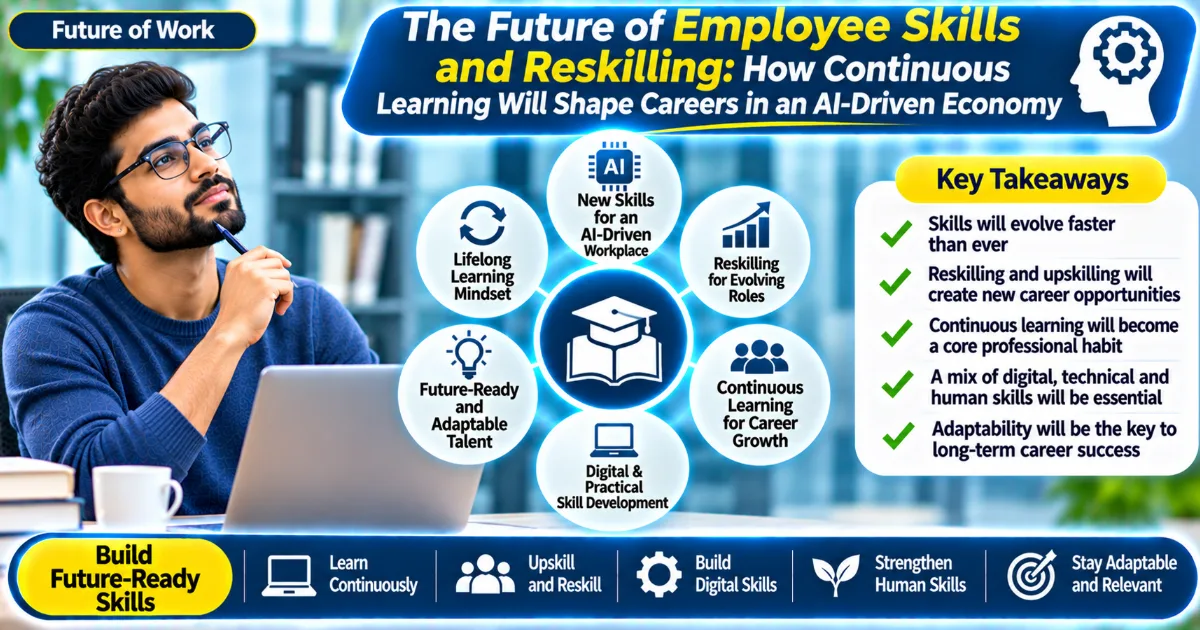
The pace of technological change is making continuous learning more important. Employees may need to update their skills several times throughout their careers as tools, business models and customer expectations evolve.
Continuous learning does not mean that everyone must enrol in a new university programme every year. It can involve short courses, professional certifications, practical projects, mentoring, workshops, technical documentation and self-directed learning.
Employees can also learn through work itself. Taking responsibility for a new project, working with a different department or experimenting with an approved digital tool can provide valuable experience.
Organisations will need to make learning accessible. Employees cannot realistically be expected to reskill if workloads leave no time for development or if training opportunities are limited to a small group.
Managers should connect learning plans with future business requirements and individual career interests. They should help employees understand which capabilities are becoming important and provide opportunities to practise them.
The future of work will reward people who remain curious and treat learning as an ongoing part of professional life.
Career Paths Will Become More Flexible and Non-Linear
Career progression has traditionally been represented as a ladder. Employees enter at a junior level, gain experience, receive promotions and move towards management or specialist positions.
Although this model will continue to exist, many careers are likely to become more flexible. Professionals may move between industries, work on different types of projects, combine employment with freelance assignments or shift between technical and managerial responsibilities.
A person may begin in digital marketing, move into customer analytics and later specialise in product management. Another employee may start in software development, gain experience in cybersecurity and eventually become a technology risk consultant.
These transitions become more practical when people develop transferable skills. Communication, project management, data interpretation, problem-solving and digital literacy can support movement between different roles.
Organisations may also create internal career marketplaces where employees can discover projects, temporary assignments and development opportunities across departments. This can help businesses use existing talent more effectively while giving employees opportunities to explore different career directions.
A flexible career does not mean an uncertain or unplanned career. Employees will still need goals, professional standards and a clear understanding of their strengths. The difference is that career development may involve several directions rather than one predictable route.
The Growth of Freelancing and Portfolio Careers
Digital platforms have made it easier for professionals to offer services to clients across geographical boundaries. Freelancing, consulting and project-based work are becoming important parts of the wider employment landscape.
Some professionals may continue to work in traditional full-time roles while taking on independent projects in their specialist areas. Others may build careers through a portfolio of clients, contracts and business activities.
A graphic designer, for example, may work with several businesses on branding projects. A software developer may provide application development services to international clients. A finance professional may offer specialised consulting to smaller organisations that do not require a full-time expert.
Portfolio careers can provide flexibility and opportunities to work across industries. They can also involve uncertainty around income, client acquisition, benefits, taxes and workload management.
Professionals considering independent work should develop more than technical expertise. They need communication, negotiation, pricing, project management and financial planning skills.
Businesses will also need to adapt their workforce strategies. They may increasingly combine permanent employees with independent specialists and external service providers. Clear contracts, data protection and intellectual property arrangements will remain important.
The future workforce may therefore include a wider range of employment arrangements rather than relying exclusively on traditional permanent positions.
Remote Work and Global Career Opportunities
Remote work has changed the relationship between geography and employment. In some professions, employees can contribute to organisations without living near their offices. Businesses can also recruit talent from wider geographical areas.
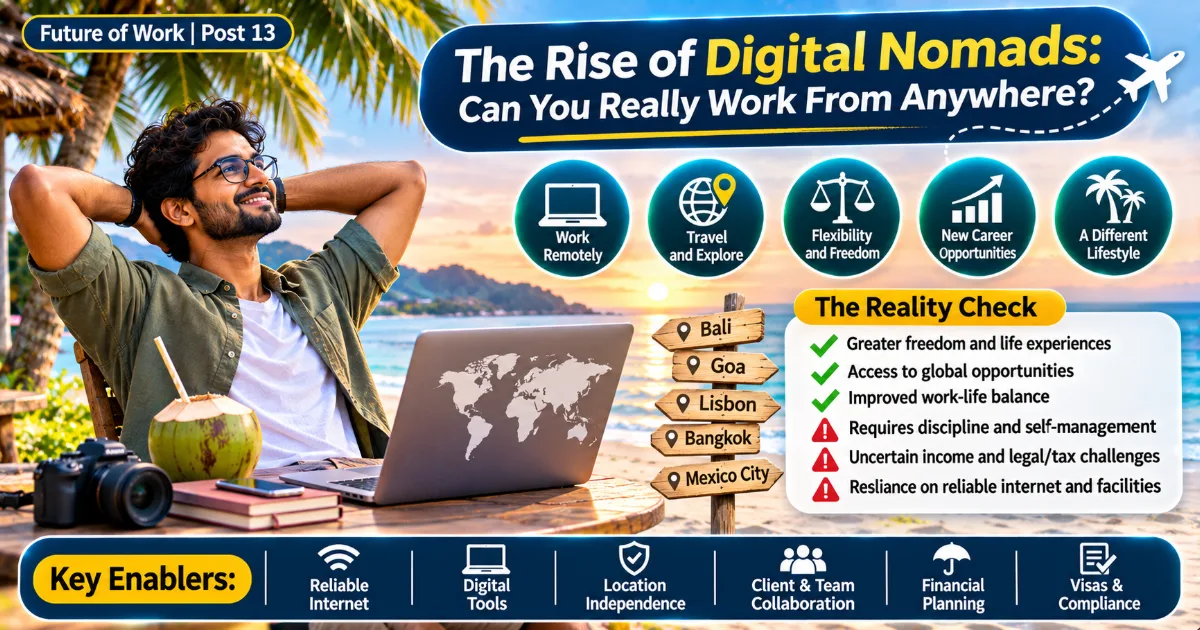
This creates opportunities for professionals who may not have access to specialised employment in their local markets. A developer in a smaller city, for example, may work with an international technology company. A designer may serve customers in several countries through digital platforms.
However, global remote work also creates competition. Professionals may compete with candidates from different regions who have similar capabilities. Strong communication, reliable delivery, time management and the ability to work independently become especially important.
Remote employees must also manage professional relationships through digital channels. Building trust, understanding organisational expectations and maintaining visibility can require deliberate effort.
Organisations need fair systems for performance evaluation, development and promotion so that employees are not disadvantaged because they work outside a central office.
Remote work will not be suitable for every occupation. Healthcare, construction, hospitality, manufacturing and many frontline services require physical presence. Nevertheless, digital coordination may influence how these industries organise supporting activities.
The future is likely to involve a combination of remote, hybrid and location-based work depending on the nature of each role.
The Transformation of Education and Professional Training
Education systems will need to respond to changing workforce requirements. Traditional degrees will continue to provide valuable foundations, but employers and learners may increasingly seek more flexible ways to acquire specific capabilities.
Short courses, industry certifications, apprenticeships, online programmes and practical learning projects can help people develop skills throughout their careers.
Educational institutions may also need to place greater emphasis on critical thinking, digital literacy, communication and problem-solving. Students should learn how to evaluate information and use technology responsibly rather than relying only on memorising established knowledge.
AI tools may support personalised learning by helping learners practise concepts, receive explanations and identify areas that require additional attention. However, educational institutions must ensure that students continue developing independent reasoning, research skills and academic integrity.
Practical experience will remain important. Internships, project-based learning, simulations and industry partnerships can help students understand how knowledge is applied in professional environments.
Employers should work more closely with educational institutions to identify emerging skill requirements. This can help reduce the gap between formal education and workplace expectations.
The future education model may become more continuous, with individuals combining formal qualifications and shorter learning experiences throughout their professional lives.
The Future of Work in Different Industries
The transformation of work will not happen at the same speed in every industry. Different sectors have different technologies, regulations, customer needs and operational requirements.
In healthcare, AI may support medical administration, information analysis and selected diagnostic processes. Healthcare professionals will continue to provide patient care, clinical judgement and communication.
In manufacturing, robotics and intelligent monitoring systems may improve production efficiency. Workers may increasingly focus on equipment supervision, maintenance, quality management and process optimisation.
In finance, automation may change transaction processing, reporting and fraud detection. Professionals may spend more time on risk interpretation, advisory services, compliance and customer relationships.
In education, AI may support lesson preparation, assessment and personalised practice. Teachers will remain important for instruction, mentorship, motivation and understanding learners' needs.
In agriculture, digital sensors, automated equipment and data analysis may help improve resource management and production planning. Farmers and agricultural specialists will need to combine practical knowledge with emerging technologies.
In retail and logistics, automation may influence inventory management, demand forecasting and delivery operations. Human employees will continue to contribute through customer service, exception handling, planning and operational decisions.
Each industry will need a different transition strategy. The important question is not whether technology will affect a sector, but how its workforce can adapt while maintaining quality, safety and reliability.
The Challenges of Reskilling and Workforce Transition
Although new technologies create opportunities, the transition will not be equally easy for every worker. Employees whose responsibilities are heavily dependent on automatable tasks may need significant support to move into new roles.
Reskilling requires time, access to training and opportunities to practise. Employees may face financial or personal constraints that make it difficult to participate in lengthy programmes.
Some workers may also experience uncertainty about whether their existing knowledge will remain valuable. Organisations should communicate honestly about changing job requirements and avoid making unrealistic promises about employment security.
Businesses need to identify which roles are likely to change and which skills can be developed internally. Where possible, employees should receive opportunities to move into new responsibilities rather than being excluded from the transition.
Governments, educational institutions and employers may need to work together to support workforce development. This can include accessible training, career guidance, apprenticeships and programmes for people affected by industry changes.
Reskilling should be practical and connected to real employment opportunities. Training that does not lead to relevant capabilities or credible career pathways may have limited value.
A responsible transition recognises that technology adoption affects people, families and local economies. Workforce planning should therefore consider social and economic consequences alongside business efficiency.
The Future of Work in India
India has an opportunity to play a significant role in the changing global workforce. Its large talent pool, expanding digital infrastructure, technology sector, entrepreneurial activity and growing demand for skilled professionals create opportunities across several industries.
Indian technology professionals may contribute to AI development, cloud computing, cybersecurity, software engineering and digital transformation projects. At the same time, manufacturing, healthcare, education, financial services and logistics may create new requirements for digitally capable workers.
The growth of smaller businesses and startups may also increase demand for professionals who can work across multiple responsibilities. Employees may need to combine technical skills with customer understanding, communication and business awareness.
However, the transition will require attention to unequal access to technology and training. Workers in different regions and industries may have very different opportunities to develop new capabilities. Accessible education, reliable digital infrastructure and practical vocational programmes will be important.
India's education and training systems will need to respond to changing industry requirements. Partnerships between employers, universities, technical institutions and skill development organisations can help learners gain relevant experience.
For Indian professionals, the opportunity lies in combining specialised expertise with digital capabilities and continuous learning. For employers, the challenge will be to create workplaces where employees can adapt and grow rather than treating technological change only as a cost-saving exercise.
How Professionals Can Prepare for the Next Decade
Preparing for the future of work does not require predicting every new technology or job title. It requires developing capabilities that remain useful across different professional environments.
Professionals should begin by understanding how their current roles may change. They can identify repetitive tasks that are increasingly supported by automation and consider which responsibilities require more advanced judgement, communication or specialist knowledge.
The next step is to develop relevant digital skills. Depending on the profession, this may include AI tools, data analysis, cloud platforms, cybersecurity awareness, digital marketing or automation software.
Employees should also strengthen their transferable skills. Critical thinking, writing, collaboration, negotiation and problem-solving can support career movement across industries.
Building practical evidence of skills is equally important. Personal projects, professional portfolios, certifications and documented work achievements can help demonstrate capabilities to employers and clients.
Networking and professional relationships can provide access to information about emerging roles and industry developments. Learning from people working in different fields can help individuals identify opportunities they may not have considered.
Finally, professionals should remain open to change. Career plans are useful, but they should be reviewed as personal interests, industry requirements and technology evolve.
How Employers Can Build a Future-Ready Workforce
Organisations have a major responsibility in preparing employees for changing work requirements. Technology investments will deliver limited value if the workforce does not have the skills and support needed to use new systems effectively.
Employers should begin with workforce planning. They need to understand which activities are likely to be automated, which responsibilities will become more important and where new capabilities may be required.
Skills assessments can help identify existing strengths and development gaps. Organisations can then design learning programmes connected to real business needs.
Internal mobility should be encouraged. Employees who understand the organisation may be capable of moving into new roles with suitable training. Providing access to internal projects and career opportunities can help retain valuable knowledge.
Managers should also communicate transparently about technological change. Employees need to understand why new systems are being introduced and how their responsibilities may evolve.
Businesses must establish responsible AI and automation policies. These should address data protection, human oversight, security, accountability and the appropriate use of automated decisions.
Finally, employers should evaluate the human impact of transformation. Productivity improvements should be considered alongside employee experience, job quality and long-term organisational resilience.
A future-ready workforce is not simply a workforce that knows how to use new software. It is a workforce that can learn, adapt, collaborate and apply knowledge in changing circumstances.
Conclusion: The Future Belongs to Those Who Can Adapt
The next decade will change how jobs are structured, how skills are valued and how people build professional careers. Artificial intelligence and automation will transform routine activities, while digital platforms will connect employees and businesses across geographical boundaries. New industries and professional opportunities will emerge, and many existing occupations will develop new responsibilities.
These changes will create challenges, particularly for workers whose current tasks are vulnerable to automation or whose access to training is limited. However, they will also create opportunities for people who are willing and able to develop new capabilities.
The most valuable professionals will combine technical knowledge with human strengths. They will understand how to use AI, interpret information, communicate effectively, solve problems and make responsible decisions. They will treat learning as a continuous activity and remain open to different career paths.
Employers will need to redesign jobs thoughtfully, invest in reskilling and create fair opportunities for employees to move into emerging roles. Educational institutions will need to connect learning more closely with changing professional requirements, while governments and industry organisations will need to support a fair workforce transition.
The future of work is not a fixed destination. It will continue to evolve as technology, business models and human expectations change. People cannot control every development, but they can prepare by building adaptable skills, gaining practical experience and remaining curious about new opportunities.
Technology will influence what work looks like, but people will continue to determine how it is used and what value it creates. The strongest future careers will not necessarily belong to those who know the most about one tool or one process. They will belong to people who can combine expertise, adaptability and human understanding to make a meaningful contribution wherever work takes them.
What Comes Next in the Future of Work Series?
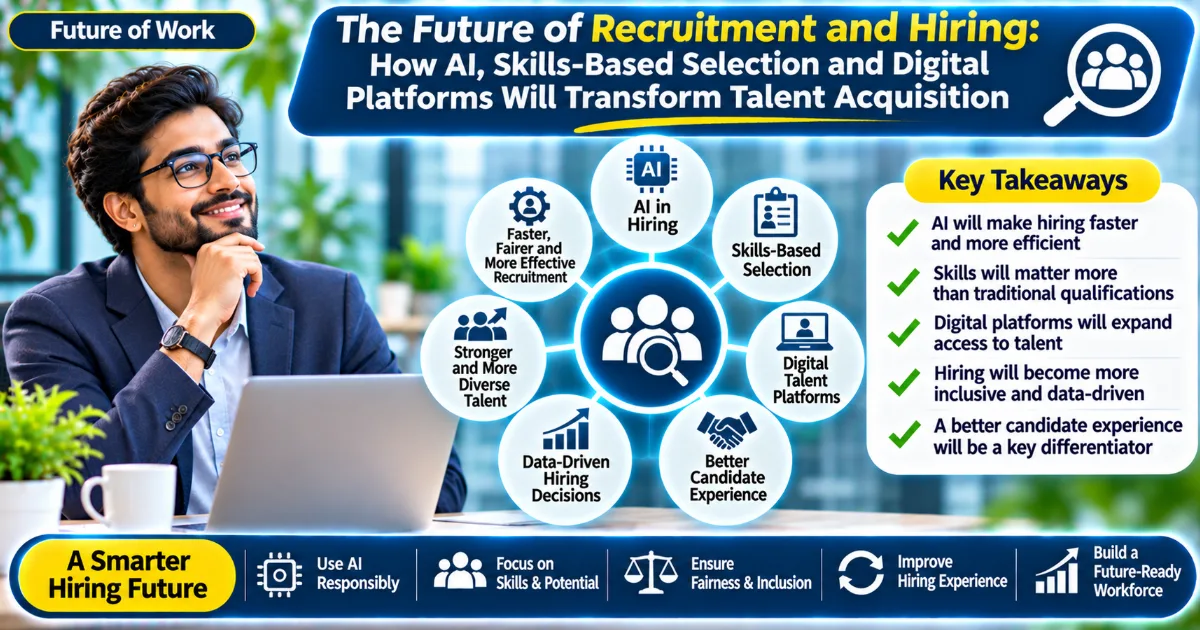
In Post 21, we will explore The Future of Recruitment and Hiring: How AI, Skills-Based Selection and Digital Platforms Will Transform Talent Acquisition, examining how employers will identify talent, evaluate candidates and build stronger teams in an increasingly technology-driven employment market.
#FutureOfWork #FutureOfJobs #CareerDevelopment #Reskilling #ArtificialIntelligence