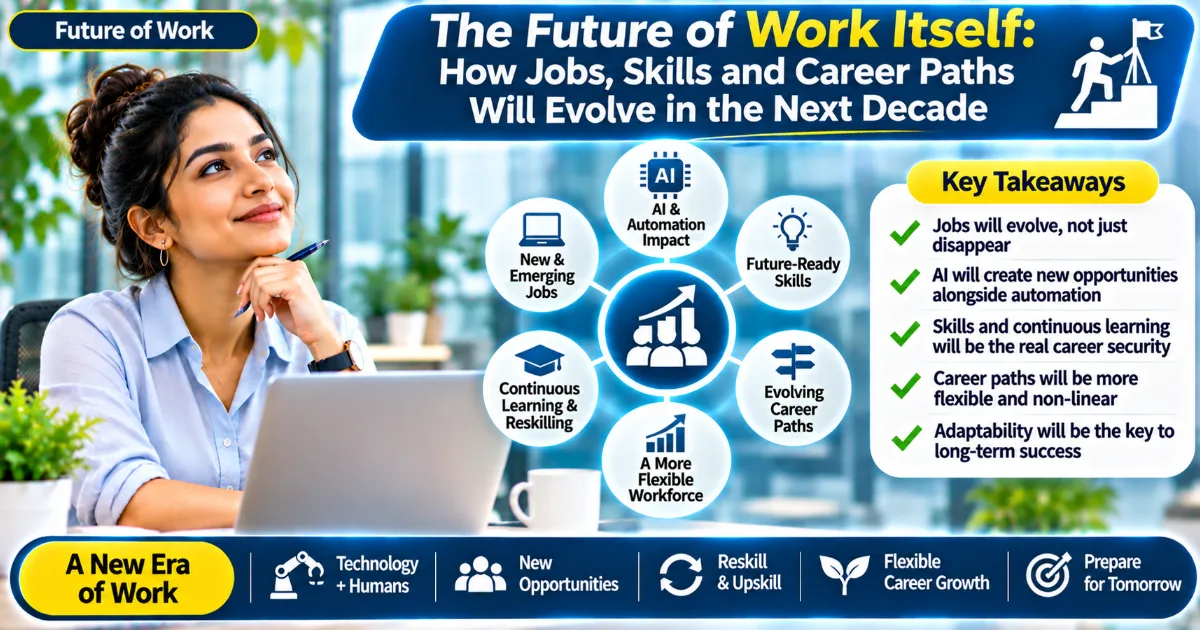
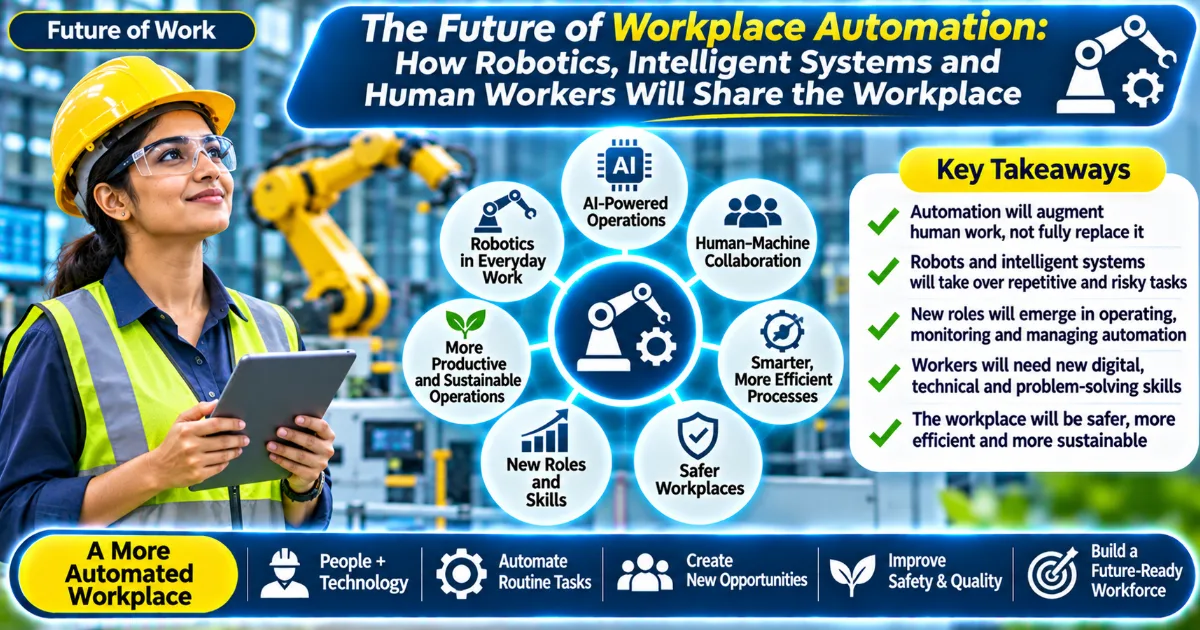
Workplace automation is changing how organisations produce goods, deliver services, manage information and coordinate employees. Machines have supported human work for centuries, from basic mechanical equipment in factories to advanced computer systems in modern offices. However, the combination of artificial intelligence, robotics, sensors, connected devices and intelligent software is creating a new phase of automation that reaches far beyond traditional industrial production.
Today's automated systems can inspect products, move materials, analyse business information, respond to routine customer enquiries, monitor equipment and support complex operational decisions. Robots are becoming more capable of working in environments designed for people, while software automation is transforming activities that previously required extensive manual effort.
These developments are changing the relationship between people and machines. In the future workplace, employees may supervise automated production lines, collaborate with robotic equipment, use intelligent assistants to complete administrative work and make decisions based on information collected by connected systems.
Automation creates significant opportunities. It can improve productivity, reduce repetitive work, increase consistency, support safer operations and allow employees to focus on responsibilities that require judgement and creativity. At the same time, it raises concerns about employment, workforce inequality, skill shortages, privacy, safety and the concentration of economic benefits.
The future of workplace automation should not be understood simply as a process of replacing human workers with machines. Its broader impact will depend on how organisations redesign jobs, train employees and decide which responsibilities should remain under human control.
Continue Reading
Businesses that introduce automation thoughtfully can create more productive workplaces while giving employees opportunities to develop new capabilities. Those that focus only on reducing labour costs may overlook the knowledge, judgement and relationships that make organisations effective.
Understanding the future of automation therefore requires examining both the technology and the people who will work alongside it.
Understanding the Different Forms of Workplace Automation
Workplace automation refers to the use of machines, software and intelligent systems to perform tasks that would otherwise require human effort. It includes a wide range of technologies, each designed for different operational requirements.
Traditional industrial automation uses machines and control systems to perform repetitive manufacturing activities. These systems may assemble products, package materials, control production equipment or move items along manufacturing lines.
Robotic process automation, commonly known as RPA, focuses on repetitive digital activities. Software robots can transfer information between applications, process standard forms, generate reports and perform routine administrative workflows.
Artificial intelligence introduces systems that can analyse information, recognise patterns, generate content and support decisions. Unlike traditional automation, which generally follows predefined instructions, AI systems may respond to changing inputs and perform tasks involving language, classification or prediction.
Physical robotics involves machines that interact with the physical world. Industrial robots, warehouse robots, inspection robots and collaborative robots are examples of technologies that can support human operations.
Connected automation combines software, equipment and sensors. These systems can monitor machines, identify unusual conditions and coordinate activities across multiple processes.
Understanding these differences is important because automation does not affect every occupation in the same way. A manufacturing company may focus on robotics and equipment monitoring, while a professional services business may prioritise document processing, workflow automation and AI-assisted research.
The right approach depends on the tasks involved, the operating environment, the required level of accuracy and the consequences of an error.
The Evolution from Mechanical Automation to Intelligent Systems
The history of workplace automation began long before modern computers. Mechanical tools and industrial machines allowed businesses to perform physical activities more quickly and consistently. The Industrial Revolution transformed manufacturing by introducing machinery that increased production capacity and changed the organisation of labour.
Later, electrical systems and programmable equipment made it possible to control industrial processes with greater precision. Computer-based automation introduced more flexibility, allowing machines to follow programmed instructions and perform increasingly complex activities.
The development of robotics expanded automation into tasks involving movement, assembly, welding, inspection and material handling. Businesses could automate activities that were repetitive, physically demanding or hazardous.
The arrival of cloud computing, connected devices and advanced software created another stage of development. Organisations could coordinate operations through digital platforms, collect information from equipment and automate workflows across departments.
Artificial intelligence is now extending automation into activities involving language, prediction, recognition and information analysis. Systems can help employees review documents, classify requests, generate reports and identify patterns in large datasets.
The transition from mechanical automation to intelligent systems is significant because it expands the range of tasks that technology can support. Automation is no longer limited to physical production lines. It is becoming part of offices, hospitals, warehouses, retail operations, financial services and professional environments.
Future workplaces will combine several generations of automation technology rather than relying on one universal system.
Robotics Will Transform Manufacturing and Industrial Operations
Manufacturing is one of the most established areas of workplace automation. Industrial robots already perform tasks such as welding, painting, assembly, packaging and material handling. These systems can operate with high consistency and support production processes that require speed and precision.
In the future, robotics may become more flexible and easier to integrate into different production environments. Improvements in sensors, computer vision and AI can help robots recognise objects, respond to changing conditions and perform tasks that previously required more specialised programming.
For example, a manufacturing facility may use robotic equipment to assemble components while human technicians monitor production quality and manage unusual situations. Automated inspection systems may identify visible defects, allowing quality specialists to investigate more complex problems.
Robotics can also improve workplace safety. Machines can perform activities involving extreme temperatures, hazardous substances, heavy lifting or repetitive physical movements. Employees can then focus on equipment supervision, maintenance, quality management and process improvement.
However, introducing industrial robotics requires careful planning. Businesses must consider equipment costs, integration, maintenance, safety standards, employee training and the suitability of existing production processes.
Robotics will not make every factory fully autonomous. Many production environments involve variable materials, customised products and unexpected situations that require human judgement.
The future of manufacturing will therefore involve different levels of automation depending on production volume, product complexity and business requirements.
Collaborative Robots Will Change Human-Machine Teamwork
Collaborative robots, often called cobots, are designed to work alongside people in suitable environments. Unlike traditional industrial robots that may operate inside restricted safety zones, collaborative systems can be designed for closer interaction with human workers when appropriate safety measures are in place.
Cobots may assist with repetitive assembly, material handling, machine tending, inspection and packaging. They can help employees complete physically demanding activities while allowing people to retain control over complex or variable tasks.
Consider a small manufacturing business that produces customised components. A traditional industrial automation system may be expensive or difficult to adapt because each order involves different specifications. A collaborative robot may offer a more flexible way to automate selected activities while employees handle customisation and quality checks.
Cobots may also support businesses that do not have the production volume required to justify large automated manufacturing systems.
However, collaborative operation does not automatically mean that every robot is safe to use without restrictions. Employers must assess risks, configure equipment correctly, train employees and follow applicable safety requirements.
Human-machine teamwork will become an important part of modern industrial operations. Employees will increasingly need to understand how to interact with robotic equipment, recognise unsafe conditions and intervene when a process behaves unexpectedly.
Software Automation Will Transform Office Work
Automation is also changing office environments. Many administrative processes involve repetitive activities such as entering information, transferring data, preparing standard reports, checking documents and updating records.
Software automation can reduce the time required for these activities. For example, an automated workflow may receive a customer request, validate required information, update a database and notify the appropriate department.
Finance teams may automate invoice processing and routine reconciliations. HR departments may use digital workflows for onboarding documentation and employee requests. Operations teams may automate approval processes, task assignments and status updates.
AI-powered systems can extend these capabilities by helping employees interpret unstructured information. They may classify emails, summarise documents, extract relevant details and prepare draft responses.
The greatest benefits often come from connecting separate processes. A company may have different systems for sales, finance, customer support and project management. Automation can help move approved information between them, reducing duplicated data entry and manual coordination.
However, automating a poorly designed process can make existing problems happen faster. Organisations should review workflows before introducing automation. They need to identify unnecessary steps, clarify responsibilities and establish appropriate controls.
Office automation should reduce administrative friction and improve service quality rather than simply increase the volume of work employees are expected to complete.
Artificial Intelligence Will Become an Automation Partner
Artificial intelligence is creating new possibilities for workplace automation because it can support tasks involving language, pattern recognition and information processing.
Employees may use AI assistants to draft reports, summarise meetings, organise research, prepare presentations and explore possible solutions to business problems. Customer service systems may answer common questions, while employees handle complex cases.
AI can also support decision-making by analysing large datasets and identifying patterns that may be difficult to detect manually. Managers may use these insights to investigate operational performance, forecast demand or identify potential risks.
In software development, AI tools may assist with code generation, testing and documentation. Developers can use these systems to accelerate routine activities while remaining responsible for architecture, security, validation and the final implementation.
In recruitment, AI may help organise applications and identify relevant skills. In marketing, it may support audience analysis and campaign preparation. In logistics, it may assist with demand forecasting and route planning.
Nevertheless, AI outputs can be inaccurate, incomplete or misleading. An organisation must not treat generated information as automatically correct. Human review is particularly important when decisions affect safety, employment, financial commitments or legal responsibilities.
The future workplace will need employees who understand how to use AI effectively, evaluate its limitations and recognise when a task requires human expertise.
Warehouse and Logistics Automation
Warehouses and logistics operations are under increasing pressure to manage large product volumes, meet delivery expectations and maintain accurate inventory information.
Automation can support these requirements through robotic material handling, automated storage systems, intelligent sorting equipment and digital inventory management.
Autonomous mobile robots can transport goods within suitable warehouse environments. Automated storage and retrieval systems can move inventory between storage locations and picking areas. Sensors and scanning systems can improve visibility into stock levels and product movement.
AI may support demand forecasting, inventory planning and delivery coordination. Businesses can use operational data to identify bottlenecks and adjust resources according to changing requirements.
These technologies can improve efficiency, but successful implementation requires more than purchasing robots. Warehouse layouts, safety procedures, software integration and employee training all influence results.
Human workers remain important for exception handling, equipment supervision, customer coordination and decisions involving unusual products or delivery conditions.
Smaller logistics businesses may adopt automation gradually. They may begin with digital inventory systems and automated notifications before introducing more expensive physical equipment.
The future of logistics will involve connected operations where people, software and machines coordinate to move products reliably through increasingly complex supply chains.
Automation Will Transform Healthcare Workplaces
Healthcare organisations face growing demands involving patient care, administration, medical equipment and resource management. Automation can support several of these activities, although healthcare requires particularly careful attention to safety, privacy and professional accountability.
Robotic systems may assist with selected surgical procedures, rehabilitation, medication handling and hospital logistics. Automated equipment can help transport supplies, manage laboratory processes and support routine monitoring.
AI systems may assist healthcare professionals with analysing medical information, organising records and identifying patterns that require further attention. Administrative automation can reduce repetitive work involving appointments, billing and document processing.
These systems may allow healthcare professionals to spend more time on patient interaction and complex clinical responsibilities. However, technology must not replace appropriate clinical judgement or professional oversight.
Healthcare automation also requires strong information security. Patient records and diagnostic information are sensitive, and access must be controlled according to applicable laws and professional standards.
The future healthcare workplace will depend on effective collaboration between medical professionals, technical specialists and automated systems. Technology can support care delivery, but patient trust and human understanding will remain central.
Automation in Retail and Customer Service
Retail businesses use automation to manage inventory, process transactions, coordinate orders and improve customer experiences. Digital payment systems, automated stock monitoring and intelligent recommendation tools are already part of many retail operations.
Future retail environments may use more advanced inventory systems, automated checkout processes and robotics for selected warehouse and store activities.
AI-powered customer service tools can respond to routine questions, provide product information and help customers navigate common processes. Human representatives can focus on complaints, complex requirements and situations requiring empathy or negotiation.
Automation can also help retailers understand demand patterns and coordinate stock replenishment. Businesses may use data from sales systems, customer interactions and supply chains to make more informed decisions.
However, customer expectations are not purely transactional. Many people still value personal assistance, especially when buying expensive products, resolving problems or seeking advice.
Retailers should therefore design automation around customer needs rather than removing human support wherever possible. A well-designed system should make routine activities easier while preserving access to people when customers need them.
The Impact of Automation on Employment
Employment is one of the most debated aspects of workplace automation. When machines perform tasks previously completed by employees, organisations may need fewer workers for those specific activities. This can create uncertainty for people whose roles depend heavily on repetitive or predictable processes.
However, the overall impact on employment is more complex than a simple calculation of jobs removed. Automation can reduce costs, increase production capacity and create demand for new services. Businesses may expand when productivity improves, potentially creating additional roles in other areas.
Some occupations may decline, while others may change or emerge. The effects will differ between industries, regions and skill levels.
For example, automated production may reduce the number of employees required for repetitive assembly, while increasing demand for robotics technicians, maintenance specialists, quality engineers and production analysts.
In office environments, automation may reduce routine data processing while increasing demand for employees who can manage systems, interpret information and improve business processes.
The transition may not be easy for every worker. New opportunities may require different qualifications, technical knowledge or geographical mobility. Employees may need training and career support to move into suitable roles.
Businesses and policymakers should recognise these challenges. Responsible automation includes planning for workforce transitions rather than treating job displacement as an unavoidable side effect without support.
New Jobs Created by Workplace Automation
As organisations introduce more advanced automation, they will require professionals who can develop, operate, maintain and evaluate these systems.
Robotics technicians will help install, inspect, repair and maintain robotic equipment. Automation engineers will design systems that connect machines, software and industrial processes. AI specialists will work on the development, evaluation and integration of intelligent systems.
Automation analysts may examine business processes and identify opportunities to reduce repetitive work. Integration specialists will connect different platforms and ensure that automated workflows exchange information correctly.
Cybersecurity professionals will help protect connected machines, industrial networks and business systems from digital threats. Safety specialists will assess risks associated with human-machine interaction and ensure that automated environments meet applicable standards.
Training and change management professionals will also become important. Employees need support when their responsibilities change, and organisations need people who can explain new processes and help teams adapt.
Some roles may combine technical and operational knowledge. For example, a manufacturing professional with experience in production management may develop expertise in robotics supervision and automated quality systems.
These emerging opportunities demonstrate why automation should be considered a workforce transformation rather than only a technology investment.
Skills Employees Will Need in an Automated Workplace
The growth of automation will change the skills required across many professions. Technical capabilities will become important, but employees will also need strong human and organisational skills.
Digital literacy will be essential. Workers should understand the software and systems used in their industries, manage digital information and recognise common cybersecurity risks.
AI literacy will help employees use intelligent tools responsibly. They should understand how to provide instructions, evaluate outputs and recognise situations where automated recommendations require additional review.
Technical skills may include robotics operation, equipment maintenance, process monitoring, data analysis, programming and workflow configuration. The level of expertise will depend on the role.
Problem-solving will become increasingly valuable because automated systems do not eliminate unexpected situations. Employees must identify the causes of failures, understand operational constraints and determine appropriate responses.
Communication and collaboration will remain important as people work alongside technical specialists and automated systems. Employees may need to explain problems, coordinate interventions and share knowledge across departments.
Adaptability will also matter. Technologies and processes will continue to evolve, and employees must be willing to learn new methods.
Organisations should provide practical training rather than expecting workers to acquire every new capability independently. Learning opportunities should be connected to actual workplace responsibilities.
The Importance of Reskilling and Upskilling
Reskilling involves preparing employees for different roles, while upskilling develops additional capabilities within their existing areas of work. Both will be essential as automation changes job responsibilities.
An employee who previously performed manual inventory tasks may receive training in digital inventory systems, equipment monitoring and warehouse coordination. A production worker may develop skills in operating and maintaining collaborative robots. An administrative professional may learn workflow automation and data management.
Effective training should combine theoretical understanding with practical experience. Employees need opportunities to use new systems under appropriate supervision and understand how to respond when problems occur.
Employers should identify skills gaps before implementing major automation projects. This allows them to plan training and consider whether existing employees can take on new responsibilities.
Training should also be accessible to different groups of workers. Employees in frontline roles may need flexible learning schedules, practical demonstrations and language-appropriate materials.
Reskilling programmes are most effective when they lead to credible career opportunities. Organisations should explain what roles are becoming available, what capabilities are required and how employees can progress.
A business that invests in its existing workforce may preserve valuable organisational knowledge while reducing the disruption associated with technological change.
Workplace Safety in an Automated Environment
Automation can improve workplace safety by reducing exposure to hazardous activities, heavy lifting and repetitive physical movements. Robots can perform tasks in environments involving extreme temperatures, dangerous materials or other risks.
However, automated workplaces introduce new safety considerations. Employees may work near moving machinery, robotic arms, autonomous vehicles and connected equipment. A failure in sensors, software or control systems could create unexpected hazards.
Employers must conduct suitable risk assessments before introducing automated equipment. Safety measures may include physical barriers, emergency stops, access controls, restricted operating zones and systems designed to detect human presence.
Employees need training on how equipment operates, what hazards exist and how to respond during an emergency. They should understand when a machine can be approached, how maintenance activities are authorised and who is responsible for reporting problems.
Cybersecurity is also connected to physical safety. In some industrial environments, unauthorised access to control systems could disrupt operations or create dangerous conditions.
Automation should not be treated as automatically safe simply because a machine performs tasks consistently. Safety must be designed into the system, reviewed regularly and supported by trained people.
Small Businesses and the Adoption of Automation
Automation is often associated with large factories and multinational companies, but smaller businesses can also benefit from selected technologies.
A small business may begin by automating invoices, appointment reminders, customer enquiries and routine reporting. These improvements can reduce administrative work without requiring expensive industrial equipment.
A growing online retailer may use inventory software, automated order notifications and customer relationship management systems to manage increasing order volumes.
A professional services firm may automate document collection, project updates and internal approvals. Employees can then spend more time on client relationships and specialist work.
Small businesses should identify processes that are repetitive, time-consuming and suitable for standardisation. They should compare the cost of automation with the expected benefits, including implementation, maintenance, training and ongoing support.
Automation does not always require replacing existing systems. Sometimes a simple integration or workflow improvement can produce meaningful results.
Businesses should also avoid automating every process simply because technology is available. Some activities require personal judgement or customer interaction, and automation may reduce quality if introduced without understanding the underlying process.
A gradual approach allows smaller organisations to learn, measure results and expand automation when the business case is clear.
Challenges and Risks of Workplace Automation
Despite its potential benefits, workplace automation creates several challenges that organisations must address.
The initial investment can be substantial. Businesses may need to purchase equipment, redesign facilities, integrate software and train employees. Smaller organisations may struggle to justify these costs when expected benefits are uncertain.
Technical integration can also be difficult. Automated systems may need to communicate with older software, existing machinery and different databases. Poor integration can create errors and operational interruptions.
Maintenance is another consideration. Robots, sensors and automated software require monitoring, updates and technical support. An automated system that fails unexpectedly can disrupt an entire process.
Cybersecurity risks increase as more equipment becomes connected. Businesses must protect networks, access credentials and operational data.
There are also workforce challenges. Employees may worry about job security, resist unfamiliar systems or lack access to relevant training. Poor communication can create distrust and reduce adoption.
AI-enabled automation introduces additional concerns involving inaccurate outputs, bias, transparency and accountability. Organisations must determine who is responsible when an automated system produces an incorrect result.
These risks do not mean that businesses should avoid automation. They mean that adoption should be supported by clear governance, realistic planning and continuous evaluation.
Ethical and Responsible Automation
Responsible automation requires organisations to consider how technology affects employees, customers and wider society.
Businesses should be transparent about significant changes to job responsibilities and workforce requirements. Employees should receive clear information about why automation is being introduced and how it may affect their roles.
Automated systems that influence hiring, performance evaluation, scheduling or other employment decisions require particular care. Organisations should examine whether decisions are accurate, fair and appropriately reviewed by people.
Privacy must also be protected. Workplace automation may collect information about employee activity, equipment usage and operational performance. Businesses should define what data is necessary, who can access it and how long it will be retained.
Human oversight should be maintained for decisions involving significant consequences. Employees should have appropriate ways to question automated outcomes or report problems.
Organisations should also consider the distribution of automation benefits. Productivity improvements may increase business profitability, but they should not automatically come at the expense of employee safety, dignity or reasonable working conditions.
Ethical automation is not simply about following technical standards. It involves making responsible choices about how technology is introduced and how its benefits and risks are shared.
Measuring the Success of Workplace Automation
Businesses should measure automation projects using more than the number of tasks automated or employees required after implementation.
Useful measures may include productivity, error rates, operational reliability, production quality, customer satisfaction and workplace safety.
For example, a company introducing automated invoice processing should examine processing time, payment accuracy, exception rates and employee workload. A warehouse adopting mobile robots should evaluate delivery accuracy, movement efficiency, equipment downtime and safety incidents.
Employee experience should also be considered. Automation may improve productivity while creating new pressures if employees are expected to supervise several systems without sufficient training.
The total cost of ownership is another important measure. Businesses should include equipment, software, integration, maintenance, energy consumption, security and training when evaluating financial performance.
Organisations should establish a baseline before implementation so that improvements can be measured against the previous process.
Regular reviews are important because the value of an automated system may change as business requirements evolve. A successful project should improve operational outcomes while remaining safe, reliable and manageable.
The Future of Workplace Automation in India
India has significant opportunities to expand workplace automation across manufacturing, logistics, healthcare, financial services, retail, agriculture and information technology.
Manufacturing organisations may adopt robotics, connected production systems and automated quality inspection to improve consistency and efficiency. Warehouses and logistics providers may use digital inventory systems, automated sorting and robotic material handling.
In information technology and professional services, software automation and AI assistants may support development, documentation, customer service and business operations.
Healthcare organisations may use automation for selected administrative processes, laboratory workflows and equipment management. Retail businesses may adopt intelligent inventory systems and automated customer communication.
However, automation adoption will vary considerably between large enterprises, startups and small businesses. Cost, infrastructure, technical expertise and workforce readiness will influence implementation.
India will also need to develop more professionals with skills in robotics, industrial automation, AI, cybersecurity, equipment maintenance and systems integration.
Vocational education, apprenticeships and partnerships between businesses and educational institutions can help prepare workers for emerging responsibilities.
The transition should also consider workers in sectors where employment is highly dependent on manual and repetitive activities. Practical reskilling programmes and accessible training will be important for ensuring that technological progress creates broader opportunities.
India's long-term advantage will depend not only on adopting advanced machines but also on developing people who can design, operate, maintain and improve automated systems.
How Organisations Can Prepare for an Automated Future
Businesses should begin by identifying where automation can solve genuine operational problems. They should examine repetitive activities, process delays, quality issues and tasks involving unnecessary manual effort.
The next step is evaluating suitability. Not every process should be automated. Organisations should consider complexity, variability, safety, cost and the consequences of failure.
A pilot project can help test assumptions before a large-scale implementation. Businesses can introduce automation in a limited environment, measure results and identify problems before expanding.
Employee involvement is essential. Workers often understand operational challenges that may not be visible to senior managers or technology providers. Their feedback can help identify practical improvements and potential risks.
Training should begin before employees are expected to use new systems. Organisations should explain how responsibilities will change and provide opportunities to practise.
Businesses should also establish governance covering data security, system access, maintenance, safety and human oversight. Responsibilities must be clear when an automated system fails or produces an unexpected result.
Finally, organisations should review outcomes regularly. Automation is not a one-time installation. Systems require updates, maintenance and adaptation as business needs change.
Conclusion: The Future Workplace Will Combine Human Capability with Intelligent Automation
Workplace automation will continue to transform how businesses operate. Robotics will support physical activities, software automation will reduce repetitive administrative work and AI will help employees process information and coordinate decisions.
These technologies can improve productivity, quality, safety and operational flexibility. They can also create new professional opportunities in engineering, maintenance, systems integration, cybersecurity, analytics and automation management.
However, automation will not remove the need for human contribution. Employees will continue to provide judgement, creativity, communication, problem-solving and accountability. These capabilities will become particularly important when systems encounter unfamiliar situations or decisions involve complex human considerations.
The transition will require investment in reskilling, workplace safety, responsible technology governance and clear communication. Employers must recognise that successful automation depends on people who understand how to use and manage the systems being introduced.
For employees, the opportunity lies in developing digital literacy, technical knowledge and adaptable professional skills. For businesses, the challenge is to introduce technology in ways that improve operations while supporting workforce development.
The future workplace will not be defined by machines working independently of people. It will be shaped by how effectively humans and intelligent systems share responsibilities.
The most successful organisations will use automation to remove unnecessary effort, improve working conditions and create opportunities for employees to contribute at a higher level. Technology will provide new capabilities, but people will remain essential to deciding how those capabilities should be used.
What Comes Next in the Future of Work Series?
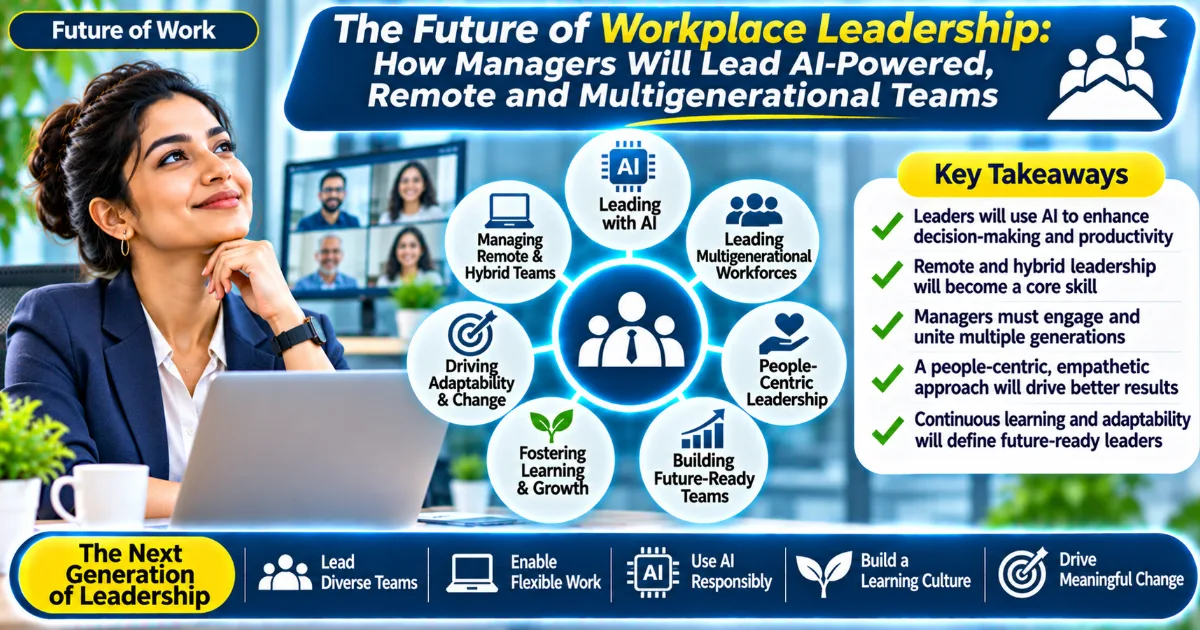
In Post 23, we will explore The Future of Workplace Leadership: How Managers Will Lead AI-Powered, Remote and Multigenerational Teams, examining how leadership responsibilities, employee expectations and organisational culture will evolve in a rapidly changing workplace.
#FutureOfWork #WorkplaceAutomation #Robotics #ArtificialIntelligence #FutureOfJobs